

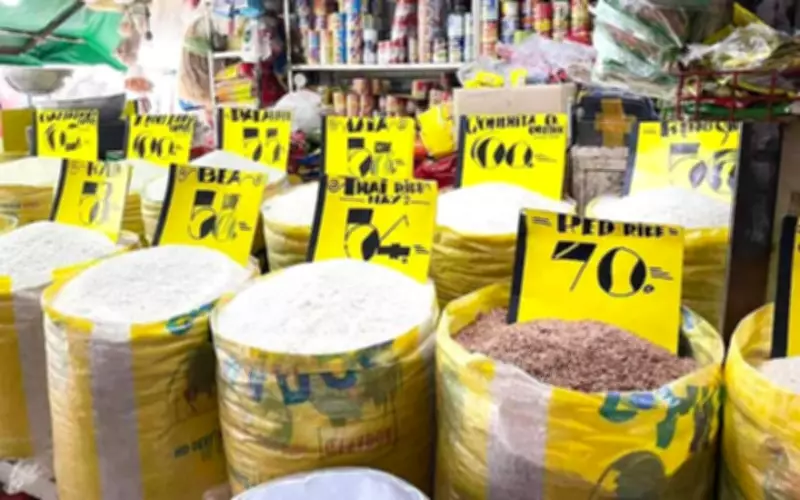
Cebu Rice Prices Reach Record Highs Amid Supply Constraints
Rice prices in Cebu have escalated to record levels, with certain varieties now selling for over P70 per kilogram. This surge is attributed to limited supply and increasing costs, which are significantly affecting both vendors and consumers across the region.
Factors Driving the Price Increase
Erwin Gok-ong, Vice President of the Grains Retailers Confederation of the Philippines (Grecon) Cebu City North Chapter, explained that prices have been climbing since last year. The rise began even before tensions in the Middle East raised concerns about potential global fuel price hikes. Gok-ong emphasized that higher oil prices could further inflate rice costs, as fuel expenses impact transportation, production, and distribution throughout the food supply chain.
He stated, "If the price of crude oil and gasoline goes up, the price of rice will definitely rise too – by a huge amount." Additionally, supply remains constrained, with Cebu receiving small allocations and cheaper rice stocks depleted. Wholesalers are releasing rice in a calculated manner, often with delays.

Record Prices and Market Impact
Popular rice varieties have reached unprecedented prices in local markets such as the Carbon Public Market in Cebu City. Lion Ivory rice is selling for P65 per kilo or P3,000 per 50-kilogram sack, while Ganador rice ranges from P67 to P70 per kilo or P3,200 per sack. Some markets report even higher figures, with Lion Ivory at P3,300 and Ganador at P3,600 per sack.
Imported rice offers a cheaper alternative, with "Gwapa" varieties priced between P47 and P49 per kilo. However, Gok-ong noted that Cebu receives limited allocations from the Department of Agriculture (DA). Retailers depend on wholesalers who source supply from distributors in Metro Manila, where rice prices have surged since August 2025.
Gok-ong highlighted, "Excellent rice used to cost around P1,850 per sack. Now in Manila it's already over P3,000, and that doesn't yet include transportation to Cebu."
Data and Regional Trends
DA 7 data reveals that rice prices in the region have risen over the past six months. Premium local rice increased from P52.51 per kilo in August 2025 to P61.60 in early March 2026, while regular milled rice rose from P36.38 to P43 during the same period. Imported rice prices also fluctuated, with premium imported rice climbing from P48.37 per kilo in August to P56.70 in March, and well-milled imported rice rising from P43.88 to P51.57.
Upcoming Harvest and Government Interventions
The upcoming harvest season in major rice-producing areas, such as the Central Plains, may provide some relief. Farmers anticipate a full harvest between the second and third week of March, which could boost supply. However, Gok-ong pointed out that the National Government typically pauses rice importation during harvest seasons to protect local farmers, potentially limiting supply if global oil prices increase.
He also warned that other commodities like sugar, flour, cornstarch, and meat products could become more expensive if global instability prompts countries to stockpile food supplies. A stronger US dollar may further increase import costs for the Philippines, one of the world's largest rice importers.
Vendor and Consumer Struggles
Vendors in markets across Cebu and nearby cities are feeling the impact of rising prices and limited supply. At the Mandaue Public Market, rice seller Nieves Albarquez explained that the price increase stems from shortages of popular brands like Ganador and Lion Ivory.
She said, "Our rice prices have really gone up because the supply is low. Local rice is what's really scarce, and that's why the price is so high." Vendors receive smaller allocations, sometimes only 10 or 20 sacks instead of 50, due to depleted warehouse stocks. Additional expenses such as plastic packaging, sacks, wages, and market fees make it difficult to reduce prices.
Recent calamities, including typhoons and earthquakes, have affected harvests, contributing to higher prices. For example, red rice now sells for P70 per kilo.

Consumer Impact and Government Programs
Consumers report that rising rice prices are straining household budgets. Loreta Jakosalem, a resident of Barangay Mantuyong in Mandaue City, earns about P2,200 weekly from cleaning work and struggles to support her family. She said, "It's very difficult when rice prices go up because you still have to buy food for your family."
Jonna Leyson, a flower vendor at Carbon Public Market, added, "The increase in rice prices really affects our budget. Everyone's expenses are changing."
Amid these challenges, Lapu-Lapu City residents may have access to cheaper rice through the "Bigasan ng Bayan" program under the National Government's Kadiwa ng Pangulo initiative. DA officials met with Mayor Ma. Cynthia 'Cindi' King-Chan to discuss rolling out subsidized rice sales, with the Lapu-Lapu City Public Market as a potential site.
The program, funded by the DA and possibly launching in April, would sell freshly milled rice from the National Food Authority for P20 per kilo. Priority beneficiaries include senior citizens, solo parents, persons with disabilities, and Pantawid Pamilyang Pilipino Program recipients, along with farmers, fisherfolk, transportation drivers, minimum wage earners, and public school staff.
Qualified buyers can purchase 10 kilos per transaction, with a maximum monthly allocation of 30 kilos. First-time buyers must present a valid ID and will receive a QR code for future transactions.
Vendors and consumers hope that increased harvest production and government programs will stabilize stocks and reduce the cost of this staple food amid ongoing supply tightness and price pressures.