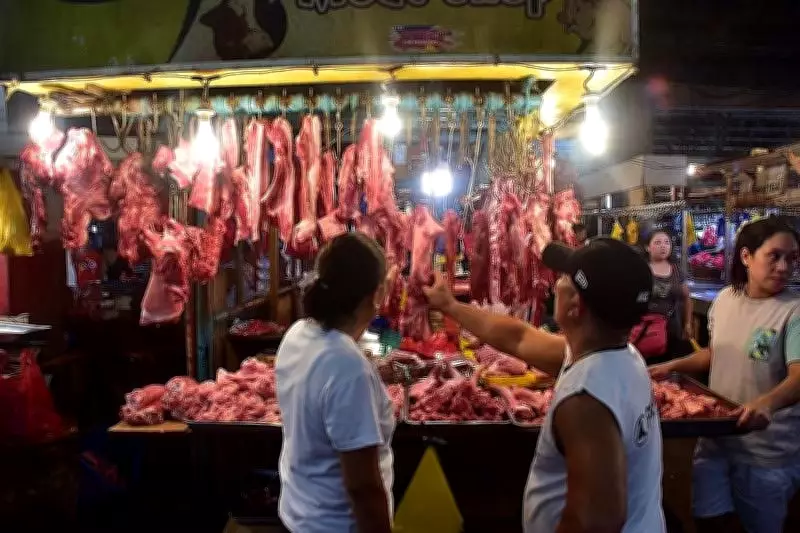
The country's hog producers have urged the government to revoke the increased minimum access volume (MAV) for pork imports, warning that the move could undermine the domestic swine industry's recovery from African Swine Fever (ASF) despite signs of improving local production.
ProPork Statement on EO 116
In a statement, the Pork Producers Federation of the Philippines Inc. (ProPork) said Executive Order No. 116, which raised the pork MAV to 204,210 metric tons (MT) from 54,210 MT for 2026, was "unnecessary and counterproductive."
"The President's decision to issue EO 116, increasing the pork MAV to 204,210 metric tons from 54,210 MT with lower tariffs, shows a disturbing disconnect from the true state of our industry," ProPork president Eric Harina said.

Details of the Executive Order
Signed on May 19, 2026, the order cited persistent supply constraints caused by ASF and elevated pork prices contributing to inflationary pressures. The measure increased pork import allocations by 150,000 MT annually for two years to augment domestic supply and stabilize prices. Under the EO, 30,000 MT will be allocated to processors, while 120,000 MT will go to Food Terminal Inc. for the Kadiwa ng Pangulo program.
However, ProPork disputed the government's assessment that domestic supply remains inadequate, citing preliminary Philippine Statistics Authority (PSA) data that showed signs of recovery in the swine sector.
Hog Production Data
PSA data showed hog production in 2025 reached 1.66 million metric tons liveweight, down 2.7 percent from 1.70 million MT in 2024. In terms of volume, hog production totaled 19.68 million heads, 5.1 percent lower year-on-year. Despite the decline, ProPork said the industry is already recovering from ASF-related disruptions.
"Contrary to PSA data suggesting a decline, the sector is actually recovering from African Swine Fever. Local and imported pork supply is already more than adequate," Harina said.
The PSA report also showed that Bukidnon remained the country's top hog-producing province in 2025 with 144.79 thousand MT, followed by Batangas with 129.65 thousand MT and Cebu with 94.29 thousand MT. At the same time, average farmgate prices for hogs rose 9.1 percent to P199.02 per kilogram in 2025 from P182.46 per kilogram in 2024. Retail prices of fresh pork kasim averaged P357.21 per kilogram, up 8.5 percent from P329.09 per kilogram a year earlier.
Inefficiencies in the Supply Chain
ProPork argued that elevated retail pork prices were driven more by inefficiencies in the supply chain than by supply shortages. "Despite low farmgate prices for local pork and low-cost imports, retail prices remain elevated. This clearly indicates a need to improve our underdeveloped supply and value chain, not merely flood the market with more imports," the group said.
The federation noted that pork imports already rose 15.1 percent in 2025 to 891.14 thousand MT from 774.47 thousand MT in 2024, based on PSA data. The group said repeated import liberalization measures since 2020 have failed to reduce retail pork prices and instead mainly benefited traders and importers.
"Instead of lowering prices, it has primarily benefited traders and importers while killing local producers," ProPork said.
No Consultation
The federation also criticized the administration for allegedly bypassing stakeholder consultations and the MAV Council process before issuing the EO. ProPork urged the government to revoke the increased MAV, institutionalize consultations with hog raisers and cooperatives, and prioritize supply chain modernization over further import liberalization.
"We are not against importation. But flooding our market while our local industry is still on its feet is not fair competition — it is a death sentence for Filipino hog farmers," the federation said.
Other Challenges
In earlier interviews, ProPork vice chairman Rolando Tambago said Cebu hog raisers continue to grapple with elevated transport and feed costs driven by higher global fuel prices linked to geopolitical tensions in the Middle East. Feeds transported from mills to farms, as well as the delivery of live hogs to slaughterhouses and markets, have become more expensive, particularly in Cebu's geographically dispersed production areas, including Bantayan Island.

Despite rising operating costs, producers have kept farmgate prices relatively stable to cushion consumers from sharp price increases, he said. Besides elevated transport costs and high imports, Tambago said another issue the industry is facing is the ongoing negotiations between the Philippines and the European Union to impose zero tariffs on pork and chicken.