Transport Groups Demand Government Action on Fuel Prices Amid Crisis
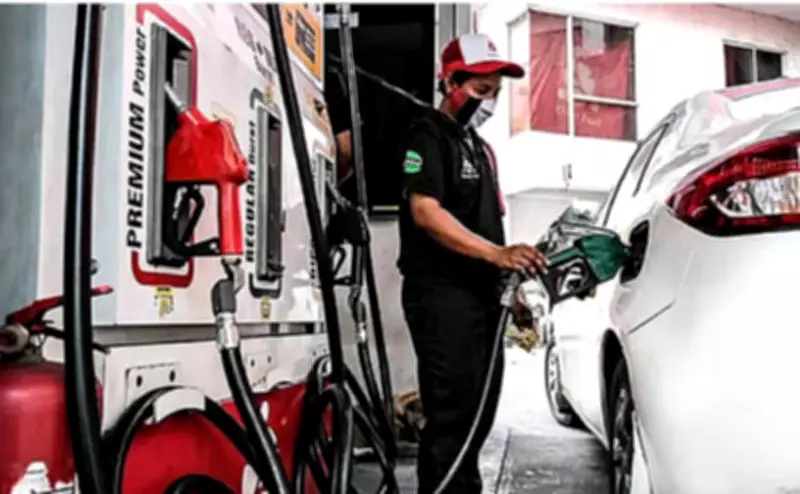
Transport organizations across the Philippines are intensifying their calls for the government to play a more active role in regulating fuel prices, with some advocating for a possible state takeover of gasoline stations. This push comes as private oil firms continue to implement price hikes during a global fuel crisis, exacerbating financial strain on drivers and operators.
Voices from the Transport Sector
Orlando Marquez, national president of the Liga ng Transportasyon at Operators sa Pilipinas Foundation Inc. (LTOP), acknowledged that fuel subsidies provide temporary relief but emphasized the necessity for long-term government support. "That's a big help because you can buy fuel and support the livelihood of new tricycle and PUJ drivers," he stated. Marquez criticized oil companies for exploiting the deregulated system and lamented the lack of consultation with transport groups by the Department of Energy (DOE). "Since the DOE Secretary took office, we haven't been consulted. The oil companies raise prices immediately even with just a two-day increase in global prices," he added.
Jojo Martin, vice president of National Pasang Masda, echoed these concerns, urging stronger government intervention and potential legislative reforms. "This has been discussed for a long time. But the government needs to intervene, pass laws, or have Congress and the Senate amend the law so that the government can run the oil companies again to help the sectors affected today," Martin explained. He argued that government control could stabilize fuel prices, contrasting it with the current system where weekly increases occur with minimal oversight.

Taxi drivers are also feeling the impact. Joms Laviña of the Davao Taxi Drivers Club noted that while subsidies are beneficial, direct fuel support would be more practical. "What we are really pushing for is that the government should really lower the price of gasoline," Laviña said. "It's extremely high—it's really hard to cope. Some, especially those relying on diesel, are really struggling. Taxi drivers who depend on fuel are among the most affected, and some have already stopped operating."
Criticism of the Oil Deregulation Law
The Oil Deregulation Law, or Republic Act No. 8479, was enacted to remove government control over fuel pricing and promote competition. However, critics contend that it has left local prices vulnerable to global market fluctuations. President Ferdinand Marcos Jr. has indicated that all options are being considered, including amending the law or removing value-added tax on fuel imports, to mitigate the immediate effects of rising oil prices linked to Middle East tensions.
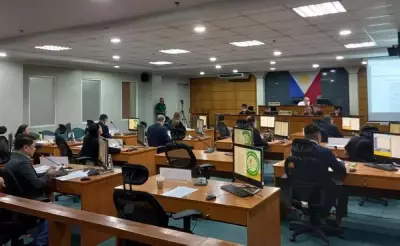
Dumper Party-list Representative Claudine Diana Bautista-Lim highlighted the limitations of the current framework. "There's very little the government can do under the current setup," she said, referencing the constraints of the deregulated oil industry. Lawmakers are reportedly drafting amendments to expand the DOE's authority to intervene during sharp price increases and are exploring measures such as suspending excise taxes on fuel, though this could impact government revenues.
State of National Energy Emergency
In response to the escalating crisis, President Ferdinand Marcos Jr. declared a state of national energy emergency on March 24, 2026. Executive Order No. 110 formalizes this declaration, citing an "imminent danger" to the country's energy supply and stability due to ongoing conflicts in the Middle East. The order authorizes the Unified Package for Livelihoods, Industry, Food, and Transport (Uplift) to address the situation. Prior to this declaration, various groups had urged the President to utilize emergency powers under the oil deregulation law, including a temporary government takeover of the industry to stabilize fuel prices.

Proposed Government Takeover of Oil Distribution
Discussions about a potential government takeover of oil distribution have resurfaced following a proposal from businessman Ramon Ang to sell Petron Corporation back to the state. Ang, chairman and CEO of San Miguel Corporation, positioned this move as a strategy to enhance energy security during the crisis. Lawmakers are currently studying the feasibility of renationalizing the country's sole remaining oil refinery to gain greater control over domestic fuel prices and supply chains.
Ang, who initially raised the idea during congressional hearings in 2021, confirmed that the option for a state buyout remains open. He expressed San Miguel's willingness to negotiate terms aligned with the government's strategic interests, suggesting that public ownership could better shield the economy from global market shocks. Petron was originally established under the Philippine National Oil Company during the 1973 oil embargo to protect against supply disruptions. After changes in ownership, including a period under Saudi Arabian Oil Company and the Ashmore Group, San Miguel acquired control in 2009. Today, the Philippine National Oil Company operates under the DOE, focusing on exploration and development, while Petron functions as a private entity.