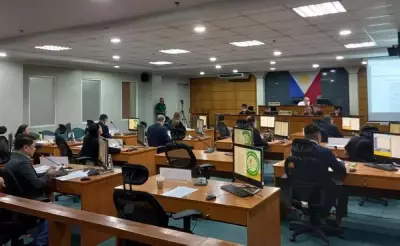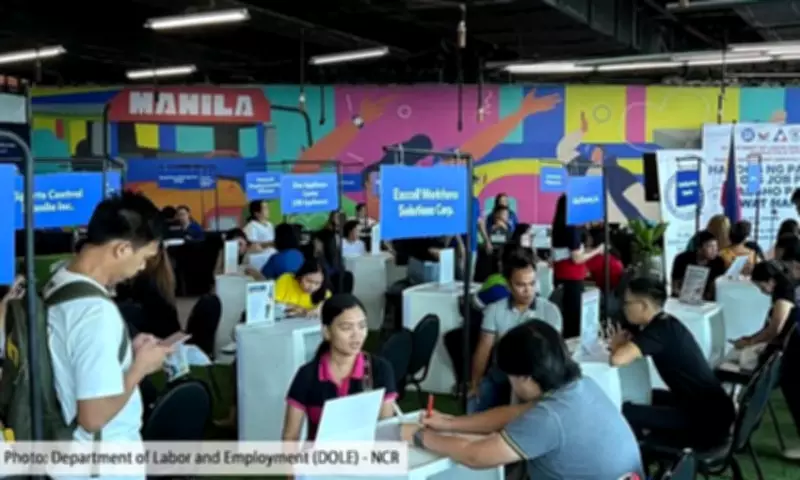
During a webinar hosted by the Philippine Institute for Development Studies, researchers and labor experts said AI adoption is accelerating across industries, creating new jobs and boosting productivity while also exposing gaps in digital infrastructure, workforce training and institutional readiness.
Changing Labor Market
“The labor market is changing in three fundamental ways,” said Alexis Antoniades during his presentation on AI and the future of work. He cited growing skills mismatches, declining demand for repetitive tasks and disruptions to the traditional career ladder.
Drawing from an analysis of more than 1.5 billion job vacancies in the United States and China, Antoniades said occupations are increasingly converging around digital competencies such as programming, data analysis and data visualization, while employers shift from degree-based hiring toward skills-based recruitment.

He warned that AI could weaken the traditional pipeline through which workers gain experience and advance professionally, particularly in fields such as law and finance where entry-level roles are often used for training.
“How are we going to end up with senior lawyers or experienced finance professionals if we are not hiring entry-levels?” Antoniades said.
He added that productivity gains from AI may increasingly favor companies and individuals with access to advanced technologies, potentially widening income inequality and leaving workers struggling to keep pace with rapid technological change.
LGU Readiness
Presenting a study on local government readiness for AI adoption, Francis Mark Quimba said the Philippine AI market is projected to expand from $772 million in 2024 to $3.4 billion by 2030, but many local government units (LGUs) remain constrained by weak internet connectivity, limited technical capacity and inadequate digital investment.
The study found that most LGUs demonstrate only low to moderate readiness for AI adoption, with gaps in ICT staffing, governance systems, digital infrastructure and long-term planning.
“AI policy adoption in Asean has lagged significantly behind the Organization for Economic Co-operation and Development countries, and within the Philippines, internet access is also a concern,” Quimba said.
He said the readiness gap is also geographic, with the National Capital Region outperforming several regions that continue to face connectivity and institutional limitations.
“The intent is there, but the implementation and budget allocation are not,” he added, referring to the gap between digitalization plans and actual spending on AI capabilities.
Affected Sectors
Separate research presented by the Department of Labor and Employment showed AI adoption is becoming more common in the Information Technology and Business Process Management, manufacturing, banking and finance sectors, where companies are using the technology to automate repetitive tasks, improve fraud detection and streamline recruitment and customer service operations.
However, workers surveyed by the agency expressed concerns over job security, mental health pressures and heavier workloads as employees spend more time reviewing and verifying AI-generated outputs.
“Because of AI adoption, workers feel their workload has increased,” said Chelsea Nicole Pineda.
Although only six percent of surveyed firms reported workforce reductions linked to AI adoption, fears of displacement remain widespread in automation-prone industries, the study found.
At the same time, demand is rising for AI-related roles such as data analysts, machine learning specialists, AI engineers and prompt engineers, highlighting the need for reskilling and workforce training programs.
Call for Investment
Experts said policymakers, schools and businesses need to invest more aggressively in digital infrastructure, skills development and human-centered AI systems to prevent workers from being left behind.
Antoniades said soft skills such as communication, creativity and critical thinking may become increasingly valuable as AI lowers technical barriers.
“The advantage will belong to those who can think and use AI to build,” he said.