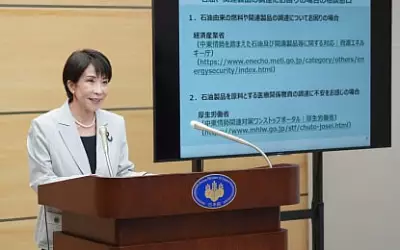
The administration of President Ferdinand Marcos Jr. has issued a public assurance that the situation in the Gulf of Hormuz is "under control" despite escalating tensions in this critical maritime chokepoint. However, for ordinary Cebuanos, this official declaration offers little comfort as they grapple with the tangible economic fallout manifesting in their daily expenses.
The Gulf's Global Ripple Effect
The Gulf of Hormuz, a narrow strategic waterway, serves as a vital artery for global oil shipments. Any disruption there sends immediate shockwaves through international markets, directly impacting what Filipinos pay for transportation, meals, and basic commodities like fish. While government spokespeople present a calm front, stating that shipments continue and routes remain open, the reality on the ground tells a different story.
Policy Promises Versus Market Realities
On paper, mechanisms for relief exist. Republic Act 12316, legislation designed to suspend fuel excise taxes during such crises, stands ready. Yet, its effectiveness is hamstrung by a critical delay: the implementing rules and regulations (IRR) have not been finalized. This bureaucratic gap leaves the law in legislative limbo—present in theory but absent in practical application.

Foreign Affairs Secretary Enrique Manalo has highlighted diplomatic "success," describing negotiations with Iranian officials as securing a "safe pass" for Philippine-bound oil tankers. While this ensures physical supply chains remain unbroken, it does not translate to price stability. The market, driven by perception and tension rather than diplomatic communiqués, reacts with swift price hikes that outpace any policy response.
The Cebuano Ground Truth
In Cebu City, the abstract concept of "market reactions" becomes a concrete financial strain. Jeepney drivers along Colon Street recalculate their daily boundaries, uncertain if passenger fares will cover rising fuel costs. Before dawn breaks at Pasil Fish Market, vendors adjust their prices upward, preemptively citing gasoline expenses. Carenderias in neighborhoods like Mabolo subtly reduce portion sizes or stretch dishes thinner, a quiet adjustment hoping regular patrons won't notice.
No widespread panic has emerged, but a universal, quiet recalibration of daily life is underway. Household budgets are stretched, meal plans are adjusted, and non-essential spending is postponed. The community carries on not from a position of stability, but from necessity—there is simply no alternative.
Questioning the Scope of Relief
The proposed suspension of fuel excise taxes, once implemented, would provide some relief. However, advocates and affected citizens question why the response stops there. With the situation clearly volatile, calls are growing for more comprehensive measures, such as additionally suspending the 12 percent Value-Added Tax (VAT) on fuel, to provide more substantial buffer against price shocks.
For the average Cebuano consumer, the technical distinctions between excise taxes and VAT are irrelevant. What matters is the final price—the "presyo"—at the pump and the market. And by that measure, the situation is far from "okay." The government narrative speaks of secured supply and controlled situations, but the lived experience is one of increasing cost pressure and quiet hardship.
The disconnect is stark: officials declare stability from briefing rooms, while in the kitchens, markets, and public transport of Cebu, a different, more difficult truth is being lived daily. The assurance that "we are okay" rings hollow where it matters most—in the wallets and well-being of ordinary Filipinos.