
Cebu BRT's First Phase Targets March 2026 Opening as Project Faces Critical Challenges
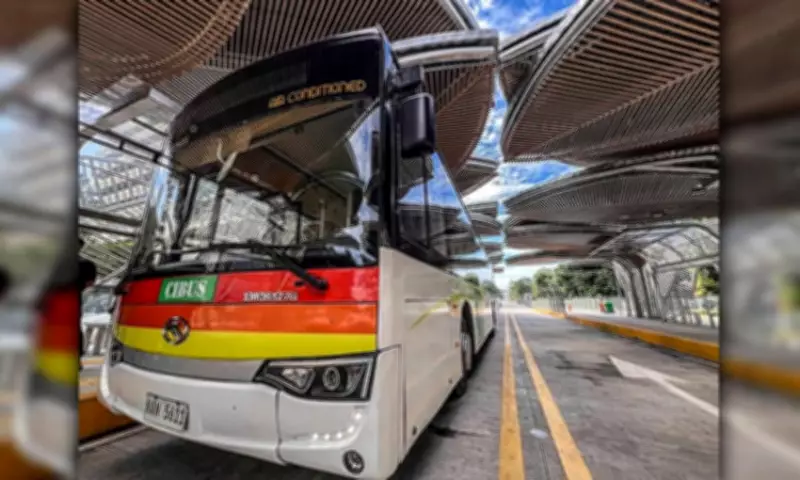
The Department of Transportation (DOTr) has announced a target date of March 2026 for the inaugural launch of the Cebu Bus Rapid Transit (CBRT), marking a significant milestone for this long-awaited infrastructure initiative. However, despite nearing completion of its initial segment, the billion-peso project confronts substantial obstacles that could impede its full realization, including financial setbacks and complex land negotiations.
Package 1 Nears Operational Status with High Passenger Expectations
Transportation Secretary Giovanni Lopez revealed on Friday, February 20, that "Package 1" of the CBRT is scheduled to open next month. This initial 2.38-kilometer route will connect the Cebu South Bus Terminal (CSBT) to Fuente Osmeña, providing a crucial transit link in the city's core. Cebu City Councilor Winston Pepito confirmed in a Monday, February 23 interview that this phase is approximately 97 percent complete, with daily ridership projections estimating service for 34,000 passengers once operational.
Funding Withdrawal and Shift to Public-Private Partnerships
Progress on the first phase is overshadowed by a major financial crisis. The World Bank has withdrawn funding for Packages 2 and 3 due to severe project delays, jeopardizing the continuation of the CBRT. With the original 2014 loan set to expire on September 30, the National Government is now exploring Public-Private Partnerships (PPP) as an alternative financing model. This potential shift could involve private companies taking over operations and maintenance of future bus lines, though it introduces uncertainty into the project's timeline and management.

Land Acquisition and Traffic Management Complications
Even if funding is secured, expanding the CBRT into areas like Escario St., V. Rama Ave., and Talamban presents formidable challenges. Acquiring expensive land from property owners to widen roads is a critical hurdle, with Councilor Pepito, who leads the BRT land acquisition committee, warning that negotiations are intricate and time-consuming. Additionally, traffic management remains a pressing concern:
- Faster Bus Lanes: Preliminary tests indicated that dedicated bus lanes allow for swift transit, improving efficiency for public transport users.
- Clogged Side Streets: However, these same tests resulted in heavy congestion for regular vehicles in outer lanes, exacerbating traffic issues in adjacent areas.
- Uncertain Solutions: Officials are considering measures such as "park and go" schemes and enhanced sidewalk infrastructure to mitigate congestion, but definitive plans are still under development.
Public Skepticism and Financial Accountability
Public frustration is mounting over the CBRT, which was approved over a decade ago, with many residents questioning the allocation of P28.78 billion for a project that has yet to fully materialize. To date, P900 million has been expended on Package 1 alone, without any buses currently in operation. Councilor Pepito acknowledged this skepticism but argued that halting the project would be counterproductive, as abandoning it would render the billions already invested a total loss, undermining public trust and infrastructure goals.
Future Prospects and Systemic Implications
The overarching aim of the CBRT is to integrate Cebu's busiest districts, including the South Road Properties and IT Park, into a cohesive transport network. Nevertheless, without resolving the dual crises of land acquisition and funding, the "backbone" of Cebu's new transportation system may struggle to advance beyond its initial phase, leaving its long-term viability in question.