

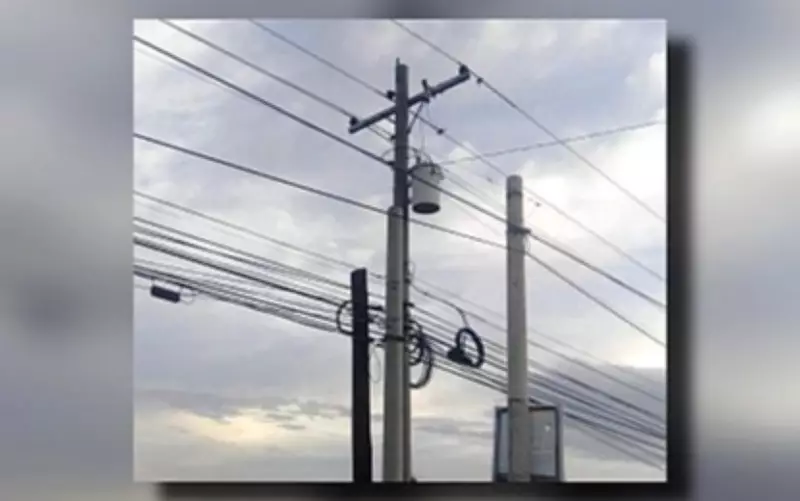
A dangerously narrow margin of spare electricity is leaving the entire Visayas region vulnerable to sudden, rolling blackouts. The regional power system has lost a significant share of its generating capacity because of unexpected mechanical failures. For residents and businesses, this means the stability of their daily power supply is balanced on a razor-thin buffer. The current crisis is not a temporary transmission glitch, but a deep deficit in actual power production that will take months of specialized mechanical repairs to resolve.
Inside the alert system
Neil Martin Modina, assistant vice president and head of Visayas System Operations of the National Grid Corp. of the Philippines (NGCP), said the current operating margin remains dangerously thin following a series of forced outages and derated operations involving several power plants across the Visayas.
“Today, our forecast for the evening peak is yellow alert. We have an operating margin projected at about 57 megawatts. So the operating margin is very slim,” Modina said during a media forum.

Grid operators issue a yellow alert when the total amount of available spare electricity drops below the required safety cushion needed to handle unexpected emergencies. It indicates that while power is currently flowing to homes and offices, the system lacks the backup capacity to absorb any sudden strain.
If reserves drop any further, the grid shifts into a red alert. This critical designation forces grid managers to implement manual load dropping — a technical term for rotational brownouts — to intentionally cut power to specific areas. This drastic measure is used as a final defense mechanism to keep the entire interconnected network from suffering a total, uncontrollable blackout.
The breakdown of local generation
NGCP said the problem is not with transmission lines, but with insufficient power generation.
“NGCP is just the highway. We transmit electricity, but if there is not enough supply entering the highway, then we cannot deliver power to consumers,” Modina said.
The immediate cause of the power scarcity is the loss of roughly 845 megawatts of electricity from the regional supply pool. This massive shortage is driven by forced outages, which occur when a power plant suffers an unpredicted equipment failure and must shut down immediately to prevent catastrophic internal damage.
The crisis is highly localized. Among the largest unavailable facilities are the two generating units of Therma Visayas Inc. (TVI) in Cebu, along with the Panay Energy Development Corp. (PEDC) Unit 3 facility in Panay. TVI’s two units each supply about 169 megawatts, while PEDC Unit 3 contributes around 150 megawatts. Combined with other smaller outages and derated facilities, the unavailable supply now totals about 845 megawatts across the Visayas. Modina said TVI’s outage was traced to high bearing vibration, which affected heavy rotating equipment and forced the units offline. Another key component failure involving a vital air-circulation fan system has kept the Panay facility from operating.
NGCP said these outages were not scheduled shutdowns.
The long timeline to safe reserves
Fixing these heavy industrial facilities is a slow process that prevents a quick resolution to the power shortage. Engineering timelines reveal that consumers will have to endure a vulnerable power grid throughout the peak high-heat season.
The Panay-based plant is not expected to return to service until early July. The restoration of Cebu’s generating units is expected to take longer, with one major Cebu unit scheduled to return online in late August, followed closely by the second unit at the end of that same month. Until these facilities are fully restored, the system cannot reach the ideal 300-megawatt reserve margin required to guarantee stable, uninterrupted operations.
The Department of Energy (DOE) prohibits routine maintenance shutdowns during summer months precisely to avoid supply shortages during peak demand season.
“What happened were forced outages,” Modina said.

Cebu’s structural energy deficit
The ongoing shortage highlights a long-term structural vulnerability: the island consumes far more electricity than its local plants can produce. During peak periods of high demand, consumption requires over 1,128 megawatts, which represents nearly half of the entire power usage of the Visayas region of around 2,600 megawatts.
Because local production cannot meet demand, Cebu relies heavily on imported electricity from neighboring islands. A subsea transmission network pulls roughly 450 megawatts daily from Mindanao and another 176 megawatts from Luzon. The arrangement leaves Cebu vulnerable if neighboring grids experience shortages or if subsea transmission lines are disrupted.
How power rationing hits home
When power reserves hit critical lows, grid managers give local distribution utilities about 30 minutes of warning before rolling blackouts must begin. Outages are distributed proportionally based on how much power a utility normally draws from the system.
Because Visayan Electric Company accounts for more than a quarter of the total demand in the region, it is forced to absorb a matching percentage of the blackouts, cutting power to local neighborhoods in rotating shifts. Some relief comes from commercial establishments that run their own generators under conservation programs.
While these efforts save thousands of nearby homes from losing power, the entire region remains entirely dependent on an unstable system until the major power plants can finally complete their repairs.
NGCP is expanding key transmission links across the Visayas, including the Luzon-Visayas interconnection and Leyte-Cebu cable system, but said new power plants are still needed to prevent future shortages.
What happens next
Addressing this generation deficit, NGCP said new solar, coal and waste-to-energy projects are being planned for Cebu and the Visayas, while reserve margins are expected to improve as major power plants gradually resume operations in the coming months. With long-term solutions still months away, grid operators are urging consumers to conserve electricity during peak hours. Grid operators have identified a critical daily window between 2 p.m. and 6:30 p.m. where the system faces its most intense strain.