
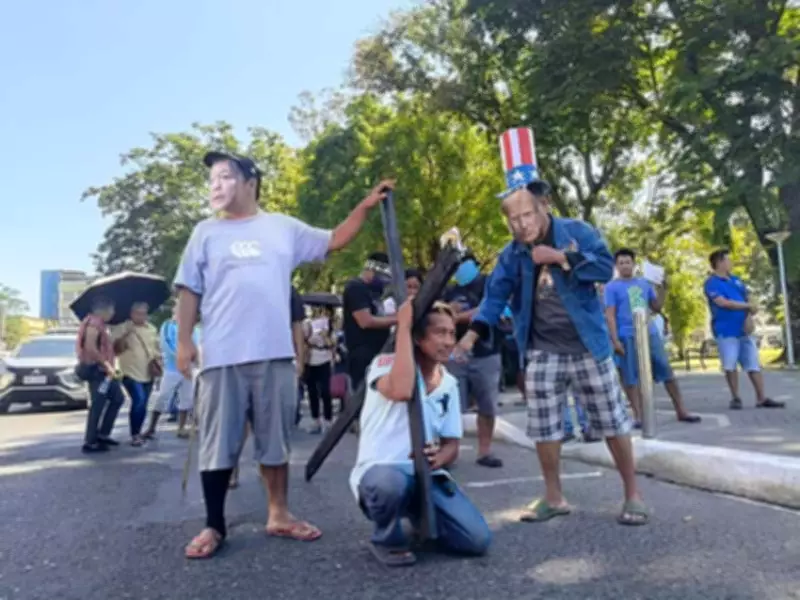
In a dramatic display of public discontent, drivers and commuters in Iloilo City staged a "Kalbaryo sang Pumuluyo" protest on Holy Tuesday, March 31, 2026. The event, which translates to "People's Calvary," was organized to oppose escalating oil prices and criticize perceived government inaction on fuel-related issues. Protesters gathered at multiple fuel stations in Barangay Jaro, including prominent outlets like Petron, Caltex, and Shell, to highlight the financial strain on ordinary Filipinos.
Symbolic Actions and Demands
The protest featured powerful symbolic gestures to illustrate the burden of rising fuel costs. One jeepney driver carried a wooden black cross while being whipped by individuals portraying President Ferdinand Marcos Jr. and United States President Donald Trump. This act was intended to symbolize the public's suffering under current policies. Additionally, participants wore black paper chains to depict the hardship inflicted on the transport sector and working class by increasing fuel expenses.
Calls for Policy Reforms
During the culmination at Jaro Plaza, Elmer Forro, secretary-general of Bagong Alyansang Makabayan (Bayan), reiterated the group's demands. He emphasized the urgent need to "scrap excise tax and value-added tax on fuel" to alleviate the financial pressure on drivers and commuters. A jeepney driver from the Timawa route echoed these sentiments, urging authorities to take immediate action and halt what he described as "US imperialist attacks on resource-rich nations."

Protesters also recited the seven last words of Jesus Christ, drawing parallels between the religious observance and the country's socio-economic challenges. They argued that the continuous surge in fuel prices has exacerbated daily transportation costs and reduced income for many, necessitating swift government intervention.
International Context and Concerns
The demonstration included calls to end the United States' war of aggression against Iran, which organizers claimed has persisted for over a month and threatens global oil supply stability. Protesters asserted that this conflict contributes to fuel price volatility, disproportionately affecting oil-importing countries like the Philippines. They warned that without decisive policy reforms, including stronger government regulation of oil prices, the livelihoods of drivers and the daily expenses of commuters will continue to suffer.
The "Kalbaryo sang Pumuluyo" protest underscored the pressing concerns of the transport sector and amplified calls for government measures to mitigate the impact of oil price increases on the Filipino public.