
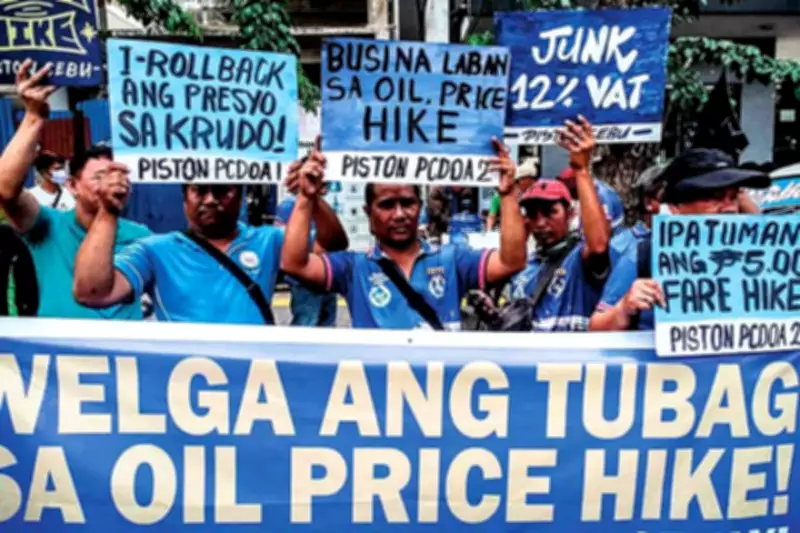
In a dramatic escalation of labor unrest, members of Piston Cebu launched their second strike within a single week on Friday, March 27, 2026, intensifying their protest against skyrocketing fuel prices and stagnant fare rates. This action, part of a coordinated national movement, brought key transportation routes across Metro Cebu to a near-standstill, with organizers claiming up to 90 percent paralysis in certain areas, highlighting the severe financial strain on jeepney drivers.
Protest Demands and Financial Struggles
Drivers, brandishing signs that called for an immediate rollback of oil price hikes and the abolition of the 12 percent value-added tax, voiced their desperation as rising operational costs continue to erode their already meager earnings. The strike, which lasted from 7 a.m. to 1 p.m., was a direct response to what Piston Cebu describes as an outdated National Government fuel subsidy, failing to address the economic realities faced by transport workers.
Conflicting Reports on Strike Impact
The success of the protest, however, sparked conflicting narratives between Piston Cebu and local authorities. Piston Cebu reported a significant 60 to 70 percent paralysis across major routes, with peak disruption reaching 90 percent in Guadalupe, Cebu City. In stark contrast, the Cebu City Transportation Office asserted that there was no notable drop in public utility vehicle volume during the morning rush hour, suggesting minimal effect on overall traffic flow.

Commuter Experiences Vary Widely
This disparity in data was mirrored by the uneven experiences of commuters throughout Metro Cebu. In Cebu City, passengers endured long queues and extended travel times, with one individual noting that his usual 80-minute journey stretched to two hours. Conversely, in the neighboring city of Mandaue, many commuters remained largely unaffected, thanks to the City Government's Libreng Sakay program, which provided free rides to mitigate the strike's impact.
Underlying Crisis and Future Warnings
Regardless of the exact extent of Friday's disruptions, the underlying economic crisis remains unresolved. Piston Cebu president Greg Perez issued a stark warning, stating that more drivers may be forced to quit if their take-home income continues to vanish after grueling 16-hour shifts. The group has outlined a series of demands to address this dire situation, including:
- Removal of fuel taxes to reduce operational burdens
- Implementation of a wage increase for drivers
- Adjustment of fare rates to reflect current economic conditions
- Abolition of the oil deregulation law to stabilize fuel prices
These measures are seen as essential for the survival of transport workers in the current challenging economic climate, with the strike serving as a powerful reminder of the urgent need for policy reforms.