Metro Cebu Engulfed in Hazardous Haze as Air Quality Index Skyrockets to 199
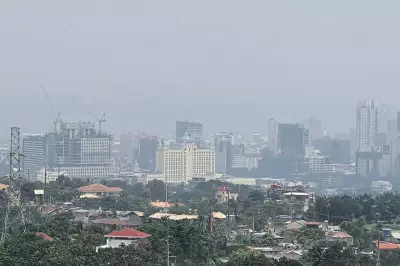
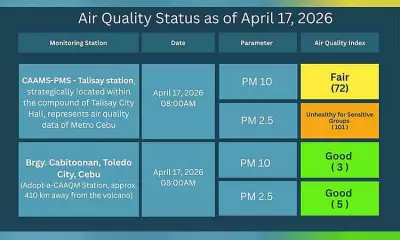
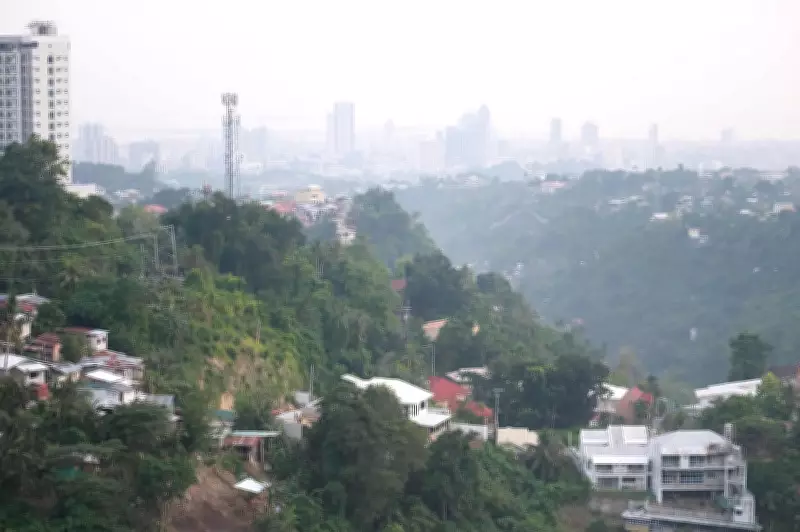
A photograph captured on November 14, 2024, depicts Metro Cebu shrouded in a dense blanket of haze, a visual testament to the region's escalating air quality crisis. Without wind or rain to disperse pollutants, a zero-dispersion effect has taken hold, trapping emissions from vehicles, road dust, and industrial activities near the ground. Data from the Talisay City monitoring station reveals a dramatic spike in the Air Quality Index, soaring from 112 on Saturday, April 18, 2026, to a hazardous 199 by 8 a.m. on Sunday, April 19. This alarming increase indicates a significant rise in fine particulate matter (PM2.5) levels since Friday, April 17.
The Mechanics of Stagnant Air and Pollution Accumulation
Severe pollution episodes in Central Visayas underscore the vulnerabilities of this growing metropolis, demonstrating how extreme heat and localized emissions combine to create persistent public health hazards. When the Air Quality Index in Metro Cebu nearly doubles within days, climbing from moderate levels to 199, the air becomes hazardous for the entire population. The Environmental Management Bureau 7 identifies fine particulate matter, specifically PM2.5, as the primary driver of these sudden deteriorations. Such spikes are directly linked to high-pressure weather systems that accompany extreme heat. During the dry season, with actual temperatures around 31 degrees Celsius and heat indices reaching 37 degrees Celsius, stagnant air settles over the region.
Without wind or rain to clear the atmosphere, the zero-dispersion effect occurs, trapping regular emissions from vehicles, road dust, and industrial activity close to the ground. Localized incidents quickly exacerbate this baseline pollution. Grass fires in areas like the South Road Properties and residential blazes, such as those in Barangay Pahina Central, release sudden concentrations of smoke that the stagnant atmosphere cannot absorb or disperse.

Why This Air Quality Crisis Matters for Public Health
An Air Quality Index approaching 200 signals a shift from isolated health concerns to a widespread public health threat. Understanding the distinction between particulate matter types is crucial to grasping the danger. Coarse particles, known as PM10, primarily irritate the nose and throat. In contrast, fine particles, or PM2.5, measure 2.5 micrometers or smaller and pose a far greater risk. These microscopic pollutants penetrate deep into the lungs and enter the bloodstream, leading to severe health impacts.
Under these hazardous conditions, healthy individuals often experience symptoms such as throat irritation, coughing, and shortness of breath. Meanwhile, vulnerable groups including children, the elderly, pregnant women, and those with cardiovascular or respiratory diseases face severe complications. Health authorities mandate strict protective measures during these episodes. Residents are advised to remain indoors with doors and windows sealed, using the recirculate function on air conditioning units. For those required to be outside, standard cloth or surgical masks are inadequate; well-fitted N95 or KN95 respirators are necessary to effectively block fine particulate matter.
The Bigger Picture: Systemic Challenges in Urban Development
Metro Cebu's struggle with air quality illustrates a systemic challenge facing rapidly developing urban centers. The convergence of heavy vehicular traffic, industrial expansion, and urban sprawl creates a high baseline of emissions. When paired with seasonal weather patterns that bring longer dry spells and intense heat waves, the city becomes highly susceptible to atmospheric trapping, exacerbating pollution levels.
This cyclical problem highlights the limitations of treating air pollution solely as an isolated environmental issue. It is intrinsically linked to public health, urban planning, and economic stability. Prolonged haze episodes disrupt daily commerce, limit outdoor labor, and place immense strain on local healthcare facilities, underscoring the need for comprehensive solutions.

What to Watch: Future Measures and Long-Term Solutions
Environmental regulators and public health officials face the ongoing challenge of refining predictive models to anticipate high-pressure systems and issue warnings before the Air Quality Index reaches critical levels. Long-term solutions demand a rigorous examination of urban mobility and emission regulations. Observers should monitor whether local governments implement stricter controls on open burning, introduce low-emission zones, or invest in mass transit infrastructure to reduce vehicular output. Until structural changes effectively reduce the daily volume of urban pollutants, the metropolis remains reliant on shifting winds to clear its skies, emphasizing the urgency for proactive and sustainable interventions.