
Cebu CSR Convention Emphasizes Partnerships for Climate Action and Disaster Resilience
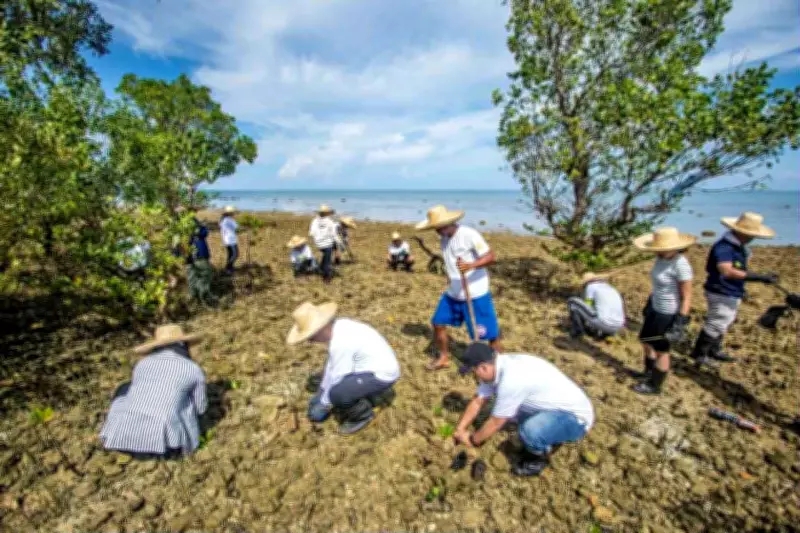
In a significant move toward environmental sustainability, the Cebu Landmasters Foundation, in collaboration with local communities, is actively growing and maintaining approximately 98,000 mangroves across various sites in Cebu as of December 2025. This initiative not only supports climate mitigation efforts by sequestering an estimated 240 tons of carbon per hectare but also provides economic benefits to 199 fishermen involved in planting and upkeep.
Key Themes of Corporate Social Responsibility Discussed
These efforts were highlighted during a two-day Corporate Social Responsibility (CSR) Convention organized by the League of Corporate Foundations (LCF) and Cebu Landmasters Foundation on February 4 and 5, 2026, at Maayo Hotel in Mandaue City, Cebu. The event, themed "Adapt. Align. Accelerate." to mark LCF's 30th anniversary, aimed to address practical strategies for disaster risk reduction following recent typhoons and earthquakes in Visayas and Mindanao.
Speakers from corporate foundations, businesses, local government units, and government offices stressed the importance of collaboration and community partnerships to ensure program sustainability, transparency, and accountability. On the second day, experts emphasized that data-driven approaches, science, and technology are crucial for effective disaster response, with a focus on clear partnership roles.

Insights from Industry Leaders
In his keynote address, Antonio G. Lambino II, president of Ayala Foundation Inc., underscored that CSR's core is "responsibility for one another," urging participants to move beyond episodic actions and embrace systemic change. He outlined that adapting involves acknowledging current challenges like climate change and inequality, aligning requires shared community partnerships and impact metrics, and accelerating means proactive investment and scaling successful initiatives.
Dr. Bernadette Velasco, director of the Health Emergency Management Bureau, highlighted the complementary strengths of private organizations, such as speed, innovation, and community trust, while advocating for empowered communities in disaster mitigation. Mandaue City Mayor Jonkie Ouano and other speakers echoed the need for multi-sector partnerships, with Atty. Jose Maria Ochave of Unilab Foundation Inc. emphasizing contributions and good governance in relief efforts.
Addressing New Realities in Disaster Management
The convention addressed the complex nature of modern disasters, with Silvestre Barrameda of the National Resiliency Council introducing the concept of "risk ownership," where communities develop their own responses. Discussions also covered resilience investments, such as upgrading infrastructure to withstand shocks, and the role of data in guiding decisions, as presented by Dr. Emma Porio and engineer Dexter Lo.
Foundations and Governance Standards
A session differentiated corporate foundations, which focus on long-term social investments and ESG goals, from family foundations driven by philanthropy. Speakers like Jeffrey Tarayao of One Meralco Foundation Inc. noted advantages like innovation without commercial risks, while Sebastian Quiniones of Pilipinas Shell Foundation Inc. emphasized accountability through foundations.
Felix Tonog of the Philippine Council for NGO Certification (PCNC) discussed accreditation processes that enhance credibility and governance standards, stating that "good intentions are not enough" without competence and accountability.
Launch of CSR Recognition Awards
The convention also launched the 3rd CSR Medal of Recognition, open to non-LCF members, to honor impactful projects in areas like arts, education, and disaster resilience. Entries are due by April 13, 2026, aiming to inspire further corporate citizenship.
This gathering in Cebu, where residents still recover from recent natural disasters, underscored the critical role of partnerships in driving climate action and building resilient communities for a sustainable future.