

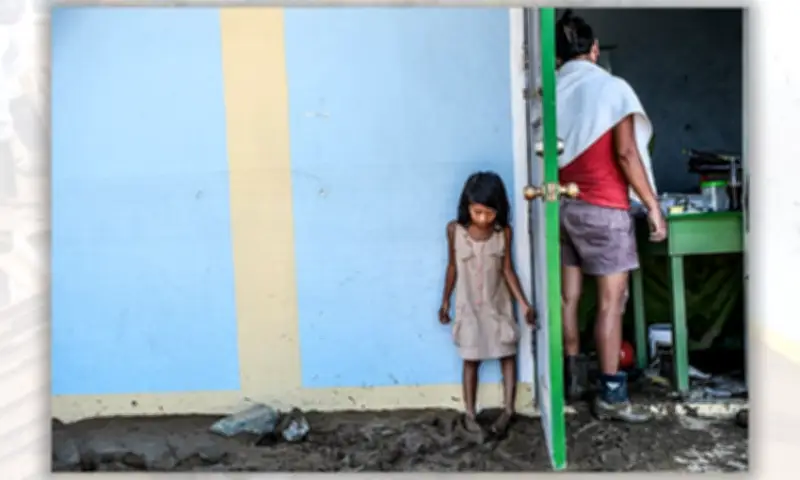
The National Nutrition Council-Davao Region (NNC-Davao) announced a modest improvement in child nutrition indicators, with stunting, underweight, and obesity rates all declining in 2025 compared to the previous year.
Key declines in malnutrition rates
Alona E. Teo, nutrition officer of NNC-Davao, reported that stunting decreased to 5.1 percent in 2025 from 5.8 percent in 2024. Underweight dropped to 2.6 percent from 2.9 percent, while obesity declined to 1.4 percent from 1.5 percent. Wasting remained unchanged at 0.7 percent over the same period.
Prevention strategy focused on first 1,000 days
Teo attributed the reduction to an aggressive campaign centered on the first 1,000 days of a child's life, promoting breastfeeding and discouraging formula use. She emphasized prevention over curative care. “Ang ating strategy as nandoon sa prevention, hindi po tayo sa curative but more on the prevention. So it's the first 1,000 days po (Our strategy focuses on prevention. We are not concentrating on curative care, but rather on prevention, especially during the first 1,000 days of life),” she said during the Kapehan sa Dabaw on July 6, 2026, at SM City Davao.

The NNC is also strengthening local government policies by encouraging investments in nutrition programs and community gardens, such as Gulayan sa Paaralan and barangay gardens, to improve food options for children.
Municipalities with highest malnutrition rates
NNC data identified the top five municipalities with the highest stunting and severe stunting rates: Sarangani at 24.21 percent, Jose Abad Santos (JAS) at 21.49 percent, Laak at 15.22 percent, Talaingod at 14.28 percent, and Don Marcelino at 13.76 percent.
For underweight and severe underweight, the highest rates were in Sarangani (14.45 percent), Jose Abad Santos (9.71 percent), Talaingod (8.94 percent), Don Marcelino (7.94 percent), and Padada (6.09 percent).
Overweight and obesity rates were highest in Sarangani (4.34 percent), followed by Padada (3.92 percent), Jose Abad Santos (3.24 percent), Hagonoy (3.05 percent), and Manay (2.91 percent).
Wasting and severe wasting were most prevalent in Jose Abad Santos (6.36 percent), Sarangani (6.05 percent), Don Marcelino (2.28 percent), Talaingod (2.25 percent), and Padada (2.07 percent).
Challenges in Geographically Isolated Areas
Teo noted that most municipalities with elevated malnutrition rates are in Davao Occidental or classified as Geographically Isolated and Disadvantaged Areas (GIDAs). She acknowledged that limited access to government services contributes to the problem. The NNC is working to reach these communities through regular visits and continuous engagement with local government units.
“Nagsusumikap po talaga tayo na parati-parati natin silang binibisita and have continuous engagement with the local government unit para mas magabay natin, mabigyan ng guidance kung paano po nila ma-strengthen yung implementation ng first 1,000 days,” she said. (We really strive hard to visit them regularly and maintain continuous engagement with the local government units so that we can provide better guidance on how they can strengthen the implementation of the First 1,000 Days program.)
Nutrition Month celebration
July is Nutrition Month in the Philippines, as declared by Presidential Decree No. 491 of 1974, with the NNC leading nationwide campaigns to address malnutrition and promote positive behavior change. This year's theme is “Nutrisyon at Kalikasan, Ating Pangalagaan!”, emphasizing the link between nutrition and environmental sustainability to ensure food resilience. The month-long observance aims to integrate human nutrition with environmental stewardship.