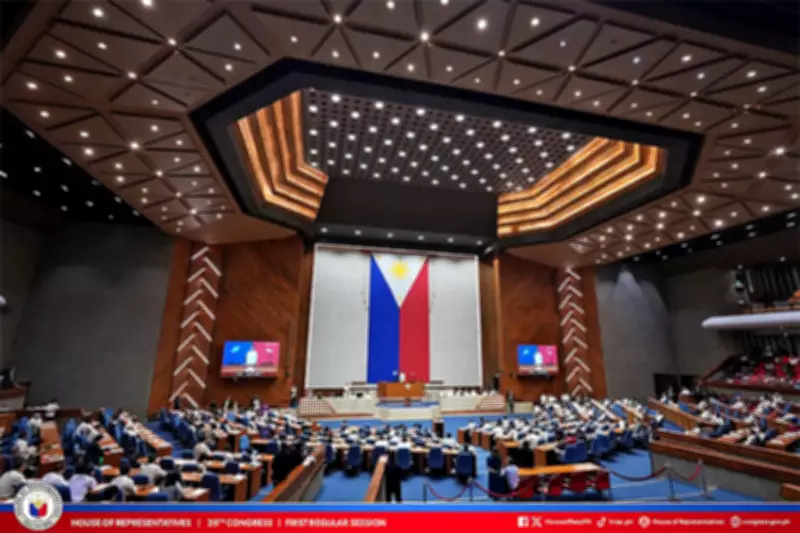
House Justice Committee Dismisses Impeachment Complaints Against President Marcos
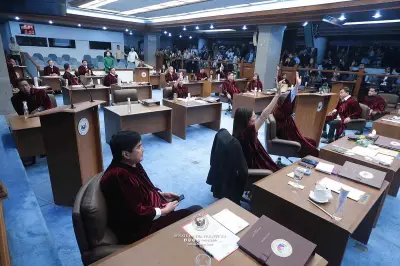
The House Committee on Justice has officially declared two separate impeachment complaints filed against President Ferdinand Marcos Jr. as insufficient in substance. This decision follows a rigorous three-day discussion and voting process by the panel, marking a significant development in the ongoing political scrutiny of the administration.
Voting Outcomes and Allegations
After extensive deliberations, the committee voted on the two complaints with clear majorities. The impeachment complaint filed by lawyer Andre de Jesus against President Marcos received 42 votes in favor of declaring it insufficient, with only one vote against and three abstentions. Similarly, the complaint submitted by former Bayan Muna chairperson Liza Maza, along with several other complainants, garnered seven affirmative votes and 39 negative votes, with no abstentions, leading to the same determination of insufficiency.
Both complaints encompassed specific allegations against President Marcos, including culpable violation of the Constitution, betrayal of public trust, graft and corruption, and other high crimes or treason. Despite the gravity of these accusations, the committee found them lacking in the necessary legal foundation to proceed further.

Committee Chairperson Explains Rationale
In a television interview, House justice committee chairperson and Batangas Representative Gerville Luistro elaborated on the panel's decision. She emphasized the critical need to establish a clear "nexus" between the alleged facts and the impeachable grounds. "It is not enough for an official to be guilty of an offense. We must establish the causal connection, or the nexus, between the alleged facts and the impeachable grounds," Luistro stated, highlighting the legal standards required for such proceedings.
Luistro further pointed out that the allegations were not based on personal knowledge or authentic records, as mandated by House impeachment rules. "One of the observations made by our justice members is that our impeachable official had no personal participation, in which case we cannot claim that he has personal knowledge," she explained. Regarding evidence, she noted that some committee members commented that attachments, such as news clippings, were not sufficient, stressing that "the evidence to be used must be authentic or certified."
Questionable Evidence and Next Steps
The authenticity of a video featuring resigned Ako-Bicol party list representative Zaldy Co, which contains corruption allegations against the President related to flood control anomalies, was also called into question. Luistro remarked, "We will remember that that video up to this date is not yet authenticated." She added that for such evidence to be admissible, it would be better if the person involved appeared physically or submitted a sworn affidavit to the Committee on Justice to support the sufficiency requirement.
Luistro outlined the procedural next steps, noting that the panel's decision will be referred to the plenary and must be approved by at least one-third of all House members. "If this is disapproved by at least one-third of all the members of the plenary, that will amount to reversal. It's like the decision of the justice committee is overturned. In which case, it will be returned to the justice committee, and the justice committee will be constrained to come up with our articles of impeachment," she said. Subsequently, if approved by one-third of the House, the articles would be transmitted to the Senate for further action.
Reactions from Allies and Critics
Allies of President Marcos welcomed the committee's determination, arguing that it reinforces the need to protect the impeachment process from being exploited for partisan purposes. They contended that this ruling allows the administration and Congress to concentrate on pressing legislative priorities, such as economic recovery and social services, without the distraction of unfounded allegations.
However, some lawmakers cautioned that the dismissal should not be interpreted as an endorsement of the President's policies. They stressed that oversight and criticism remain essential functions of Congress, ensuring accountability and transparency in governance.

Palace Response and Forward Outlook
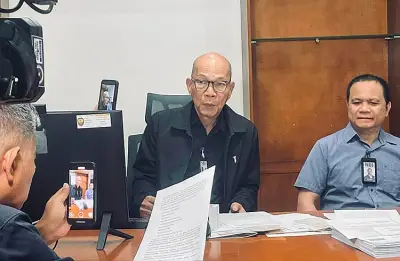
In response to the dismissal of the complaints at the justice committee level, President Marcos urged critics to "move forward." Palace Press Officer Undersecretary Claire Castro expressed satisfaction with the outcome in a press conference, stating, "First of all, we are pleased that the process was followed, and we are grateful that the lawmakers were able to see what the truth really is. We always stand by the truth." She added, "We have seen that the said complaints truly have no merit, and even the President is confident that he has committed no impeachable offense. At present, the President is focused on improving the country’s economy, which is why he says, 'Let's move forward.'"
This development underscores the complexities of impeachment proceedings in the Philippines, balancing legal rigor with political dynamics, as the nation navigates challenges in governance and economic advancement.