President Marcos Considers Postponing Barangay and SK Elections to Address Middle East Crisis
President Ferdinand "Bongbong" Marcos Jr. has expressed openness to postponing the Barangay and Sangguniang Kabataan Elections (BSKE), currently scheduled for November 2, All Souls' Day. This potential move aims to reallocate the election's P16 billion budget to mitigate the impact of the Middle East crisis on Filipinos, according to Malacañang.
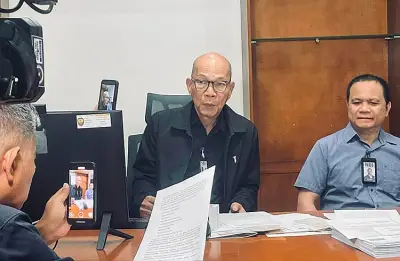
Undersecretary Claire Castro of the Malacañang Press Office confirmed that the government could save and repurpose the funds intended for the November 2 elections. Castro's statement followed a call from Bacolod City Representative Albee Benitez to delay the BSKE by six months, allowing the budget to be used for crisis response efforts.
Historical Context and Legal Background
This development comes amid a complex legal history. The Supreme Court previously declared Republic Act 11935 unconstitutional, as it had postponed the BSKE from December 5, 2022, to the last Monday of October 2023. The court ruled that this law violated citizens' right to vote and lacked legitimate government interest. However, under the operative fact doctrine, the court ordered the BSKE to proceed as rescheduled in October 2023.

The upcoming election marks the final BSKE before the implementation of Republic Act No. 12232, signed by President Marcos on August 13, 2025. This law extends the terms of barangay officials from three to four years for three consecutive terms and sets a single term for SK officials. It also moved the BSKE from December 2025 to the first Monday of November 2026.
Supreme Court Upholds Anti-Dynasty Clause in SK Elections
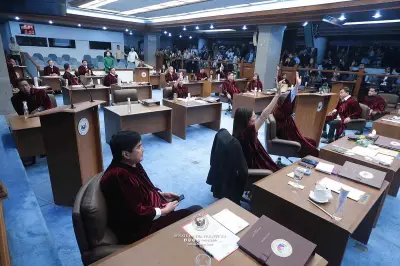
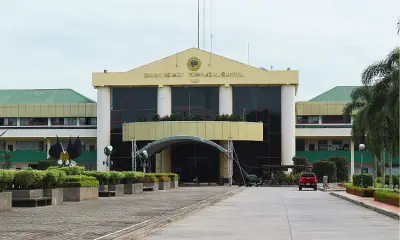
Regardless of the postponement debate, the issue of political dynasties in SK elections remains pertinent. In a landmark decision, the Supreme Court recently upheld the Commission on Elections' (Comelec) enforcement of the anti-dynasty clause in the SK Reform Law.
The case, Merson C. Calubag v. Commission on Elections and Kimberly P. Joseph (G.R. No. 279008, April 8, 2026), involved the cancellation of a candidate's Certificate of Candidacy (COC) for the 2023 BSKE. The Supreme Court En Banc denied Calubag's petition, which challenged Comelec resolutions that disqualified him as a candidate for SK chairperson in Barangay Magtangale, San Francisco, Surigao del Norte.
Comelec's Second Division found that Calubag falsely declared in his COC that he had no relatives within the second civil degree of consanguinity or affinity to any incumbent barangay official. In reality, his mother was a member of the Sangguniang Barangay, leading to the cancellation of his candidacy.
Legal Basis and Constitutional Implications
The Supreme Court emphasized that the anti-dynasty clause, as outlined in Section 10 of Republic Act 10742, the Sangguniang Kabataan Reform Act of 2015, is crucial. This section requires SK candidates to not be related within the second civil degree to any incumbent elected official at the national, regional, provincial, city, municipal, or barangay level in their locality.
The court stated that this provision "breathes life to the constitutionally enshrined policy of the sovereign to prohibit political dynasties." It aligns with legislative intent to curb the formation and expansion of political dynasties, particularly at the barangay and SK levels, in response to constitutional calls for their definition and restriction.
This ruling reinforces efforts to promote fair and democratic processes in youth governance, even as broader election schedules face potential adjustments due to external crises.