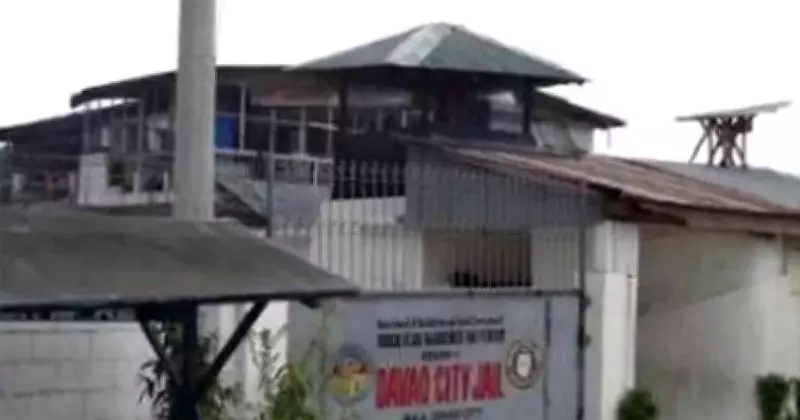
The Bureau of Jail Management and Penology (BJMP) is intensifying security measures at the Davao City Jail Annex Male Dormitory in Maa to prevent the entry of contraband into the facility.
Security Challenges Acknowledged
During the Davao Peace and Security Press Corps on May 20, 2026, Jail Officer (JO) 1 Windy Llave stated that contraband-related issues persist and are difficult to prevent because authorities have no control over activities outside the jail. However, she noted that they are currently identifying security solutions to curb such illegal activities.
Llave confirmed similar incidents occurred last year, but she could not provide data, including figures for this year, as investigations and validation are ongoing.

"That issue is inevitable, especially since the area outside is uncontrolled, but we make sure we have security measures in place. We are also adding facilities and manpower to check all visitors entering the BJMP office, and we are coordinating with the City Government of Davao for additional security personnel," Llave said.
Visitation and Contraband Smuggling
Llave did not directly answer whether suspects involved in smuggling contraband were relatives of Persons Deprived of Liberty (PDLs), reiterating that they cannot control activities outside the facility.
"For that question, ma’am, we cannot identify the suspect bringing contraband inside the jail facility. But if a suspect is caught during visiting hours, it is usually a relative or any family member," she added.
The E-Dalaw at the Davao City Jail Annex is scheduled from 1 to 3 p.m., Monday to Friday, and only immediate family members are allowed to visit, subject to proper coordination through the BJMP office.
Future Plans and Congestion
BJMP is also considering implementing conjugal visits exclusively for married PDLs. However, authorities are still looking for suitable areas within the facility to ensure safety and security.
Llave admitted that the Male Dormitory Jail Facility is severely congested, operating at a 140 percent occupancy rate due to the high number of PDLs and the lack of facilities.