Cebu City's 'Mayor of the Night' Program Moves Forward with Office Lease Agreement
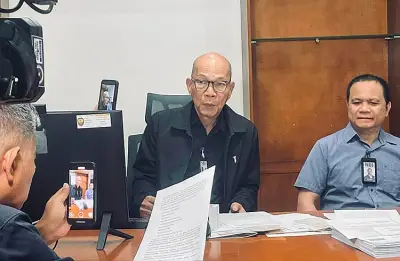
The Cebu City Government is poised to launch its innovative "Mayor of the Night" program, designed to extend municipal services into nighttime hours. This initiative follows the signing of a lease contract on Monday, March 2, 2025, for office space in the Cebu Exchange Tower located within Cebu I.T. Park, Lahug. The agreement, presumably executed by Mayor Nestor Archival Sr. and a representative of Cebex, secures two units on the building's second floor for a period spanning from February 1, 2026, to June 30, 2028.
Funding and Framework for Round-the-Clock Operations
The City Council has allocated P5,111,550 for the rental, a significant reduction from the initially reported P12.5 million. This financial approval underscores the city's commitment to enhancing public service accessibility. The program's foundation is laid out in Executive Order No. 027, signed by Mayor Archival on October 23, 2025. This EO mandates "round-the-clock" city operations and authorizes Vice Mayor Tomas Osmeña to oversee the program's implementation under the mayor's supervision.
However, the EO's language has sparked discussions regarding clarity. It does not explicitly limit Vice Mayor Osmeña's authority to nighttime operations alone, potentially vesting him with responsibility for the entire 24/7 framework. This includes regular office hours from 8 a.m. to 5 p.m., Monday to Friday, plus unspecified night hours throughout the week. The precision of terminology is crucial, as the EO carries the force of law, allocating authority that must be unequivocally defined.

Distinctive Features of Cebu City's Model
Cebu City's "Mayor of the Night" program exhibits several key differences from international "night mayor" models, such as those in New York City and other U.S. cities where the trend gained traction in 2023.
- Purpose and Scope: Overseas night mayors typically serve the entire nightlife industry, including businesses and cultural economies, aiming to regulate and support growth. In contrast, Cebu City's focus is narrower, primarily targeting services like payment processing and permit issuance, with a noted emphasis on assisting call-center employees.
- Office Structure: While international versions often establish separate, dedicated offices, Cebu City's model consolidates representatives from various City Hall departments and some national offices into the leased I.T. Park units, operating remotely from the main municipal building.
- Leadership: Abroad, a director typically manages the night mayor office. Here, an elected official, Vice Mayor Osmeña, assumes the role of "mayor of the night," overseeing the night hub while balancing legislative duties—a unique multitasking approach.
Implementation and Future Prospects
The program is viewed as an experimental venture, with its expansion or discontinuation hinging on performance outcomes. Key metrics will include the number of clients served and the extent to which it alleviates the burden on daytime services at City Hall. A critical question remains: will the actual benefits justify the P5.1 million expenditure on rental alone?
As the city prepares for this novel initiative, stakeholders are also considering terminology refinements. Some suggest adopting "night mayor" over "mayor of the night" to avoid potential misinterpretations and align more closely with global precedents. With the lease secured and framework in place, Cebu City's foray into 24/7 governance marks a significant step in redefining public service delivery in the Philippines.