

Cebu City Councilor Winston Pepito has defended keeping the South Road Properties (SRP) in the Cebu Bus Rapid Transit (CBRT) project, saying excluding one of the city's fastest-growing business and tourism districts from the mass transit network would cost Cebu City economic opportunities and better public transportation.
Pepito, who chairs the committee on transportation, issued the statement after Vice Mayor Tomas Osmeña pushed for a resolution asking the Cebu City Government to reject the Department of Transportation's (DOTr) proposed CBRT realignment and restore the project's original Bulacao-Talamban alignment.
Both Routes Can Coexist
Pepito said he supports completing the original Bulacao-Talamban route but sees no reason to remove the SRP from the project. “I am against excluding the SRP from the CBRT. Why shouldn’t the SRP be included when it is one of the business districts that the city itself has been promoting? Why shouldn’t it be served by a mass transport system?” he said.

Pepito said the debate has created the impression that Cebu City must choose between the original Bulacao-Talamban alignment and the SRP extension when both can move forward. “The issue is not choosing between the two. Both routes can coexist. Why can’t we implement both?” he said.
Pepito also questioned why objections to the SRP component surfaced only recently. He said the CBRT alignment approved by the National Economic and Development Authority (Neda) in 2014 already included both the Bulacao-Talamban corridor and the SRP. Pepito noted that Osmeña returned as Cebu City mayor in 2016, two years after the project secured approval. “If the approved alignment already included the SRP, why wasn't it questioned at the time? Why is it only becoming an issue now?” he asked.
Benefits for SRP
Pepito also disputed claims that including the SRP would mean abandoning the original Bulacao-Talamban corridor, saying the original alignment remains part of the overall CBRT project. He argued that excluding the SRP would deprive thousands of workers, residents and visitors of efficient public transportation. The SRP has grown beyond a commercial district and is now one of Cebu City's major employment centers and tourist destinations.
“I don’t know anyone from SM or Ayala. I have no personal interest in defending them. What I don’t want is for Cebu City to lose the opportunity to have a modern mass transport system in the SRP, where thousands of workers travel every day,” he said. He added that the CBRT would benefit more than major establishments such as SM Seaside City Cebu and Ayala-owned developments, noting that the SRP includes other property owners, businesses and public spaces, including land still owned by the Cebu City Government.
Implementation Timeline
Pepito also said the SRP segment could be completed sooner than portions of the original Bulacao-Talamban alignment because the necessary road infrastructure is already in place. He said the SRP would require only the construction of BRT stations because its roads are wide enough to accommodate the system. By contrast, completing the Bulacao-Talamban corridor would require years of right-of-way acquisition, demolition of affected structures, road widening and station construction.
“The SRP is ready. We only need to build the stations because the roads are already there. If we wait until the Bulacao-Talamban route is completely finished before implementing the SRP segment, it could take decades,” he said. According to Pepito, pursuing the SRP component while work continues on the original corridor would allow the city to provide mass transportation services sooner without delaying the project's long-term goals.

Debate in Council
Beyond improving mobility, Pepito said the CBRT could strengthen Cebu City's efforts to attract investment to the SRP. He said the Cebu City Government continues to market and sell properties in the reclaimed area, and a reliable mass transit system would make the district more attractive to investors. Pepito said the CBRT was never intended to benefit only SM or Ayala but to serve ordinary Cebuanos, especially workers who travel to and from the SRP each day. He added that major commercial establishments should not be treated as obstacles because they generate jobs, contribute to the local economy and have helped drive Cebu's development.
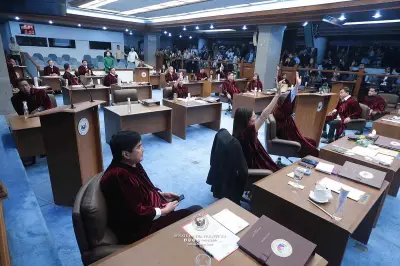
Pepito said the City should maximize the benefits of the CBRT by implementing both the original Bulacao-Talamban alignment and the SRP component instead of treating them as competing proposals. The debate stems from a proposal to integrate the SRP into the CBRT project, which Osmeña opposes, saying the DOTr should restore the project's original Bulacao-Talamban alignment. Osmeña has argued that prioritizing the SRP segment shifts the project's focus from densely populated residential communities to commercial areas. He also threatened to resign if the City Council endorses the proposed realignment.
During recent council deliberations, Pepito said the original Bulacao-Talamban route remains part of the overall CBRT project and has not been abandoned. He said the SRP component is being implemented first because it is more feasible, while other portions of the original corridor still require right-of-way acquisition, road widening and demolition of affected structures.