

MINDANAO is poised as the country’s next major investment destination as improved peace and order conditions in the southern region have opened the door for large-scale infrastructure, logistics and private sector investments.
Peace and Development
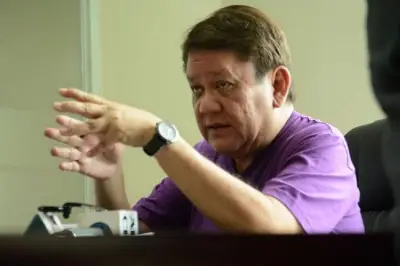
In a press conference on Friday, May 8, 2026, Secretary Tereso Magno, chairman of the Mindanao Development Authority (MinDA), said Mindanao is transforming from a conflict-affected area into a regional growth corridor backed by infrastructure expansion and stronger regional cooperation.
“Peace now reigns in the islands of Mindanao,” Magno said, pitching the region to foreign investors and development partners attending the summit. He said the decades-long debate over whether peace or development should come first has effectively been resolved.

“There has been a long debate on what comes first — peace and order or development,” Magno said. “That four-decade debate has been answered for us.” According to Magno, many municipalities, cities and provinces across Mindanao have “practically been declared insurgency-free,” creating conditions that could finally unlock sustained economic growth and investor confidence.
BIMP-EAGA Vision 2035
The investment push comes as leaders of the Brunei Darussalam-Indonesia-Malaysia-Philippines East Asean Growth Area (BIMP-EAGA) approved the Vision 2035 roadmap aimed at improving connectivity and economic integration among the four member economies. For the Philippines, the infrastructure agenda heavily focuses on Mindanao and Palawan, areas long considered underserved despite their strategic location near neighboring Southeast Asian economies.
Priority Projects and PPPs
President Ferdinand Marcos Jr., who led the Special BIMP-EAGA summit in Cebu on Thursday, May 7, urged member economies to deepen public-private partnerships (PPPs) to accelerate high-impact infrastructure projects under the roadmap. Among the Philippine priority projects identified under BIMP-EAGA are the Laguindingan Airport Development Project and the Mindanao-Visayas Interconnection Grid, both seen as critical to improving regional connectivity and energy reliability.
“We are in the southernmost part of the Philippines and we have been touted as the area where development is most needed,” Magno said. “Mindanao has opened up this other door that can bring about change in Mindanao, and that is the public-private partnership.” The government recently established a PPP facilitation and one-stop shop in Mindanao to help local government units prepare bankable projects for private investors.
Magno said many local governments are only now realizing that under the revised PPP Code, they can directly enter into partnerships with private entities without lengthy legislative procedures. The Marcos administration is also reviving major transport projects in the region, including the long-delayed Mindanao Railway Project, which is now being repositioned for private sector participation following earlier funding challenges.
Magno said feasibility studies for several railway segments have already been completed, while coordination continues with the Department of Transportation and the Department of Public Works and Highways to accelerate implementation.
Vision 2035 Goals
Under Vision 2035, BIMP-EAGA aims to become a “Socially Inclusive, Open, Aligned and Resilient” or Soar growth area integrated into regional and global value chains. Magno said the roadmap remains aligned with the original objective behind the creation of BIMP-EAGA in 1994 — narrowing regional disparities in geographically remote and less-developed areas, particularly Mindanao and Palawan.
Beyond transport infrastructure, the government is also promoting opportunities in the halal industry, renewable energy, food security and tourism. Magno said development partners, including China, Japan, South Korea, Australia and the European Union, have expressed interest in Mindanao’s infrastructure and development programs.
“We have been fighting the negative image in Mindanao for four decades,” Magno said. “Now, we are inviting development partners and investors to help us bring development into the region.”