

The Provincial Government of Davao Occidental has ordered all public and private schools to continue implementing precautionary measures, including alternative learning modalities (ALMs) and suspension of face-to-face classes in the hardest-hit municipalities, as authorities respond to the ongoing effects of the magnitude 7.8 earthquake and thousands of aftershocks.
Memorandum Order No. 76 Extends Safety Protocols
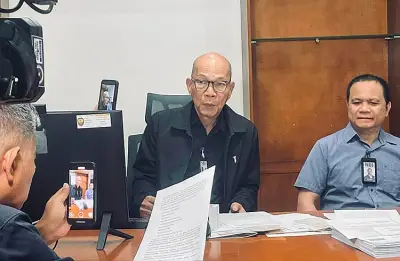
In Memorandum Order No. 76, Series of 2026, signed by Governor Franklin P. Bautista on July 5, the provincial government directed school administrators to adopt learning arrangements based on the recommendation of the Provincial Disaster Risk Reduction and Management Office (PDRRMO) and in accordance with Department of Education (DepEd) Order No. 014, Series of 2026. The memorandum cited continuing aftershocks as the basis for maintaining flexible learning measures while prioritizing the safety of students, teachers, and school personnel.
For municipalities classified under the HINAY (Ease In) level—Malita, Santa Maria, and Don Marcelino—schools shall continue implementing ALMs as determined by their respective school heads. The directive gives school heads discretion to choose the most appropriate learning delivery modality based on local conditions.

HINTO Level Municipalities Suspend All Academic Activities
Schools in Jose Abad Santos and Sarangani, which remain under the HINTO (Stop) level, will continue suspending all academic learning activities until further notice as authorities assess school facility safety and monitor seismic activity. Instead of regular classes, these schools must prioritize welfare through wellness check-ins, Mental Health and Psychosocial Support Services (MHPSS), and Psychological First Aid (PFA).
The order also authorizes school heads to require teachers and non-teaching personnel to physically report only when necessary for essential operations and in compliance with safety protocols. Before face-to-face classes resume, schools must conduct PFA sessions and stress debriefing for teachers and personnel before extending interventions to students.
Continuous Monitoring and Aftershock Statistics
The Provincial Disaster Risk Reduction and Management Council (PDRRMC), through its Emergency Operations Center (EOC), continuously monitors the situation and recommends additional measures as needed. According to the Department of Science and Technology–Philippine Institute of Volcanology and Seismology (DOST-Phivolcs), a total of 11,870 aftershocks were recorded offshore Sarangani from June 8, the date of the magnitude 7.8 earthquake. Of these, 3,211 have been plotted, and 116 were felt by residents, with magnitudes ranging from 1.2 to 6.4.
DOST-Phivolcs Science Research Assistant Edward Louise Orquillas stated that the agency continues to closely monitor seismic activity and urged the public to remain vigilant, stay informed through official advisories, and strictly follow local disaster management guidance.
Earthquake-Induced Hazards and Response
Provincial disaster officials continue to address earthquake-induced hazards, including six landslide-damming incidents in Jose Abad Santos. A joint operation on June 24 successfully cleared the river blockage along the Nuing River in Barangay San Isidro, involving the provincial government, the 545th Engineer Combat Battalion, the 73rd Infantry Battalion of the Philippine Army, and Davao Central 911. Intermittent rains hamper assessment and response in other affected areas where impounded water and debris remain under observation.
Casualty and Recovery Efforts
As of July 5, the National Disaster Risk Reduction and Management Council (NDRRMC) reported that the June 8 earthquake has claimed 92 lives, including 71 fatalities in Soccsksargen and 21 in the Davao Region. Government agencies continue rehabilitation and recovery efforts while urging residents to remain alert as aftershocks persist across southern Mindanao.