Unilab Foundation and ULAP Forge Partnership to Strengthen Local Universal Health Care Implementation
In a significant move to enhance healthcare delivery across the Philippines, the Unilab Foundation, through its research and policy arm, the Unilab Center for Health Policy (UCHP), has entered into a strategic partnership with the Union of Local Authorities of the Philippines (ULAP). This collaboration, formalized with the recent signing of a memorandum of understanding (MOU), aims to jointly identify and address critical barriers to the effective and accelerated implementation of the Universal Health Care (UHC) Act at the local level.
Addressing Systemic Challenges in Local Healthcare
The partnership will specifically tackle fragmented policies, processes, proficiencies, and systems that hinder the ability of local government units (LGUs) to implement UHC reforms. This initiative aligns with the mandate to empower LGUs, ensuring that the devolution of healthcare delivery functions from the national government does not result in inconsistent health services across different localities. By focusing on these structural issues, the collaboration seeks to create a more cohesive and efficient healthcare framework.
Pilot Programs and National Policy Influence
UCHP and ULAP plan to pilot programs in selected LGUs to demonstrate the practical implementation of UHC at the local level. The intent is to use lessons learned from these ground-level initiatives to inform national policy and replicate best practices in more areas. This approach emphasizes the importance of local governance in realizing universal healthcare, as highlighted by ULAP National President and Quirino Governor Dakila Carlo “Dax” Cua.

“This MOU reflects our shared understanding that Universal Health Care is ultimately realized when governance meets execution, which is at the local level, and that this cannot be done by government alone. We need the support of all stakeholders,” said Cua. He added that many challenges are structural and systemic, requiring partnerships to address problems in isolation, with hopes for expanding collaboration into service delivery models and innovation.
Empowering Local Governments for Better Healthcare
Unilab Foundation Executive Director Atty. Jose Maria Ochave emphasized UCHP’s role in partnering with government leaders to help achieve their vision for constituents. “Our role is to show that certain things can work and can be implemented. But the ones who can really move the needle is still government. The ones who can move the needle the most in the coming years will be the local government because that is where governance is felt the most by the people,” he stated.
UCHP, as a program of the Unilab Foundation, empowers LGUs to become self-reliant and successful implementers of UHC by supporting policy development, enabling evidence-based decision-making, and providing holistic technical assistance. Recently, UCHP commissioned a study revealing that a large portion of local health budgets goes to personnel salaries, leaving limited funds for actual health programs and services. This study has been praised by the Department of Budget and Management as a valuable tool for maximizing local resources.
Recent Initiatives and Future Prospects
In addition to this partnership, UCHP recently collaborated with the local government of Ormoc City to develop and implement a UHC-aligned primary care service delivery framework for geographically isolated and disadvantaged communities. This effort underscores the commitment to reaching underserved Filipinos and improving access to quality healthcare in fragile areas.
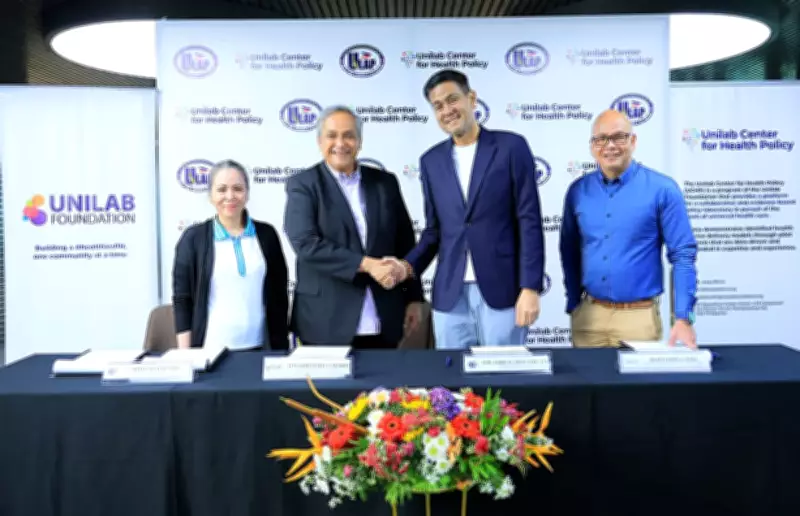
The signing ceremony included key figures such as ULAP Executive Director Aileen Leycano, Unilab Foundation Executive Director Atty. Jose Maria Ochave, ULAP National President and Quirino Governor Dakila Carlo “Dax” Cua, and UCHP Program Director Ruben John Basa, marking a pivotal step towards stronger local healthcare systems in the Philippines.