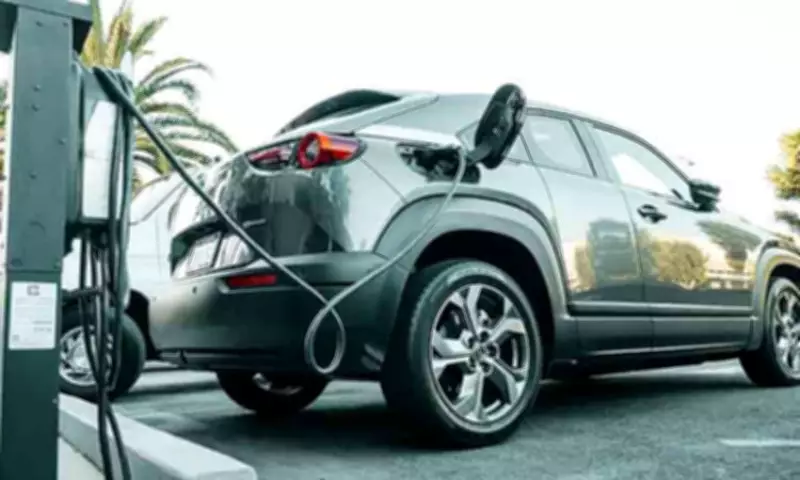
The 21st Davao City Council has approved on third and final reading an ordinance that provides incentives to electric vehicle (EV) manufacturers, dealers, users, and public transport operators as part of the city's push for sustainable transportation. Councilor Temujin “Tek” Ocampo, chairperson of the committee on environment and proponent of the ordinance, stated that the measure aligns with Republic Act No. 11697, or the Electric Vehicle Industry Development Act (Evida), and the Davao City Local Incentive Code.
“We are really pushing for sustainable transportation to encourage investors,” Ocampo said during a media interview on May 13 at the Sangguniang Panlungsod. Under the ordinance, eligible business enterprises may avail of tax holidays and incentives for six years, although regulatory permits such as building permits are excluded. Ocampo said the city will waive mayor’s permits and other non-regulatory fees.
The ordinance also grants parking incentives to EV users. Owners of electric and hybrid vehicles may park for free for up to three hours in designated city government parking areas, including San Pedro and C. M. Recto streets. Ocampo noted that the city cannot require private establishments to provide the same benefit but is encouraging them to follow suit.

Additionally, the ordinance creates an Electric Vehicle Monitoring Committee tasked with coordinating, reviewing, and recommending policies related to the implementation of the measure, including price monitoring and compliance. The committee will be chaired by the city mayor, with the City Environment and Natural Resources Office serving as vice chairperson and the Davao City Investment Promotion Center acting as secretariat. The ordinance carries an annual appropriation of P1 million sourced from the city’s annual or supplemental budget.
Ocampo said the ordinance will be forwarded to the Office of the City Mayor for signature. He added that several EV companies had already expressed interest in investing in Davao City even before the measure’s approval, including BYD and VinFast. To qualify for incentives, manufacturers, assemblers, distributors, charging station operators, and EV battery recycling enterprises must meet specific investment and employment requirements.
Domestic-oriented manufacturers must have at least P100 million in paid-up capital and employ at least 20 workers, while export-oriented manufacturers must invest at least P200 million, employ 25 workers, and export at least 60 percent of their products. All enterprises must also register with the Board of Investments or the Philippine Economic Zone Authority and ensure that at least 70 percent of their workforce are Davao City residents.
The ordinance also includes provisions on proper disposal and recycling of EV batteries in line with regulations of the Department of Environment and Natural Resources, Republic Act No. 6969, and Republic Act No. 9003. Manufacturers, dealers, and suppliers operating in the city must establish or participate in battery take-back and recycling programs, while disposal and recycling activities must only be conducted through DENR-accredited facilities. Users of electric vehicles, including government-owned EVs, must surrender used batteries to accredited collection points and recycling facilities recognized by the DENR and the city government. Violators may face suspension or revocation of incentives, repayment of granted benefits, and fines ranging from P1,000 to P5,000.
Meanwhile, Councilor Al-Ryan Alejandre said the city also needs to address the availability of accessible and reliable charging stations as EV use increases. “By studying the possible establishment of strategically located DC Fast chargers in key areas such as transport hubs, commercial centers, highways, and airport corridors, Davao City can better prepare for the growing transition toward cleaner transportation technologies,” Alejandre said during his privilege speech.

Martin Angelo T. Hao of Electryx said the company plans to expand charging stations in Davao City to support the growing EV market. Hao said construction of a charging station in Lizada is ongoing, and the company aims to establish more charging facilities in strategic areas before expanding to other locations outside Davao. He added that Electryx plans to install 120-kilowatt fast chargers capable of charging EVs within 20 to 30 minutes, much faster than home chargers that usually take seven to eight hours. Hao said charging fees currently average P25 per kilowatt, although prices may still change depending on electricity rates. He added that the ordinance could help make electric vehicles more affordable and encourage more consumers to shift from internal combustion engine vehicles to EVs.