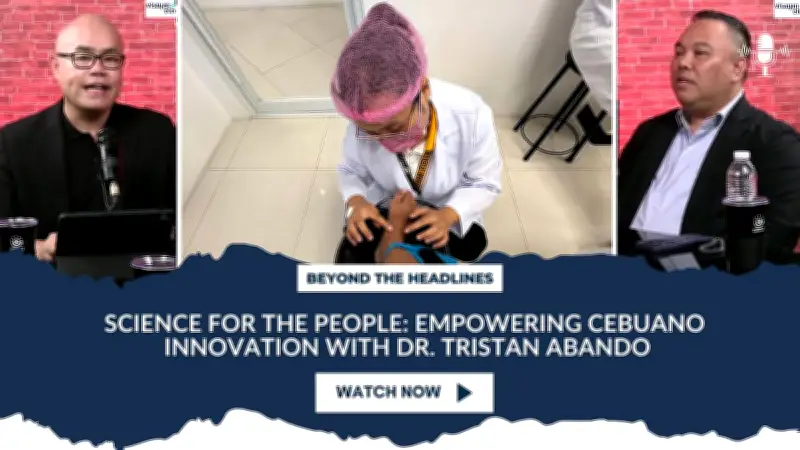
Dr. Tristan Abando of the Department of Science and Technology Region 7 (DOST 7) explains how the agency moves scientific innovations from laboratories directly into local businesses and communities. In a live interview on Beyond the Headlines, Abando detailed practical technology transfers that help small entrepreneurs increase productivity and sales, while regional science initiatives address everyday challenges to uplift ordinary Filipinos.
Technology Transfer Programs
DOST 7 has established several programs to bridge the gap between research and commercial application. One key initiative is the Small Enterprise Technology Upgrading Program (SETUP), which provides technology interventions to micro, small, and medium enterprises (MSMEs). Through SETUP, local firms receive equipment upgrades, training, and technical assistance to enhance their production processes and product quality.
According to Dr. Abando, technology transfer is not just about handing over equipment; it involves a comprehensive support system. “We assess the needs of each enterprise, then match them with appropriate technologies from our research institutions,” he said. This tailored approach has led to significant improvements in productivity and sales for many beneficiaries.

Real-World Impact
Abando cited examples of local entrepreneurs who have benefited from DOST 7’s programs. A food processing business in Cebu, for instance, adopted a new drying technology that reduced spoilage and extended shelf life, resulting in a 30% increase in sales within six months. Another enterprise in the furniture industry used a computer numerical control (CNC) machine to automate carving, cutting production time by half and allowing them to take on larger orders.
These success stories highlight how science can solve everyday problems. “Our goal is to make science felt on the ground,” Abando emphasized. “When a small baker can produce more bread with less effort, or a farmer can preserve crops longer, that’s science in action.”
Regional Science Initiatives
Beyond individual enterprises, DOST 7 runs community-level programs addressing broader issues. The Community Empowerment through Science and Technology (CEST) program brings basic science and technology services to remote areas, including water testing, waste management solutions, and renewable energy systems. These initiatives improve quality of life and create economic opportunities.
Abando noted that collaboration with local government units (LGUs) and academic institutions is crucial. “We cannot do this alone. Partnerships ensure that our interventions are sustainable and aligned with local needs,” he said.
Future Directions
Looking ahead, DOST 7 plans to expand its technology transfer efforts, focusing on digitalization and automation to help MSMEs compete in a global market. The agency is also exploring partnerships with start-ups and innovation hubs to accelerate the adoption of emerging technologies.
Dr. Abando invited viewers to engage with DOST 7 through their online platforms and to submit questions for future discussions. “Science is for everyone. We want Filipinos to see that it can improve their daily lives,” he concluded.