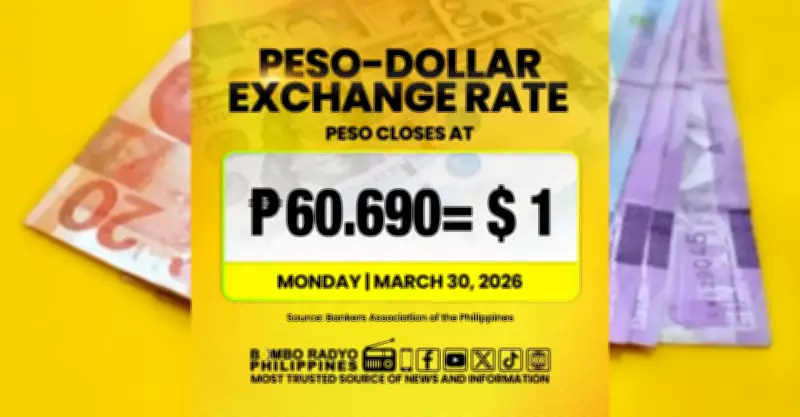
Philippine Peso Plunges to Record Low, Closing at P60.69 per US Dollar
The Philippine peso has reached a historic nadir, closing today at P60.69 per US dollar, marking the lowest level ever recorded for the local currency. This represents a significant decline from the previous close of P60.46, with the peso even hitting an intraday high of P60.84 during trading sessions, underscoring the volatility in the foreign exchange market.
Key Drivers Behind the Peso's Decline
According to financial analysts, the primary factors contributing to the peso's weakness are the ongoing tensions in the Middle East and the surge in global oil prices. These geopolitical and economic pressures have bolstered demand for the US dollar as a safe-haven currency, further exacerbating the depreciation of the peso. The situation highlights the interconnectedness of global events and their direct impact on local economies.
Economic Implications for the Philippines
The record-low exchange rate is expected to have mixed effects on the Philippine economy:

- Increased Costs: Consumers are likely to face higher prices for imported goods and essential commodities, potentially fueling inflation and straining household budgets.
- Benefits for OFW Families: On a positive note, families of Overseas Filipino Workers (OFWs) stand to gain, as the stronger US dollar translates to higher values for their remittances, providing some financial relief.
- Challenges Ahead: Despite this silver lining, the economy faces significant hurdles, including persistent inflation risks and a potential decline in investor confidence, which could hinder economic growth and stability.
Central Bank's Critical Role in Stabilizing the Economy
In response to these developments, the Bangko Sentral ng Pilipinas (BSP) is under pressure to implement strategic measures in the coming days to maintain economic stability. Analysts emphasize that the central bank's actions will be crucial in mitigating further currency volatility and supporting the peso. Potential interventions may include monetary policy adjustments or market operations to curb excessive fluctuations and restore confidence among investors and the public.
As the situation evolves, stakeholders are closely monitoring the BSP's moves, which will play a pivotal role in shaping the economic outlook for the Philippines in the near term.