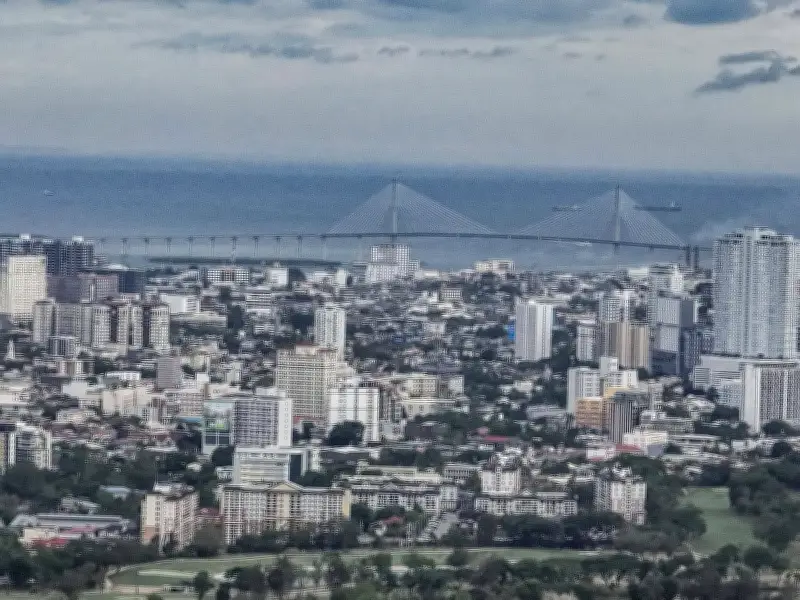
The average Filipino household now consists of 3.8 persons, down from 4.1 in 2020, according to the latest 2024 Population Census (PopCen) data released by the Philippine Statistics Authority (PSA) on Tuesday, June 23, 2026. Cebu City recorded an even smaller average household size (AHS) of 3.2 persons, lower than the national average.
Long-term decline in household size
The AHS has steadily declined over the past decade and a half. The PSA data show a decrease from 4.6 persons per household in 2010 to 4.4 in 2015, then 4.1 in 2020, and finally 3.8 in 2024. This trend reflects smaller family units nationwide.
Cebu City's AHS was computed by dividing its household population of 946,912 by its 298,505 households. Mandaue City and Lapu-Lapu City each recorded an AHS of 3.5. The Province of Cebu, excluding the three highly urbanized cities, posted an AHS of 3.8.

Regional variations
Among the regions, the Bangsamoro Autonomous Region in Muslim Mindanao posted the largest AHS at 4.9 persons per household. It was followed by Zamboanga Peninsula at 4.2 and Bicol Region at 4.1. Caraga and Eastern Visayas each recorded an average of 4.0 persons, while Northern Mindanao, Western Visayas, and Mimaropa posted 3.9. Central Visayas recorded an AHS of 3.7.
At the lower end, Calabarzon and the Davao Region registered the country’s smallest AHS at 3.5 persons each.
Household population and number of households
Nationwide, the household population reached 112.33 million in 2024, accounting for 99.6 percent of the country’s total population. This represents an increase of 3.66 million people, or 3.4 percent, from the 108.67 million household population recorded in 2020. The remaining 0.4 percent comprised persons living in institutional settings such as hospitals, orphanages, and military camps, as well as Filipinos assigned to Philippine embassies, consulates, and missions abroad.
The PSA also reported that the number of households rose to 29.67 million in 2024, up by 3.27 million households, or 12.4 percent, from 2020. Compared with 2015, the country added 6.69 million households, representing a 29.1 percent increase.
Region 4-A (Calabarzon) registered the highest number of households at 4.82 million, followed by the National Capital Region with 3.74 million and Central Luzon with 3.52 million. Together, the three regions accounted for 40.7 percent of all households in the Philippines. Central Visayas recorded 1.7 million households. The Cordillera Administrative Region had the fewest households at 473,422.
Census methodology and purpose
The PSA conducted the 2024 PopCen alongside the Community-Based Monitoring System from July to September 2024. The 2024 PopCen was the 16th population census in the Philippines since the first census was conducted in 1903. The census covered the collection, compilation, evaluation, analysis, publication, and dissemination of data on population counts, as well as the demographic and socioeconomic characteristics of residents and barangay-level profiles across the country.
According to the PSA, the PopCen is designed to provide government planners, policymakers, and administrators with updated data on population size, distribution, and composition to support the formulation of social and economic development plans and programs.