Amid escalating oil prices driven by the ongoing Middle East conflict, President Ferdinand R. Marcos Jr. has reaffirmed his administration's commitment to securing adequate fuel and food supplies for the nation. This assurance comes as the Department of Energy (DOE) clarifies the legal pathway for potential tax relief on petroleum products.
Legislative Action Required for VAT Removal
Energy Secretary Sharon Garin emphasized on Friday that any move to eliminate the value-added tax (VAT) on fuel must be enacted through new legislation. Speaking to reporters at the Palace, Garin explained that the VAT on petroleum products is imposed under the National Internal Revenue Code (NIRC), which was established by Congress.
"Is it possible to eliminate the VAT? The VAT is imposed under the Revenue Code, which was under Congress. It's a legislation," Garin stated. "This was imposition by legislation, and it's an imposition that can only be removed through legislation also."

She stressed that any proposed measure must undergo the proper congressional process as mandated by existing tax laws, highlighting the separation of powers in tax policy implementation.
Significant Revenue Implications
Garin cautioned that removing the VAT on fuel could lead to substantial revenue losses for the government, estimated at approximately PHP170 billion annually. While noting she is not from the Department of Finance, she referenced this figure as a potential impact on national collections.
"I'm not from the Department of Finance, but I think the estimate was about PHP170 billion per year ang VAT on petroleum products. So, that's PHP170 billion also na mawawala sa collection," she said.
The actual financial impact would depend on global oil price fluctuations and the specific design of any proposed policy, including whether the VAT removal would apply throughout the entire supply chain or be limited to pump prices.
Enhanced Monitoring and Enforcement
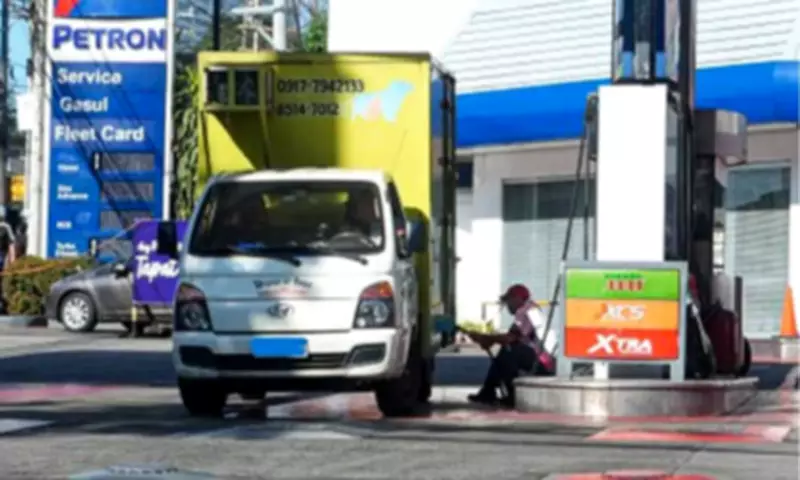
Despite the tax discussion, Garin assured the public that the DOE is rigorously monitoring gas stations and oil companies to prevent profiteering and hoarding during current supply disruptions. The department has implemented several directives under President Marcos's Executive Order 110 to ensure stakeholder compliance and consumer protection.
These measures include Special Operating Guidelines for Fuel Retail Monitoring and Inspection, which coordinate field inspections by deputized agencies to maintain fuel quality, fair pricing, and uninterrupted distribution. Additionally, Anti-Hoarding measures have been strengthened to safeguard fuel supply for Filipino consumers.
Garin reported that cases of profiteering and hoarding have decreased with assistance from the Philippine National Police, leading to more stable supply conditions at gas stations nationwide. Oil companies are now required to submit weekly reports detailing their price adjustments and the rationale behind them, enhancing transparency in the market.
Administration's Broader Assurance
President Marcos's assurance of sufficient fuel and food supplies comes at a critical time as global tensions continue to affect energy markets. The administration's multi-pronged approach combines regulatory oversight with potential policy adjustments to address both immediate supply concerns and longer-term economic considerations.
The DOE's clarification about the legislative requirements for tax changes underscores the complex balance between providing consumer relief and maintaining government revenue streams essential for public services and development programs.