
The Davao Region closed 2025 with significant improvements in transportation and connectivity, as a synchronized rollout of large-scale infrastructure projects began to ease congestion and slash travel times for residents and businesses.
Public Transport and Road Networks Expand
Commuter mobility received a major boost with the expansion of the Davao City Bus (DC Bus) system. Throughout the year, the city-run program deployed more than 70 modern buses across fixed routes linking Toril, Calinan, Buhangin, Cabantian, Roxas Avenue, and the central business district. The system's standardized fares, cashless payments, and reliable schedules offered a safer alternative to traditional jeepneys, steadily growing ridership and helping decongest city roads.
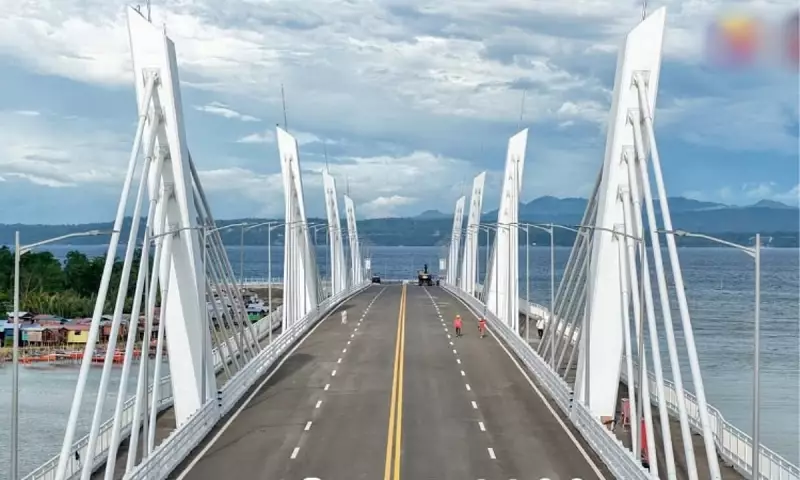
On the road network, the ₱28.22-billion Davao City Coastal Road opened new sections along its 18.4-kilometer stretch from R. Castillo Street to Talomo. Serving as a vital alternate route, it diverted traffic from Quimpo Boulevard and MacArthur Highway, leading to smoother traffic flow and shorter trips. A key component, the ₱3.4-billion, 1.34-kilometer Bucana Bridge across the Davao River, also saw progress. President Ferdinand "Bongbong" Marcos Jr. inspected the bridge, highlighting its role in reducing travel from southern districts to downtown from nearly an hour to just minutes once operational.

Mega-Projects Gain Momentum
Construction advanced on two of the region's flagship projects. The ₱70-billion Davao City Bypass Road, a 45.5-kilometer corridor, continued with work on its centerpiece: a 2.3-kilometer twin-tube tunnel set to be the longest road tunnel in the Philippines. Once complete, it will connect Barangay Sirawan in Toril to Barangay J.P. Laurel in Panabo City, cutting travel between southern Davao and Davao del Norte from three hours to about one.
Meanwhile, the ₱23.52-billion Samal Island–Davao City (SIDC) Connector Bridge moved forward with marine piling and environmental works. The 4.76-kilometer bridge linking Barangay Punta Dumalag and Barangay Limao aims to end ferry dependence and boost tourism and trade. The Department of Public Works and Highways reported the project had achieved over 12 percent physical accomplishment, targeting a 2028 completion.
Rail and Airport Developments Advance
After years of delays, the Mindanao Railway Project (MRP) Phase 1 (Tagum-Davao-Digos) saw tangible movement. The Department of Transportation began right-of-way acquisition and allocated ₱148 million to relocate 178 affected families to the new Tagum Train Village, with 96 families set to move by early 2026. The 100-kilometer line with eight stations promises to reduce travel between Tagum and Digos from three hours to one.
Air travel infrastructure also progressed. The Francisco Bangoy International Airport started a ₱650-million terminal expansion, increasing floor area from 17,500 to 25,910 square meters and adding seating for 700 passengers, on track for a December 2026 finish. Private sector groups, including Filinvest and Changi Airport Group, submitted Public-Private Partnership (PPP) proposals for long-term modernization.
Infrastructure Fuels Economic Growth
The infrastructure push directly supported Davao's robust 7.9-percent economic growth in 2025, driven by construction, transport, and services. The Philippine Chamber of Commerce and Industry recognized Davao as one of the Most Business-Friendly Cities, citing its infrastructure readiness. The Regional Development Council XI also aligned investments by approving the Midterm Update of the Davao Regional Development Plan 2023–2028.
Officials emphasized that the synchronized progress on the DC Bus, Coastal Road, Bucana Bridge, Bypass Road, and Davao–Samal Bridge positions the region for sustained growth while fundamentally improving daily life for workers, families, and businesses across Davao.