
In a significant development for labor relations, the rank-and-file and supervisors' unions at Opascor have formally established themselves as independent labor organizations, heralding what their leaders describe as a transformative "new chapter" in employee-management dynamics. This move represents a decisive break from their long-standing federation affiliation, signaling a shift toward greater autonomy and localized representation.
Official Registration Details and Historical Context
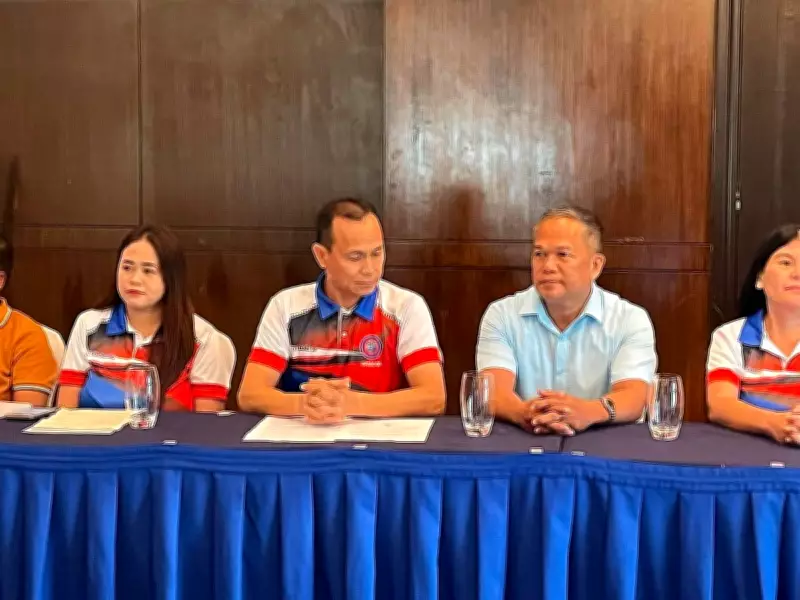
During a press conference held on Tuesday, March 31, 2026, union officials provided precise registration timelines. The Opascor Workers' Union (OWU) confirmed its official registration with the Department of Labor and Employment (DOLE) on January 15, 2026. Meanwhile, the supervisors' group, now rebranded as the Opascor Supervisory, Technical and Responsible Alliance Union (OSTRA-Union), was officially recorded in the DOLE registry on March 30, 2026.
This independence formally severs ties with the Associated Labor Unions–Trade Union Congress of the Philippines (ALU‑TUCP), which had served as their federation for multiple decades. The disaffiliation process, initiated in October 2025, culminates in a renewed focus on direct member representation and tailored advocacy.

Leadership Perspectives and Motivations for Independence
Vivencio Ybañez, president of OSTRA-Union, articulated the collective sentiment: "The journey toward independence was forged in unity and sustained by hope. Together, we move forward, leaving the past behind, and building an enterprise truly owned by its workers." This statement underscores the unions' commitment to a worker-centric approach, distancing themselves from previous federative structures.
Union leaders cited several compelling reasons for pursuing independence. Primary among these was the perceived ineffectiveness of the ALU‑TUCP, which they argued had become increasingly out of step with local members' needs, leading to deteriorating relations. Specific grievances included disagreements over a recent collective bargaining agreement, particularly benefit cuts approved without full member ratification, tensions over inadequate consultation processes, and concerns about the lack of tangible support despite high membership dues.
Concrete Programs and Immediate Initiatives
The newly independent unions, representing a combined membership of 458 individuals, have already outlined comprehensive programs aimed at enhancing employee welfare. Key initiatives include the establishment of medical and dental facilities accessible to members and their dependents, ensuring healthcare support is a cornerstone of their advocacy.
Additionally, social amelioration efforts such as USAPPA—a program providing financial assistance at minimal interest rates and offering returns through patronage shares—demonstrate a practical approach to member benefits. A notable financial innovation is the adoption of a system that returns 75 percent of union dues to members annually, promoting transparency and direct value.
"These are not promises, they are actions. And they represent only the beginning," Ybañez emphasized, highlighting the unions' proactive stance in delivering tangible outcomes.
Future Directions and Relationship Management
Looking ahead, union leaders have ambitious plans to develop further programs, including specialized trainings, workshops, and sustained engagement initiatives designed to foster cooperation and mutual respect with Opascor management. They have explicitly stated that their independence does not imply lingering conflict, expressing a strong desire to maintain positive working relationships.
"We look forward to maintaining a good relationship with the owner and management, as well as with the other union. This is about moving forward; we don't hold any grudges," Ybañez affirmed, reinforcing a collaborative outlook for future interactions.
This restructuring marks a pivotal moment in Philippine labor movements, showcasing a trend toward localized unionism focused on direct member benefits and constructive dialogue with employers.