Millions of Filipino workers commence each day embroiled in a relentless struggle they never chose to confront. They awaken burdened by profound hopelessness and despair, unable to adequately provide for their families, consumed by a fatigue that extinguishes their aspirations. Work should inherently offer warmth, security, dignity, and pride. For these individuals, work does fulfill that role. They walk with heads held high, embodying an unbreakable pride rooted in their indomitable work ethic.
The Harsh Reality of Wage Disparities
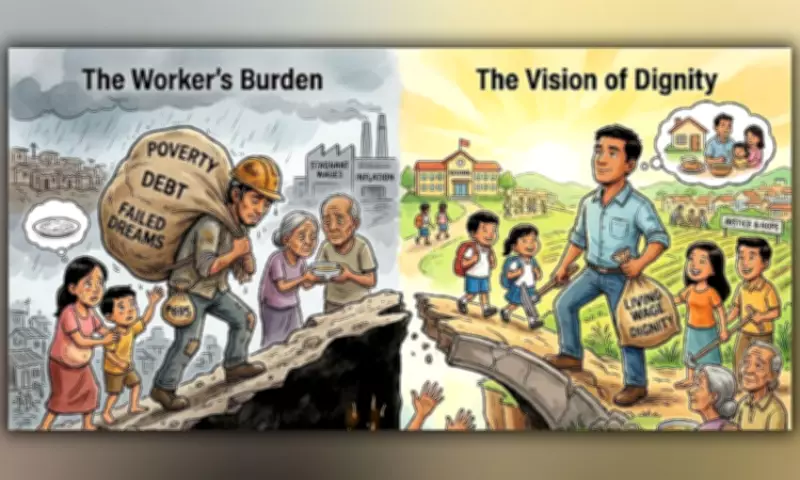
This pride, however, is severely tarnished by the hunger their children endure and the sacrifices their parents make, such as skipping meals to ensure their families can eat. The constitutional promise of a living wage, enshrined in the 1987 Constitution, rings hollow amidst the silence of shattered dreams. Dignity must never become a casualty of mere survival.
Examining the Wage Rate Adjustments
The disconnect between earnings and essential expenses becomes starkly evident in recent wage rate adjustments. By July 2025 or 2026, the daily non-agricultural minimum wage for Metro Manila workers will be P695, which is P505 below the family living wage exceeding P1,200. For small-scale and agricultural workers, the daily minimum wage is set at P658.

Regional disparities further exacerbate the issue. Starting May 2026, daily minimum wage rates in other areas range from P435 to P550 in Central Luzon, P425 to P560 in Calabarzon, P405 to P435 in Eastern Visayas, and P500 in Northern Mindanao. The Bangsamoro Autonomous Region in Muslim Mindanao records the lowest rates. Additionally, domestic workers in Metro Manila will be entitled to a minimum wage of P7,800 as of February 2026.
The Human Cost of the Wage Gap
This wage gap fractures families, forcing parents into unimaginable sacrifices. They send children to school on empty stomachs, work until their bodies collapse, leave loved ones behind in pursuit of better opportunities, and drown in debt and shame. Each day is lived in fear and anxiety, perpetuating a vicious cycle of despair filled with the pain of unfulfilled dreams, while injustice looms overhead.
The Economic and Human Argument
Opponents argue that higher wages could jeopardize small businesses. Yet, it is the worker who suffers—enduring relentless fear of layoffs, battling inflation, and struggling under the stifling grip of stagnant wages. While the powerful thrive, many watch their children's futures dim and their hopes extinguished. This issue transcends economics; it is a profound test of humanity, questioning whether society still cares.
A Call for Collective Action
The tragedy lies in the numbness developed towards such suffering. We cannot accept a world that drains parents' strength yet leaves them empty-handed. We cannot accept a reality where fairness equates to mere survival, devoid of hope or dignity. Anger alone is insufficient; we must channel rage against a system that overlooks their pain.
A world aligned with our aspirations must support every worker, fostering hope, ambition, and rest. It is imperative to stand united—to eliminate the wage gap, ensure dignified living for all workers, and demand justice not merely as leaders or employers, but as compassionate human beings.