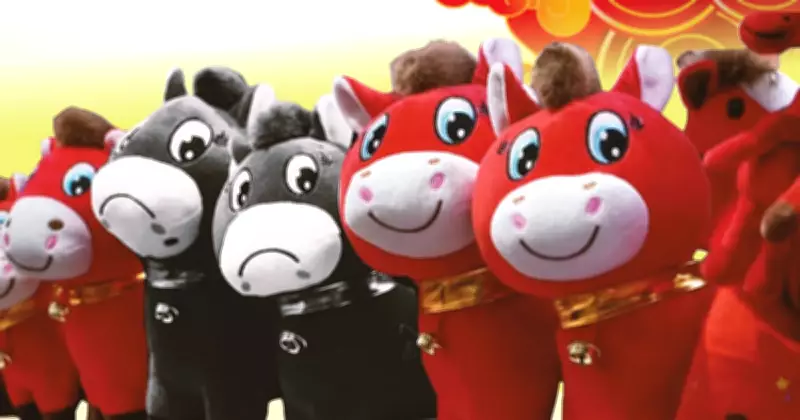
From Manufacturing Mistake to Cultural Phenomenon: The 'Sad Horse' Plush Captures Modern Work Realities
As the Lunar New Year approaches, heralding the energetic and ambitious Year of the Horse, an unexpected symbol has emerged from the bustling manufacturing hub of Yiwu in eastern China. Instead of the traditional cheerful decorations, a small horse plush toy with a permanently downturned mouth—a result of an accidental stitching error—has captured the collective imagination online. This seemingly defective item, originally destined for a refund, has transformed into a powerful emblem resonating with young professionals across the region.
The Accidental Creation That Sparked a Movement
The story began when a factory worker in Yiwu mistakenly sewed the horse's smile upside down, creating a plush that appeared visibly defeated rather than festively joyful. Measuring 20 centimeters tall and priced at approximately 25 yuan (around US$4), the toy was designed with all the traditional Lunar New Year symbols: vibrant red for good fortune and gold embroidery reading "money comes quickly." However, its gloomy expression created a striking contrast that immediately caught attention when photos surfaced on social media platforms.
Initially, the shop owner planned to issue a standard refund to the customer who received the flawed product. But as the image circulated online, something remarkable happened. Rather than rejecting the imperfect toy, people—particularly young workers—began embracing it as a relatable representation of their daily struggles. The plush quickly earned labels like "corporate slave" mascot, with users humorously noting how its tired frown mirrored their own feelings about modern work life.

Emotional Resonance in the Year of the Horse
The timing proved particularly poignant. As reported by the South China Morning Post in January 2026, this accidental creation arrived precisely during the zodiac year it was meant to symbolize. The customer who helped spark its virality, known online as Tuan Tuan Mami, shared her perspective: "This little horse looks so sad and pitiful, just like the way I feel at work." She added that receiving the crying toy in the Year of the Horse inspired her to "leave all my grievances at work behind and keep only happiness."
This emotional connection transformed the plush from a simple holiday decoration into what many describe as an "emotional stand-in"—a tangible representation of workplace fatigue and the desire for better work-life balance. The irony wasn't lost on observers: a toy created to symbolize energy and forward motion had become a symbol of exhaustion, yet its message of hope remained embedded in its traditional design elements.
The Rise of Imperfect Collectibles and Cultural Shifts
The sad horse's viral success fits neatly into a broader trend of so-called "ugly" or imperfect toys gaining popularity. Like other cult-favorite collectibles such as Labubu—known for its mischievous grin and sharp teeth—these items thrive not on traditional cuteness but on personality, quirkiness, and emotional resonance. They become keepsakes precisely because they stand out, offering authenticity in a market often saturated with predictable designs.
As demand skyrocketed, production quickly ramped up to meet orders, turning what began as a sewing error into a viral bestseller. The phenomenon demonstrates how imperfections can sometimes create deeper connections than flawless execution, especially when they reflect genuine human experiences. In this case, the sad horse plush has become more than just a toy—it's a cultural touchstone for a generation navigating the complexities of modern employment, reminding everyone that even in moments of fatigue, there's space for humor, connection, and unexpected joy.