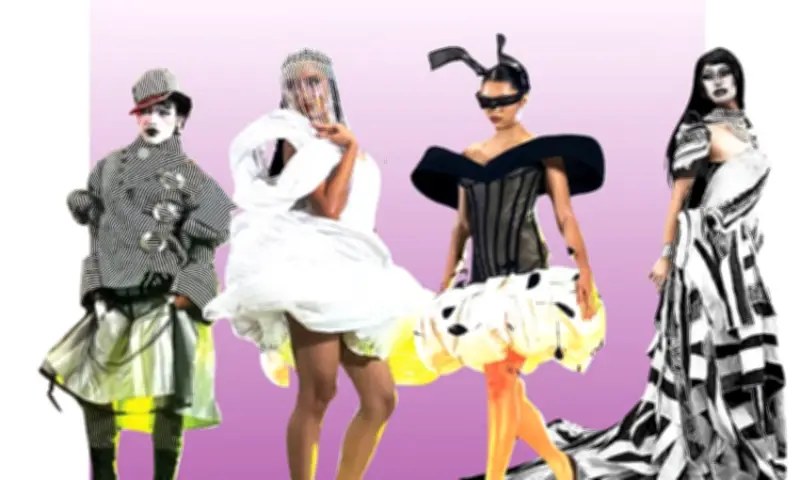
True fashion is rarely just about the clothes; it is about the stories woven into the very seams of the garments. This was the defining revelation at “Beneath the Fabric,” a striking fashion exhibition in which 30 third-year Product Design students from the University of the Philippines (UP) Cebu transformed the runway into a canvas for contemporary artistry.
Moving far beyond mere aesthetics, the showcase celebrated design as a powerful medium for personal and cultural expression, challenging the audience to look past the surface glamour and discover the deep, intentional narratives stitched into every single creation.
Abstract, tight deadlines
The atmosphere inside the venue was charged with the distinct, electric energy of raw, unfiltered creativity. For these 30 students, “Beneath the Fabric” was a trial by fire, born from an intense timeline and highly conceptual constraints.

“We had a month to prepare, and I had to challenge the kids,” shared Edwin Ao, a renowned fashion designer and the instructor guiding the student cohort.
Ao revealed that he split the assignment into two distinct, abstract categories: one group had to interpret a specific scent. At the same time, the other read deeply personal letters from unnamed individuals and translated those emotions into a garment. According to Ao, the ultimate soul of the exhibition stems from the concept of “Reporma” (reform) — and that structural philosophy is exactly where the story lives within the garment construction.
From olfactory to visual
For the students tasked with translating scent into structure, the exercise required a sharp pivot from traditional design thinking. It was a challenge compounded by strict visual limitations.
Thom Ilustrisimo, the designer of “Sumpa Kita, Sampaguita” admitted to being caught off guard when he received a strict monochromatic constraint on top of an already abstract brief. “I was surprised when we were given the prompt of black and white,” he said.
However, he quickly embraced the limitation as a creative catalyst. “As a creative, I should be challenged with the resources that I have.”
Tasked with the olfactory challenge, Ilustrisimo and his peers were given perfumes to envision. He chose to anchor his piece on the bittersweet narrative of the national flower, the Sampaguita. His resulting creation successfully translated the delicate yet heavy essence of the bloom into a stark, striking visual statement on the runway.
On the other side, designers were tasked with interpreting the written word, anchoring their garments in heavy, human emotions.
For Kenai Meneja, the designer of “Melancholy”, inspiration came from the heavy ache of longing. Her prompt was a poignant letter where the writer spoke of missing a specific individual and harboring a deep desire to be just like them.
“I wanted to convey those kinds of emotions into my piece,” Meneja said.
Navigating the emotional weight of the letter was only half the battle; as a first-time designer, Meneja also had to conquer a steep technical learning curve on the fly. “It’s my first time designing and sewing a dress. It was fun and stressful; however, it turned out great in the end.”
The fabric of reality
Design is a silent language, but for that evening, it spoke volumes.
By inviting the audience to look beneath the fabric, the exhibition successfully dismantled the misconception that fashion is merely superficial. Instead, the UP Cebu cohort proved that contemporary clothing can serve as a mirror to complex human experiences — whether it is the memory of a scent or the grief of an unread letter.
As the final models walked the stage to resounding applause, the message of the night lingered long after the music stopped: the true beauty of fashion lies not in the transient trends it sets, but in the stories it dares to tell.