
DA-Davao Launches AI-Powered Drone Initiative with Japanese Collaboration
The Department of Agriculture-Davao Region (DA-Davao) has officially entered into a memorandum of understanding with Japanese partners to initiate a groundbreaking pilot project. This initiative leverages artificial intelligence-powered drones to accurately count banana plants and identify diseases at an early stage in the region.
Pilot Areas and Initial Testing
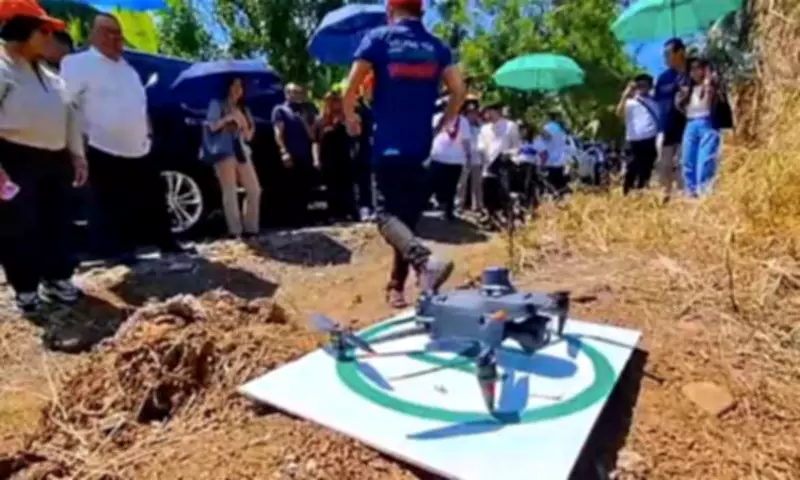
According to DA-Davao regional director Macario Gonzaga, the pilot areas will encompass farms in Davao del Norte and Davao de Oro, covering approximately 15 hectares. The first pilot test of this advanced technology was conducted at Laserna Farm in Ula, Tugbok District, Davao City, on March 30, 2026. Gonzaga emphasized that the team will thoroughly evaluate the effectiveness of the AI drone technology in detecting banana diseases.
"Once proven effective, we will campaign this to all banana growers. Especially the small-scale banana growers, we will help them with this drone technology," he stated.

Technology and Partnership Details
The project utilizes AI-assisted analysis of multispectral drone imagery to pinpoint infected banana plants and detect diseases during the presymptomatic stage. Gonzaga highlighted that the partnership with Japanese stakeholders is driven by the strong demand for Philippine banana exports to Japan. He added that this technology has the potential to significantly enhance banana production in the region.
The Department of Science and Technology will oversee project implementation, which includes drone operations, AI analysis, and field validation processes.
Addressing Disease Challenges in the Banana Industry
The banana industry, a leading export sector in the Philippines, continues to confront major obstacles, particularly from diseases like Fusarium wilt and inaccuracies in plantation data. Fusarium wilt, also known as Panama disease, is a lethal fungal infection caused by the soil-borne fungus Fusarium oxysporum. It ranks among the first banana diseases to achieve global spread.
This fungus infiltrates through the roots, colonizes the xylem vessels, obstructs the flow of water and nutrients, and ultimately kills the plant. It also affects other crops, including tomatoes and cotton.
Gonzaga noted that while no definitive solution exists yet to combat Fusarium wilt, AI-powered drone technology can improve plantation mapping, estimate plant populations, enable early disease detection, and support faster monitoring and response efforts.
Training and Implementation Strategy
Under the project, DA personnel and farm managers will receive comprehensive training on AI applications. The agency plans to develop manuals and operational guidelines, integrate drone-AI outputs into its monitoring system, and establish a digital database dedicated to plantation mapping and disease surveillance.
Overview of the Banana Industry in Davao Region
Davao Region maintains its status as the Banana Capital of the Philippines, with production reaching 3.19 million metric tons in 2024. This figure accounts for 94.8 percent of the region’s total fruit output.
Banana, especially Cavendish varieties, stands as one of the country’s top exports. Exports rebounded in 2025, with volumes estimated to grow by 25.6 percent to 2.93 million metric tons.
Key production areas include Panabo City and Tagum City in Davao del Norte, along with Davao del Sur and Davao de Oro.