Cebu City Residents Queue for Subsidized Rice as Market Prices Skyrocket
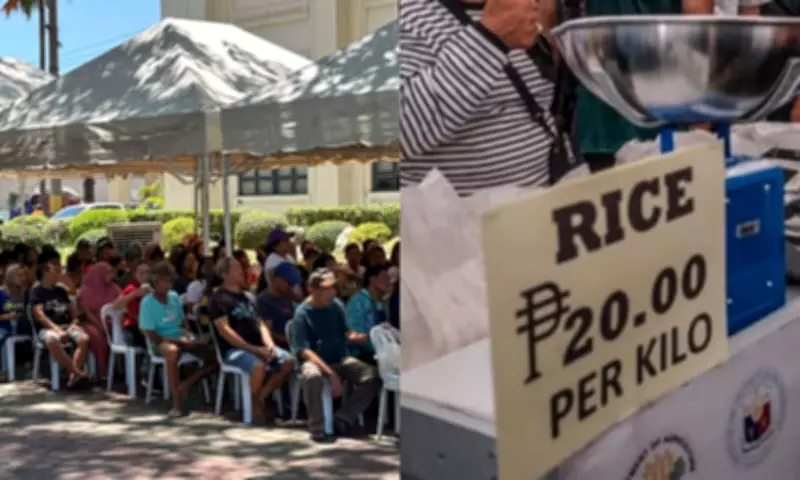
On March 30, 2026, long lines formed at Plaza Sugbo in Cebu City as residents from several barangays flocked to avail themselves of rice sold at a heavily subsidized price of P20 per kilo. This initiative, part of the city's "Benteng Bigas" program, aimed to provide relief amid soaring market prices that have climbed as high as P70 per kilo for the staple food.
Early Morning Rush for Limited Supplies
Residents from Barangays Sto. Niño, San Roque, and Tejero lined up early to register and secure a limited supply of the subsidized rice. The scene highlighted the growing desperation among low-income families grappling with the escalating cost of basic goods. For many, this program represents a crucial, albeit temporary, lifeline in their daily struggle to make ends meet.
Personal Stories of Economic Hardship
Noel Gallado of Barangay San Roque, who survives on a monthly income of P10,000, described the cheaper rice as only a short-term fix. "Everything is expensive now. Rice alone can reach P70 per kilo. It's really difficult," he said, adding that he relies solely on his monthly pension. He noted that the P20 rice might last about a week, and his family often mixes it with higher-quality rice to extend its use.

Sonia Olmoguez, also from San Roque, depends on irregular sideline jobs such as babysitting and laundry, earning as little as P400 on some days and nothing on others. Supporting a household of four, she remarked, "We just make do with what we have. The P20 rice helps, but only just enough."
In Barangay Duljo, Lorna Manayon shared her plight of having no stable income and relying largely on financial assistance. Her P1,000 monthly aid barely covers maintenance medicines, and she lamented, "It's not enough. Prices keep going up, and most of it goes to paying debts."
Families Grapple with Mounting Expenses
Cristy Dacira, a mother of six from San Roque, detailed the difficulty of budgeting on a single income. Her husband works as a security guard and driver, earning minimum wage with no work on weekends. With children in college, high school, and elementary—and one with special needs—expenses pile up quickly. "We can still eat three times a day, but everything has to be budgeted carefully," she said, urging the government to increase wages.
Balbiana Diola, also from San Roque, faces magnified challenges with nine children and a husband who earns an uncertain income as a massage therapist. She worries the rice they purchased may only last a day, stating, "Life is really hard. I just hope prices can go back to how they were before."
Calls for Regular and Expanded Support
Mary Jane Sode of Barangay Sto. Niño expressed gratitude for the program but pointed out its limitations. "This might last a week, but what about the next?" she asked, suggesting that similar rice distributions be conducted regularly in every barangay to reach more families. Residents also acknowledged the efforts of the local government, particularly Nestor Archival, for rolling out the initiative.
A Temporary Relief Amid Ongoing Struggles
As the cost of basic goods continues to rise, programs like "Benteng Bigas" provide temporary relief. However, for many families in Cebu City, the long lines at Plaza Sugbo reflect a more pressing reality: survival has become a daily struggle, and every kilo of rice counts. The event underscores the urgent need for sustained economic support and policy interventions to address the deepening cost-of-living crisis.