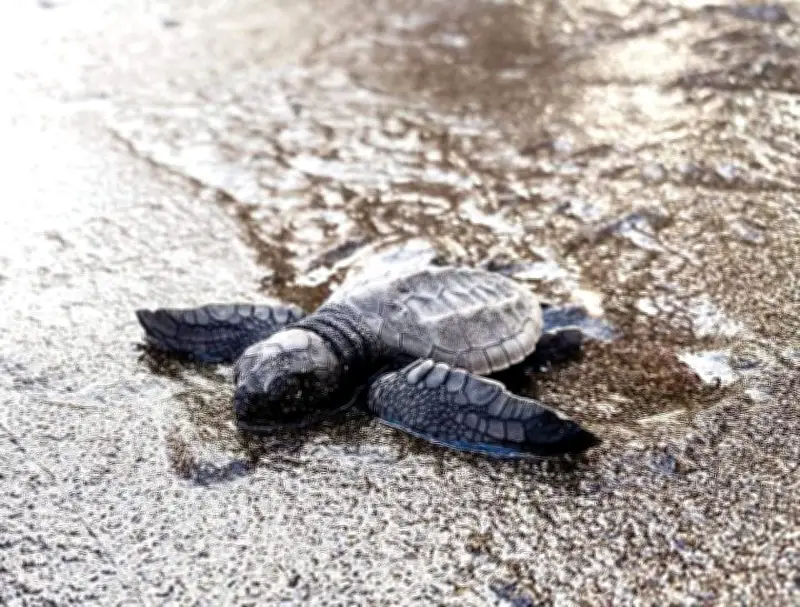
The Department of Environment and Natural Resources (DENR) 7 released 183 green sea turtle hatchlings into the waters off Panglao, Bohol on Friday, July 3, 2026, after they emerged from a protected nest at Hennan Premier Coast in Barangay Tawala.
Incubation and Hatchling Release
The hatchlings came from a clutch of 198 eggs that completed 51 days of incubation. The DENR 7 said 15 eggs have yet to hatch and remain under monitoring until the incubation period ends.
DENR 7 Director Laudemir Salac said the successful hatching reflects the results of coordinated conservation efforts involving the government, the private sector and the local community.

“This achievement proves that conservation efforts truly bear fruit when (the) government, the private sector and local communities work together,” said Salac. “Every protected nest and every hatchling that reaches the sea is a meaningful step toward securing the future of our marine biodiversity,” Salac added.
Green Sea Turtle Biology and Conservation
Green sea turtles or Chelonia mydas are migratory marine reptiles that depend on healthy coastal habitats for reproduction and survival, according to the US National Oceanic and Atmospheric Administration (NOAA). Adult female green sea turtles return to sandy beaches, often near their birthplace, to lay eggs above the high-tide line, where sand temperature helps determine incubation and hatchling development.
After about 45 to 75 days, hatchlings emerge mostly at night and instinctively head toward the brightest horizon over the ocean, a behavior that helps them avoid predators and reach deeper waters. NOAA notes that only a small number survive to adulthood due to natural threats.
The species depends on quiet, undisturbed beaches with suitable sand conditions and minimal artificial light, making nesting areas highly vulnerable to human disturbance and underscoring the need for coastal protection and conservation efforts.
Local Impact and Future Outlook
Bohol Provincial Environment and Natural Resources Office officer-in-charge Wilson Henson said each hatchling reflects improving marine ecosystem health. He added that protecting nesting sites is essential to ensure the species’ survival for future generations.