Cebu's Binaliw Landfill Tragedy: A Foreseen Disaster Exposing Systemic Waste Failures
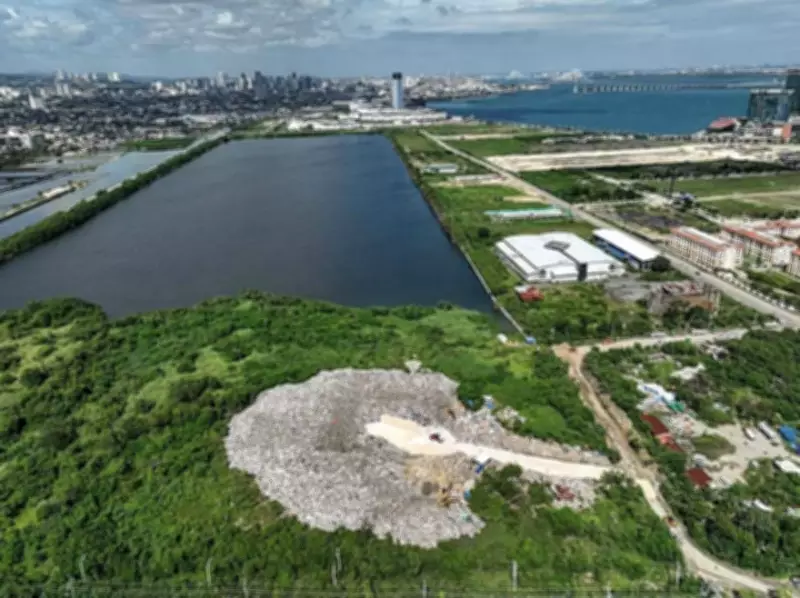
An aerial photo reveals a massive pile of garbage dumped in a vacant lot near Pond A at the Cebu South Road Properties, just meters from the closed Inayawan Sanitary Landfill, raising alarms about potential new dumping sites. The catastrophic trash slide at the Binaliw landfill, which claimed 36 lives, has transformed a long-simmering local government issue into a profound human rights tragedy. While the incident shocked residents of Cebu, environmental scientists and policy experts argue the disaster was not unforeseen. Instead, it stems from a decades-long gap between the strict requirements of national law and the actual enforcement on the ground.
The Binaliw Collapse and Its Causes
On January 8, 2026, a massive collapse of waste occurred at the Binaliw landfill in Cebu City. The facility had been operating under an amended Environmental Compliance Certificate (ECC) that expanded its area from 1.7 to 17 hectares in 2020. Though projected to handle 1,200 tons daily for a five-year lifespan ending in 2025, the landfill continued operations into 2026, eventually exceeding its design capacity and resulting in the fatal slide. Dr. Ian Dominic Tabañag, a chemical engineering specialist, confirmed that the trash slide was directly linked to the landfill operating beyond its design limits.
The Critical Disposal Gap and Policy Failures
Following the tragedy, experts highlighted a critical disposal gap during the forum Binaliw Trash Talk: Pride of Place and Waste Management on February 21, 2026. Cebu City generates an estimated 600 to 700 tons of waste daily, yet its legal disposal capacity only covers approximately 450 tons. This daily surplus of 150 to 250 tons creates systemic pressure that leads to overfilling and safety compromises at existing sites. The Binaliw tragedy illustrates that waste management is no longer just an aesthetic or logistical concern—it is a matter of public safety and environmental justice.

Republic Act 9003, the Ecological Solid Waste Management Act, has been the law for over 25 years, mandating waste diversion, segregation at the source, and the establishment of Materials Recovery Facilities (MRFs). Lito Vasquez, senior executive officer and Visayas policy advisor of the Philippine Movement for Climate Justice, stated that Cebu's waste problem stems largely from avoidance of responsibility and non-enforcement of key provisions of RA 9003 for more than two decades. For most people, waste is limited to collection. As long as the garbage is removed, it's out of sight and out of mind, Vasquez said.
Plastic Proliferation and Marine Impact
Scientific monitoring along Cebu's coastline, from Cogon Pardo to Il Corso, shows that plastic waste has nearly doubled in three years—rising from 600 kilograms per day in 2022 to an estimated 1,000 kilograms in 2025. This indicates that inland waste mismanagement has a direct, rapid impact on marine ecosystems. Dr. Tabañag raised alarm over this plastic pollution, noting that most of the waste consists of sachets, plastic bags, and fragments. Within just five days, discarded plastics from inland areas can reach coastal waters, making regular cleanups insufficient. Do we have enough resources to clean every day? No, he said, adding that Cebu remains among the top contributors to marine plastic waste in the country. He emphasized that waste mismanagement is not only technical but behavioral, rooted in a belief system that is difficult to change.
Human Cost and Global Implications
The Binaliw landslide transformed policy non-compliance into a death toll. While the waste contractor has provided burial expenses and scholarships to survivors, advocates argue that corporate and governmental accountability must shift from paying for damage to preventing disaster. Cebu's struggle mirrors a global tension in rapidly urbanizing cities and reflects a larger national crisis. A study published by Science Advances identifies the Philippines as the world's leading contributor to plastic waste emissions into the ocean.

The research highlights that it is not just the total volume of plastic produced that determines environmental impact, but the effectiveness of waste management systems. For instance, while China generates significantly more total plastic waste, the Philippines emits more into the ocean because a staggering 8.8 percent of its mismanaged plastic waste reaches the sea through its 4,820 rivers. According to the study, the Philippines emits approximately 356,371 metric tons of plastic per year, followed by India, Malaysia, and China. This data underscores that Cebu's local failures are contributing to a global environmental emergency.
Future Challenges and Key Developments
The big question for Cebu is what happens when the current landfill contracts expire. Without a permanent, sustainable strategy, the city risks falling into a cycle of emergency dumping and illegal site use. Observers should monitor several key developments:
- Barangay Decentralization: Whether local officials will finally empower individual barangays to manage their own MRFs and composting, as RA 9003 intended.
- The Polluter Pays Principle: Whether the government will start enforcing stricter financial and legal penalties on companies and individuals that fail to comply with environmental standards.
- WTE Legislation: The potential fast-tracking of Waste-to-Energy facilities, which remains a controversial but increasingly discussed alternative to landfills.
- Legal Action: Whether the 2026 tragedy leads to landmark litigation against officials for non-enforcement of environmental laws, setting a precedent for local government accountability.
Legal experts often compare Cebu's infrastructure to cities like Yokohama, Japan, which utilizes a highly organized system of strict segregation and advanced waste-to-energy facilities. In contrast, Cebu City still lacks the infrastructure to prevent inland waste from becoming marine pollution, highlighting the urgent need for systemic change.