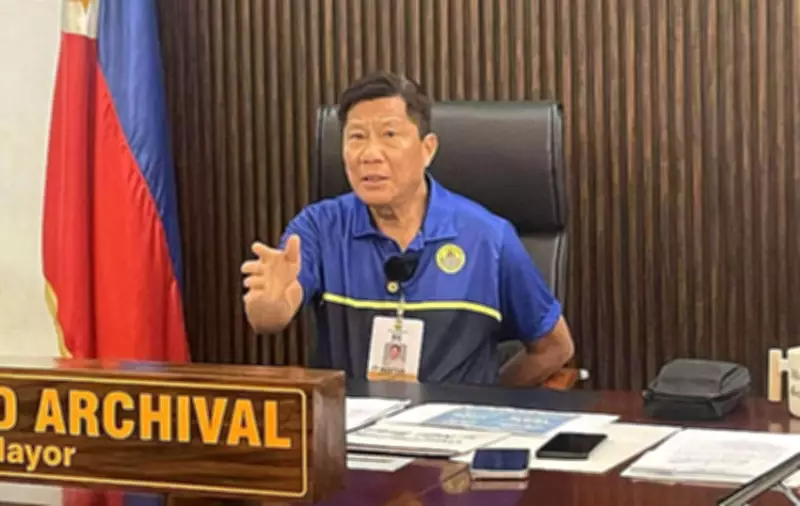
Cebu City's Waste Segregation Policy Delayed Amid Landfill Crisis
Cebu City's ambitious plan to strictly enforce waste segregation this March is facing significant delays, primarily due to the city's lack of a stable garbage disposal site. Mayor Nestor Archival has expressed his commitment to implementing the separation of biodegradable and non-biodegradable waste, but this effort has been complicated by the closure of the main landfill. The policy, originally scheduled to start on February 10, was put on hold following a tragic trash slide on January 8 that resulted in 36 fatalities and multiple injuries.
"It is still difficult to fully implement the waste segregation policy," Archival stated, highlighting the ongoing challenges. Before the landfill crisis escalated, Cebu City was preparing to roll out a "No Segregation, No Collection" policy. Under this plan, first-time violators would face a P1,000 fine or four hours of community service, with penalties increasing for repeat offenses up to P5,000 fines or six months in jail.
Landfill Closure and Disposal Struggles
The crisis began when the Department of Environment and Natural Resources in Central Visayas indefinitely closed the Prime Integrated Waste Solutions (PWS) Cebu landfill in Barangay Binaliw after the trash slide. Since then, Cebu City has struggled to find a reliable disposal site for the 400 to 600 tons of garbage generated daily from its 80 barangays. Archival emphasized, "Even if we continue segregating but we have nowhere to dump the waste, what will happen? So we focus on one problem first. We cannot handle everything at once."

Currently, the city is transporting waste to the San Rafael Landfill Corp. in Aloguinsan, approximately 60 kilometers away, with about 25 garbage trucks making daily trips. This shift has led to a sharp increase in costs, as the tipping fee rose to P3,906 per ton, over 70% higher than the previous rate of P1,100 per ton at the Binaliw landfill. City councilors have raised concerns about these escalating hauling expenses.
Potential Solutions and Future Plans
Mayor Archival has moved the full rollout of the segregation policy to March, allowing time for more information campaigns and a "dry run." He hopes to divert at least 100 tons of waste daily through proper segregation by December, which could significantly reduce monthly expenses at the current Aloguinsan rate. Possible short-term solutions include approving the environmental compliance certificate for PWS Cebu to open interim cells for up to two months, and city councilors are pushing to reopen a three-hectare portion of the Binaliw landfill by March 2026 as an interim measure.
PWS manager Niño Abellana Jr. noted that rehabilitating the 17-hectare Binaliw landfill may take six months to a year, but the company is exploring ways to help accommodate the city's waste. For residents, full enforcement of segregation may be delayed, but Archival urges households to start separating waste now to build discipline for when stable disposal systems are in place. This situation underscores that without a safe and reliable landfill, even well-intentioned policies can stall, highlighting the broader challenges in urban waste management.