In a casual conversation between two friends, one inquired about the other's daughter. "Where is your daughter now?" asked the first. The second replied, "She went to the city to become an astronaut." Puzzled, the first friend asked, "What's an astronaut?" The second humorously clarified, "She's working as a maid—it's like going to the moon for work." This light-hearted exchange reflects a broader societal awareness of space exploration, even as it intertwines with everyday economic struggles.
Historic Lunar Mission Takes Flight
On April 1, the National Aeronautics and Space Administration (NASA) launched the Artemis II mission, a 10-day journey to the moon carrying four astronauts aboard the Orion spacecraft. This marks the first crewed mission to the moon since 1972, reigniting global interest in lunar exploration. The powerful rocket launch propelled the astronauts and Orion into space, a spectacle that drew comparisons to the rapid surge in fuel prices, such as diesel and gasoline, in the Philippines.
Fuel Price Monitoring and Economic Concerns
According to price monitoring data from the Department of Energy for the week of March 24 to 30, regular diesel prices ranged from P105 to P131.90 per liter, while premium diesel was priced between P119.50 and P140.20 per liter. Gasoline prices varied from P84 to P111.10 per liter. As the Orion spacecraft orbits the moon, there is growing public anxiety that upon its return to Earth, diesel prices in the Philippines could skyrocket to P170 per liter. This has led to questions about whether emergency powers granted to President Ferdinand "Bonbong" Marcos Jr. by law can effectively curb these increases.

The Artemis II mission involves astronauts orbiting the moon without landing, utilizing gravitational forces to navigate the spacecraft. While this scientific achievement aids in space travel, it does little to mitigate the rising fuel costs affecting Filipino consumers. The disconnect between advanced space technology and ground-level economic issues highlights a pressing challenge for policymakers.
Diplomatic Efforts and Fuel Supply Security
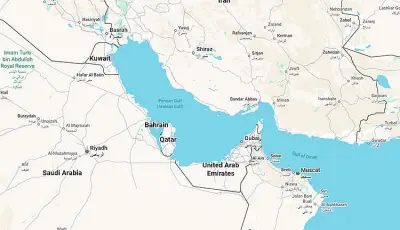
In related developments, Foreign Affairs Secretary Ma. Theresa Lazaro successfully negotiated with Iranian Foreign Minister Seyed Abbas Araghchi, ensuring safe passage for Philippine-flagged ships and Filipino seafarers through the Strait of Hormuz. This agreement, part of high-level talks ordered by President Marcos, also secures the transit of oil tankers carrying fuel to the Philippines. Although the Philippines is not directly involved in conflicts between the United States, Israel, and Iran, the nation remains vulnerable to fuel price fluctuations influenced by global tensions.
Future Implications and Urban Challenges
With a secured fuel supply, the primary concern shifts to pricing. Urban and provincial roads in Cebu are already experiencing decreased traffic congestion, raising speculation about who might solve the persistent traffic woes. Some wonder if figures like US President Donald J. Trump could offer solutions, though this remains speculative. The juxtaposition of a landmark space mission with domestic fuel price debates underscores the complex interplay between international achievements and local economic realities, calling for sustained attention from both government and citizens.