
ASEAN Foreign Ministers Demand Immediate End to Middle East Hostilities
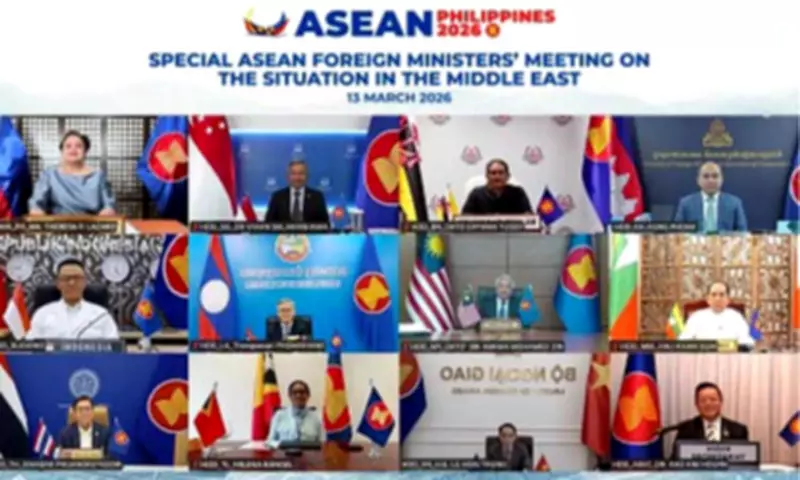
In a virtual special meeting chaired by Philippine Foreign Affairs Secretary Ma. Theresa Lazaro on Friday, March 13, 2026, the Association of Southeast Asian Nations (ASEAN) renewed its urgent call for the "immediate cessation of hostilities" in the ongoing Middle East conflict. The meeting, convened by the Philippines as the 2026 ASEAN chair, brought together foreign ministers and senior officials to address the crisis and its far-reaching implications for the region.
Diplomatic Appeals and Regional Stability
Secretary Lazaro emphasized that ministers and senior officials unanimously urged all parties to "exercise utmost self-restraint and resolve differences through diplomacy and dialogue." The ASEAN chair statement highlighted the critical importance of maintaining regional peace, stability, and prosperity, while upholding international law. It stressed that dialogue and diplomacy must serve as the primary tools for resolving conflicts and tensions.
The meeting saw participation from the foreign ministers of Brunei, Indonesia, Laos PDR, Singapore, and Vietnam, along with senior officials from Cambodia, Malaysia, Myanmar, and Timor-Leste. Ministers engaged in in-depth discussions on the broader consequences of the crisis, particularly focusing on its cascading effects on energy supply chains, commodity prices, macroeconomic stability, and the welfare of ASEAN nationals in conflict-affected areas.

Economic Concerns and Mitigation Strategies
ASEAN Economic Ministers, meeting concurrently at the 32nd ASEAN Economic Ministers’ Retreat in Taguig, Philippines, expressed deep concern over the tensions. They echoed the call for de-escalation through diplomatic means, warning that prolonged instability could severely challenge the global economic outlook, already weakened by recent headwinds. The conflict has already driven up freight, insurance, and logistics costs, contributing to inflationary pressures on energy, food, and other essential goods.
To mitigate these impacts, the Economic Ministers vowed to keep ASEAN markets open for trade and investment. They emphasized the need to strengthen regional energy security and resilience, given ASEAN's exposure to global oil and liquefied natural gas (LNG) supply routes. Collaboration on existing frameworks like the ASEAN Framework Agreement on Petroleum Security (APSA), the ASEAN Power Grid (APG), and the Trans-ASEAN Gas Pipeline (TAGP) was highlighted as crucial for ensuring stable and sustainable energy connectivity.
Call for Coordinated Action and Solidarity
The Philippines urged ASEAN states to swiftly identify and implement short-term mitigation measures, including sharing best practices, coordinating policy responses to cushion economic shocks, and safeguarding ASEAN nationals abroad and regional supply chains. Ministers reaffirmed ASEAN's collective obligation to provide emergency assistance and consular protection to nationals of member states during the crisis.
Additionally, they explored potential collaboration with external parties to address the situation. The Economic Ministers stressed the importance of safeguarding food security by fully implementing relevant ASEAN agreements to minimize disruptions in regional food supply chains, keep markets open, and reduce excessive price volatility.
In a joint statement, the Economic Ministers reaffirmed ASEAN's solidarity, economic integration, and policy coordination in navigating external shocks. They committed to facilitating trade, strengthening logistics connectivity, and ensuring the mobility of business people to support ongoing trade and investment activities across the region.