Philippine Government Agencies Stand Ready for OFW Repatriation from Middle East
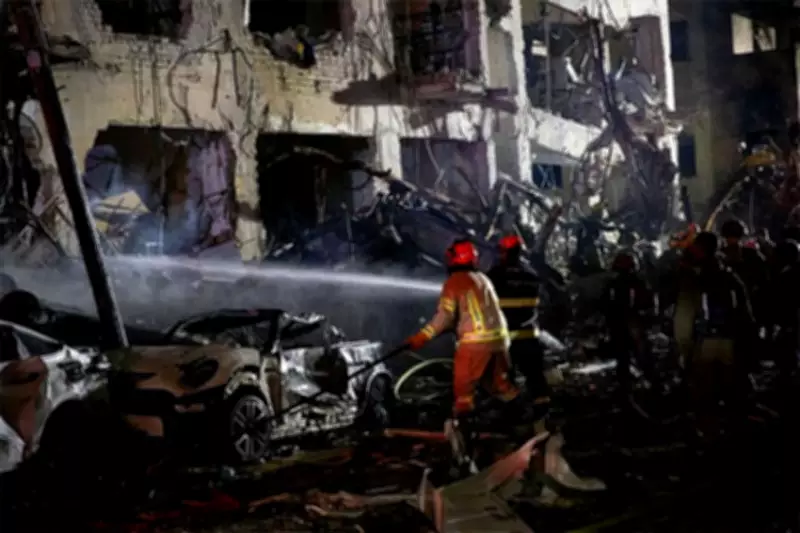
The Department of Migrant Workers (DMW) and the Overseas Workers Welfare Administration (Owwa) have officially declared their preparedness to execute repatriation operations for overseas Filipino workers (OFWs) currently situated in the crisis-stricken Middle East. This announcement comes in direct response to escalating regional tensions following ballistic missile attacks launched from Iran targeting Israel.
Official Statements on Repatriation Readiness
During a press briefing held on Wednesday, March 4, 2026, Migrant Workers Secretary Hans Leo Cacdac and Owwa Administrator PY Caunan jointly confirmed that all necessary logistical frameworks for repatriation are fully established. However, both officials emphasized that the final decision to proceed requires explicit authorization from President Bongbong Marcos Jr., with safety considerations remaining paramount.
"All the ways in which we can carry out the repatriation are in place. But safety is beyond our control. So we really have to seriously look into whether we can repatriate them now given the risks," Secretary Cacdac stated, highlighting the complex security environment.

Administrator Caunan reinforced this position, adding, "Once there is a clear directive from the Department of Foreign Affairs, the DMW, and the President, we stand ready to repatriate and provide the services needed."
Current OFW Repatriation Requests and Locations
According to the latest data released by Owwa, a total of 1,189 overseas Filipino workers have formally requested repatriation to the Philippines. The breakdown of these requests by location is as follows:
- 278 OFWs in Bahrain
- 246 OFWs in Abu Dhabi
- 231 OFWs in Dubai
- 173 OFWs in Qatar
- 62 OFWs in Kuwait
- 46 OFWs in Israel
- 5 OFWs in Lebanon
Logistical Challenges and Alternative Routes
Secretary Cacdac acknowledged significant logistical hurdles complicating the repatriation process, primarily due to the closure of multiple airports and airspaces across the region. In response, the DMW is actively exploring alternative transportation methods to ensure the safe return of affected workers.
"We are mainly looking at land travel as a possible route but are also not discounting the possibility of doing it by sea," Cacdac explained, indicating that all viable options are being thoroughly evaluated to overcome current aviation restrictions.
Repatriation of Fallen OFW's Remains
In a somber additional note, Administrator Caunan confirmed that Owwa is simultaneously coordinating efforts to repatriate the remains of caregiver Mary Ann Velasquez de Vera, an overseas Filipino worker who tragically lost her life during an Iranian missile attack in Israel.
"Once ready, we will immediately work on bringing her remains to her family. We are just waiting for the time when we are cleared to repatriate her remains," Caunan stated, underscoring the agency's commitment to honoring both living and deceased OFWs during this crisis period.
The Philippine government's proactive stance demonstrates its ongoing dedication to protecting its citizens abroad, even as geopolitical tensions create unprecedented challenges for international worker safety and mobility in the Middle East region.