Philippine Space Agency Identifies Source of Mysterious Sky Lights
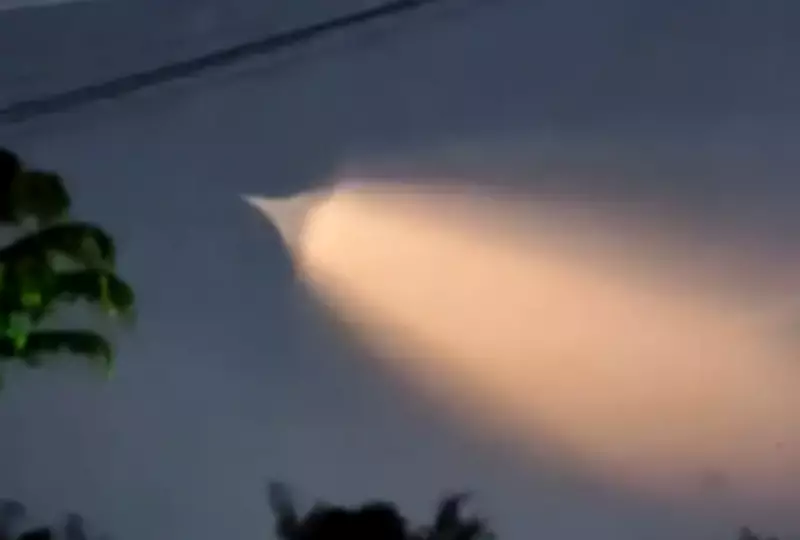
The Philippine Space Agency (PhilSA) has provided a scientific explanation for the unusual luminous display observed across various regions of the country during the evening of April 11, 2026. According to the agency's official statement, the captivating light show was directly caused by the passage of a recently launched Chinese rocket through the upper atmosphere.
Rocket Launch Creates Atmospheric Spectacle
PhilSA confirmed that the Jielong-3 rocket was launched at approximately 7:32 PM from disputed waters in the South China Sea. The mysterious lights were subsequently spotted in multiple Philippine provinces, including Pangasinan and Tarlac, around 7:40 PM that same evening. The timing and trajectory align perfectly with the rocket's flight path, establishing a clear connection between the launch and the visual phenomenon witnessed by thousands of Filipinos.
The 'Space Jellyfish' Phenomenon Explained
Space agency officials have identified the specific atmospheric occurrence as what they term a "space jellyfish" effect. This remarkable visual display occurs when rocket exhaust particles in the upper atmosphere become illuminated by sunlight while the Earth's surface below is already shrouded in darkness. The resulting contrast creates a brilliant, shimmering light formation that often resembles the distinctive shape of a jellyfish floating through the night sky.

The scientific explanation reveals that this phenomenon is not uncommon following rocket launches during twilight hours, though it remains a relatively rare sight for ground observers. The specific conditions required—including precise timing, atmospheric composition, and viewing angles—must align perfectly to create such a visible display from Earth's surface.
Public Awareness and Scientific Clarification
PhilSA's prompt clarification serves multiple important purposes for the Philippine public. First, it provides factual information to dispel potential misinformation or speculation about the unusual lights. Second, it demonstrates the agency's monitoring capabilities and scientific expertise in tracking space-related activities that affect Philippine airspace. Finally, it offers an educational opportunity about atmospheric science and space technology for citizens who witnessed the event.
The agency emphasized that such phenomena, while visually striking, are generally harmless natural consequences of space launch activities. However, they represent important markers of increasing space traffic and technological development in the region that require continued monitoring and analysis by national space agencies.