Nearly two decades after their inception, Technology and Innovation Support Centers (TISCs) have empowered millions of researchers and inventors worldwide by optimizing access to global patent and scientific databases. While many TISCs have primarily focused on technology protection, a select few, notably the Philippines, have expanded their mission to translate innovations into tangible market impact.
Philippines Praised as a Global Leader in TISC Maturity
Alex Riechel, Head of the TISC Development Section at the World Intellectual Property Organization (WIPO), highlighted the Philippines as "among the longest established and most advanced TISC networks in the world." This maturity enables the country to prioritize outcome-based metrics over mere activity counts, demonstrating real economic and social gains.
The Intellectual Property Office of the Philippines (IPOPHL) has adopted a progressive approach by tracking not only intellectual property (IP) filings but also commercialization outcomes. Success indicators now include the number of IP assets commercialized and licensing transactions, reflecting a strategic shift toward measurable value.

Commercialization Success and Regional Influence
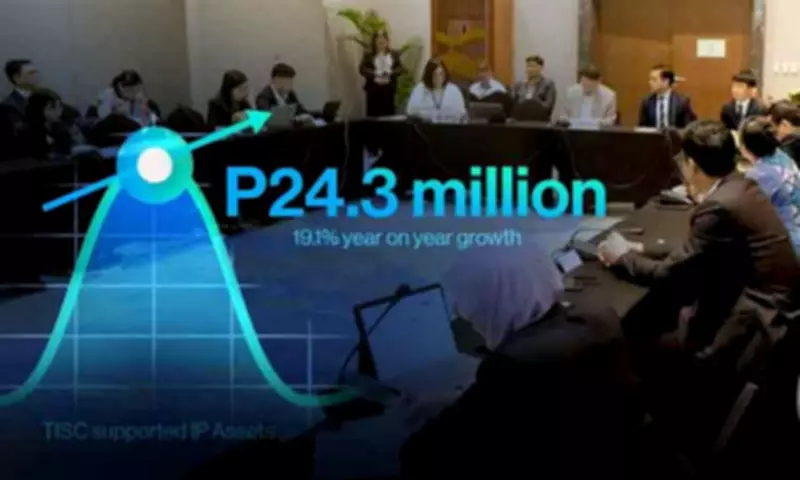
At a recent WIPO regional meeting, ASEAN member states exchanged best practices to strengthen the TISC Network. IPOPHL's methodology garnered significant attention, particularly its tracking of revenues from TISC-supported IP assets, which surged 19.1% year-on-year in 2025 to P24.3 million. This focus on commercialization was underscored in WIPO's TISC Report 2024, which surveyed 1,667 centers across 93 countries and spotlighted the Philippines for actively incentivizing market uptake.
IPOPHL's "Palladium" cluster represents the highest distinction for TISCs, awarded based on service volume and quality in areas like patent filing, IP commercialization, and international applications. Additionally, the Philippine model emphasizes inclusion, with six ITSO staff registered as pro bono agents under the Inventor Assistance Program to support underserved innovators.
From Awareness to Market: University-Led Initiatives
Commercialization begins with awareness, as noted by Dr. Lourdes Marie S. Tejero, Director of UPM's Technology Transfer and Business Development Office. "Some researchers didn't realize their work was patentable until IP awareness campaigns sparked eureka moments," she explained. UPM facilitates this transition through networking events and investor galas to bridge research with market applications.
Engagement with ITSOs has transformed research into enterprise. Dr. Joel P. Ilao, CEO of VISION Technologies Corporation, stated, "It enabled our shift from research that works to research that survives outside the laboratory." With support from DLSU's ITSO, including licensing discussions and innovation grants, the startup achieved maturity.
DLSU extends its efforts to students through IP Advocates (IPA), who conduct awareness campaigns and intern with the university's ITSO. Meanwhile, Adamson University (AdU) runs a four-phase incubation program, providing IP assistance and industry linkages to guide startups from ideation to market.
Leadership in ASEAN and Future Directions
With 103 ITSOs nationwide, accounting for over 40% of ASEAN's nearly 250 TISCs, the Philippines leads the region in demonstrating real-world impact. IPOPHL Deputy Director General Ann Claire C. Cabochan, Chair of the 2nd ASEAN TISC Network Task Force, emphasized, "Leadership in innovation means building systems that move ideas from research to protection and into the market."
A recent tour organized by IPOPHL allowed ASEAN delegates to visit ITSOs at AdU, DLSU, and UPM, showcasing institutions at the forefront of IP commercialization. Dr. Merlinda A. Palencia, CEO of Envigor Natural Products Manufacturing Inc., credited AdU's ITSO for turning her research into a viable business, stating, "Without your support, we may not have the courage to step into technopreneurship."

Acting Director General Nathaniel S. Arevalo summarized IPOPHL's vision: "Our goal is impact—ensuring protected technologies reach the market, generate income, create jobs, and address real needs through our TISC network." This holistic approach positions the Philippines as a global benchmark in innovation translation.