Senator Ronald “Bato” dela Rosa can either be extradited or voluntarily surrender in connection with the arrest warrant issued by the International Criminal Court (ICC) for crimes against humanity during former President Rodrigo Duterte’s drug war, Philippine National Police (PNP) spokesperson Brigadier General Randulf Tuaño said on Tuesday, May 12, 2026.
Legal Options for Implementation
In a press conference, Tuaño explained that the ICC warrant is subject to existing laws, due process, and coordination with relevant agencies. He stated that the National Central Bureau-Philippine Center on Transnational Crime (NCB-PCTC) will determine whether extradition proceedings or direct surrender will be pursued.
“We will wait for the NCB-PCTC to convene and decide on the approach. As of now, there is no direct order for the PNP to arrest Senator Dela Rosa,” Tuaño said. The NCB-PCTC includes the PNP, National Bureau of Investigation (NBI), Department of Justice (DOJ), and Department of Foreign Affairs (DFA).

Extradition vs. Direct Surrender
Extradition requires a local court order following a petition from the ICC, which involves hearings guided by the DOJ. This process can be lengthy. Direct surrender, on the other hand, is provided under Republic Act 9851, which penalizes crimes against international humanitarian law. This method was used when Duterte was transferred to ICC custody in March 2025.
Under direct surrender, the ICC coordinates with Interpol, which then works with the NCB-PCTC and local law enforcement to execute the warrant.
Senate Protective Custody
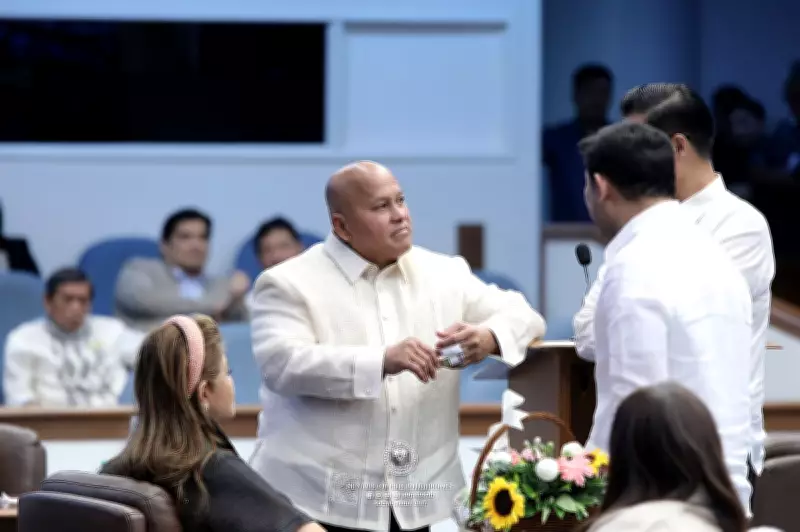
The ICC confirmed the arrest warrant on Monday, May 12, 2026, hours after Dela Rosa appeared in the Senate following a six-month absence. His arrival coincided with a leadership change that ousted Senate President Vicente Sotto III. A commotion ensued as NBI personnel allegedly tried to prevent him from entering the plenary hall, leading to a staircase chase.
Later that evening, senators placed Dela Rosa under the chamber’s protective custody to allow him to exhaust legal remedies.
Legal Experts Weigh In
Constitutional law expert Domingo Cayosa said the Senate’s protection is temporary and cannot shield Dela Rosa from accountability. “The protective custody is just to avoid chaos, but eventually the arrest can be carried out regardless of the senators’ wishes,” he said.
Cayosa warned that if lawmakers obstruct the warrant’s service, they could face obstruction of justice charges, leading to imprisonment or disqualification from public office. He emphasized that the rule of law applies equally to all, and no Senate resolution can override legal provisions.
He also clarified that the ICC warrant falls under Republic Act 9851, which recognizes the international tribunal’s authority. “Even though the Philippines withdrew from the Rome Statute, we have a residual obligation to cooperate with the ICC for cases initiated before withdrawal,” Cayosa added.