
In diplomacy, positions are often articulated through carefully calibrated language. Yet not all expressions of goodwill can or should be conveyed in words. At times, a gesture or a symbol can amplify goodwill more effectively in silence. For countries like China and the Philippines, bound by close cooperation yet marked by periodic friction, such nonverbal signals often become critical diplomatic details.
It was with this perspective in mind that, upon seeing Ambassador Jing Quan attend an event wearing the Philippine national attire, the barong, I was reminded of the first time I wore one myself. It was during a school parade marking Independence Day in my secondary school years. That morning, a few Chinese classmates and I stood hesitantly in the corridor, barongs in hand, exchanging uncertain glances. As one of the few Chinese students on campus, we felt a degree of hesitation. After all, the barong carries deep national symbolism for the Philippines. Thinking that, would wearing it feel out of place, perhaps even awkward? I stood in front of the mirror, adjusting my collar, and I felt a certain caution, as if I were tentatively stepping into an unfamiliar cultural space.
Yet once we stepped out and joined the parade, the atmosphere shifted almost imperceptibly. Passersby smiled more warmly than usual. Some nodded in greeting; others offered friendly remarks. One local Filipino even joked to me, “You look just like a Filipina.” In that moment, I did not feel a transformation of identity. I remained a foreign student, still distinct from my Filipino peers. But within those brief minutes, I could clearly sense that a certain distance had quietly narrowed. The clothes themselves did not change who we were, but they changed how we were seen and understood.

That day, I realized that clothing can function as a kind of “buffer.” It does not erase differences, nor does it alter underlying positions. But it can recalibrate the atmosphere, softening latent defensiveness. It sends a signal that requires no explanation: a willingness to approach, to respect. And even before a word is spoken, it subtly adjusts the emotional temperature.
With this realization, I began to observe public expressions, especially in sensitive contexts, through a different lens. When issues themselves carry tension, how something is expressed can matter just as much as what is being expressed. Later, when I noticed Ambassador Jing Quan wearing the barong on several occasions, I paid attention to how my Filipino friends reacted. Their responses were strikingly consistent. “It shows he really respects the Philippines,” one said with a smile. Another added: “He must really like our culture.” These were not formal political judgments, but spontaneous expressions of goodwill. A figure once perceived as distant suddenly felt more approachable. In their eyes, he was no longer just a foreign diplomat, but someone willing to engage within the cultural context of the Philippines.
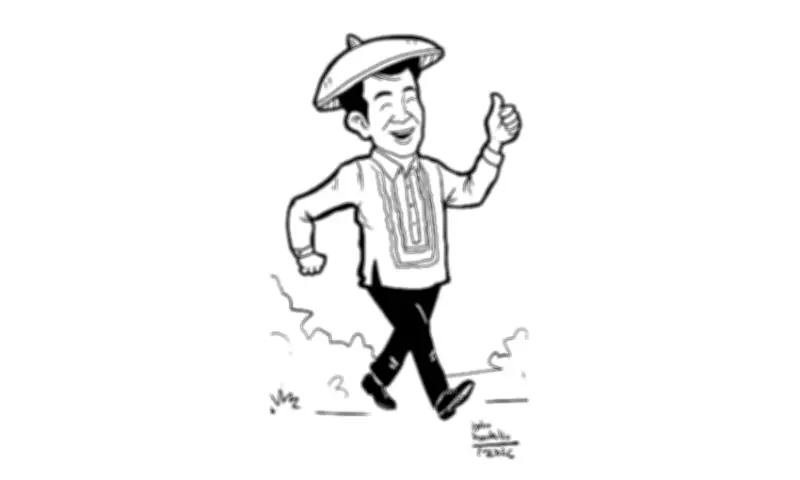
In diplomatic settings, language is often scrutinized and parsed word by word. But clothing communicates earlier. Before words are spoken, visual cues already convey an attitude. When a foreign ambassador wears the barong, it signals more than propriety. It reflects a symbolic gesture of proximity, a willingness to engage within the host country’s cultural framework. Such silent expressions are not isolated incidents. In recent years, they have appeared repeatedly in key moments of China-Philippines diplomacy.
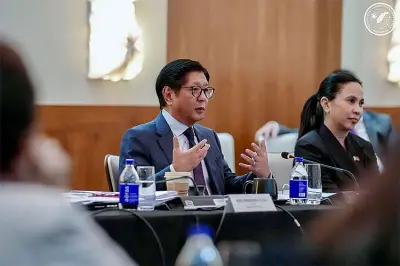
In 2022, Chinese Foreign Minister Wang Yi visited Manila and met President Ferdinand Marcos Jr. at Malacañang Palace, wearing a barong. At the time, President Marcos had just taken office, and the Philippines was in the early stages of recalibrating its foreign policy. Bilateral relations stood at a sensitive juncture. While observers focused on the signals that would emerge from formal talks, a visual message had already been conveyed: by wearing the barong, China’s top diplomat expressed not only ceremonial appropriateness, but also respect for the Philippines as host and a willingness to engage on equal footing.

Two years later, a similar gesture reappeared. In 2024, during the ASEAN Foreign Ministers’ Meetings in Vientiane, Laos, Wang Yi once again wore a barong when meeting Philippine Foreign Secretary Enrique Manalo. Notably, this was not in the Philippines, but in a third-country multilateral setting. Yet the symbolism remained consistent: in diplomatic interactions involving the Philippines, China signaled its readiness to engage through the Philippines’ own cultural lexicon. When such details recur across time and contexts, they cease to be incidental choices of protocol. They evolve into a stable mode of diplomatic expression.
Language can certainly convey intentions of cooperation, but it is also prone to over-interpretation and emotional amplification. Cultural symbols, by contrast, often enter public perception in a subtler yet more enduring way. When goodwill is embedded within familiar cultural forms, it becomes easier to perceive—and easier to remember. In this sense, the barong carries a unique power in diplomacy: it speaks without speaking, amplifying goodwill in silence. Some forms of goodwill, when merely stated, risk being dismissed as routine diplomatic rhetoric. But when they are quite literally worn, they are more readily perceived as sincere.
Finally, in the Philippines, the barong is not just formal attire. It is a vessel of national history and identity. In the context of still-complex China-Philippines relations, it remains necessary to articulate firm principles and positions. Yet firmness does not have to entail emotional confrontation. Mature diplomacy often lies precisely in this delicate balance: maintaining clarity of stance while preserving space for mutual respect. I still remember that school parade vividly. Wearing the barong did not change who I was. But over the course of those brief minutes, I felt a tangible shift in how others responded to me. The distance quietly narrowed. It was subtle, but real.
At the diplomatic level, such subtlety matters as well. Diplomacy ultimately returns to policy and interests. Yet beyond formal agendas, interactions between states also unfold in the realm of symbols and emotions. How positions are understood depends not only on what is said, but also on how it is conveyed. The barong cannot replace policy, nor resolve differences at the negotiating table. But like a silent amplifier, it makes goodwill more visible and more memorable within the other society. It completes part of the communication before words even begin. In this sense, the barong is indeed an amplifier of goodwill. It does not substitute for diplomatic language, but beyond language, it allows goodwill to be perceived with greater clarity.
The writer is an overseas Chinese student pursuing a Bachelor’s degree in International Relations at Jinan University.