Navotas Lawmaker Proposes Ban on 'Number 8' Protocol Plates for House Members
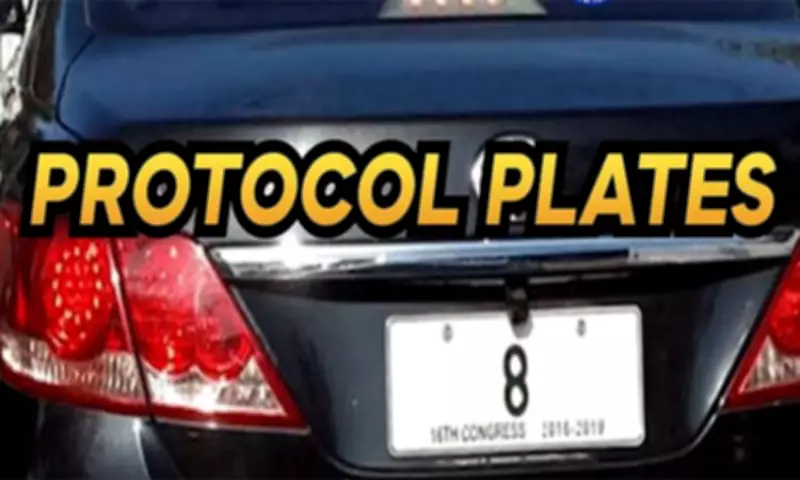
In a move to promote equality and curb potential abuses, Navotas City Representative Toby Tiangco has introduced a legislative measure seeking to prohibit the issuance and use of "Number 8" protocol or courtesy license plates on vehicles belonging to members of the House of Representatives. This proposal, detailed in House Bill No. 7599, aligns with constitutional mandates that government officials should not receive special privileges.
Constitutional Basis and Past Issues
Representative Tiangco emphasized that the bill is rooted in the Philippine Constitution, which explicitly states that public officials should not be granted undue advantages. He highlighted historical concerns, noting that the proliferation of vehicles with protocol plates has often been linked to abusive behavior by individuals driving or using these vehicles, whether they are high-ranking government officials or impostors posing as such.
"Several times in the past, the proliferation of vehicles with protocol plates has been identified with abusive behavior exhibited by individuals driving or using these vehicles, whether high-ranking government officials or persons posing as such," Tiangco explained, underscoring the need for reform.

Legislative History and Current Push
This is not the first time Tiangco has championed this cause; he initially filed a similar measure during the 17th Congress, but it stalled at the committee level. Encouraged by ongoing reforms within the House, he has decided to refile the bill, expressing hope for its enactment. "Kung may no work-no pay na, kasama iyan sa reform na kailangan," he remarked, adding that he has personally abstained from using a "Number 8" plate since becoming a lawmaker.
Challenges in Enforcement and Public Identification
Tiangco pointed out practical difficulties in enforcing traffic laws due to the widespread use of protocol plates. With nearly 300 members in the House of Representatives, it becomes nearly impossible for traffic law enforcement agencies across the nation to verify the true identities of those using such plates. "Moreover, it has become more and more difficult for motorists and the public to identify the individuals concerned, as thousands of protocol plates are issued to various government officials," he added, stressing the confusion and lack of accountability.
Key Provisions of House Bill No. 7599
The bill outlines several critical measures to address these issues:
- Prohibition of the issuance and use of "Number 8" protocol license plates for House members.
- Cancellation, recall, and withdrawal of all previously issued plates bearing the "Number 8" designation.
- Mandate for the Land Transportation Office (LTO) to immediately cease issuing such plates upon the law's enactment.
Penalties for Violations
To ensure compliance, the bill imposes strict penalties:
- Individuals driving or using vehicles with prohibited protocol plates may face fines of up to P25,000 or imprisonment of up to six months.
- Officials or employees of the LTO, or any person involved in issuing such plates, will also be subject to the same penalties.
- These penalties will not interfere with the House's internal disciplinary powers over its members, as per its rules.
Setting an Example for Good Governance
Tiangco concluded by urging his colleagues to lead by example. "As lawmakers, members of the House of Representatives should set a good example by passing a law that will curtail a privilege presently granted to them and that would put them on equal status with other vehicles on the road," he stated. Protocol plates, commonly known as low-numbered license plates, have long been reserved for high-ranking officials in the Philippines, with "Number 8" specifically assigned to House members.