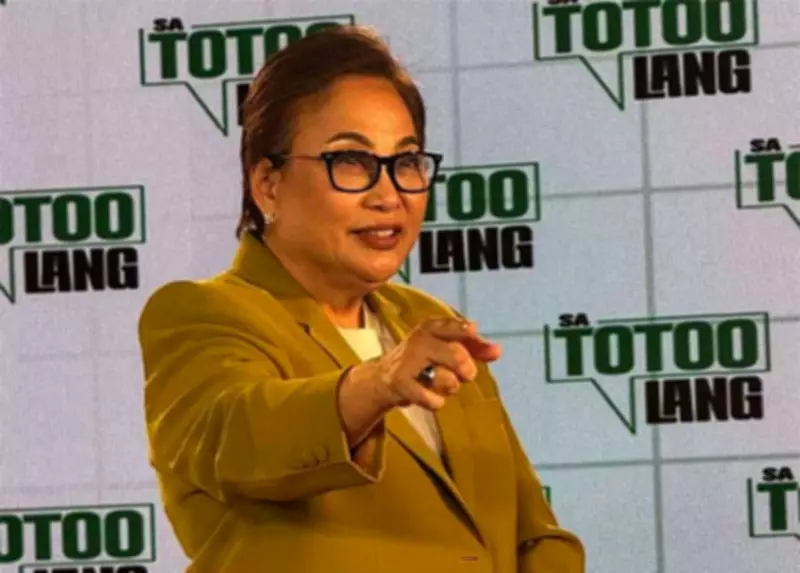
Cebu's Senate Seat Vacancy Sparks Debate as Rowena Guanzon Announces 2028 Bid
The political landscape in Cebu is stirring with renewed discussion as former Commission on Elections (Comelec) and Commission on Audit (COA) commissioner Rowena Guanzon has officially declared her intention to run for senator in the 2028 elections. This announcement, made during the launch of the "Cebu Alliance for Duterte 2028" on March 14, 2026, has reignited a pressing question: "Has Cebu run out of qualified and winnable candidates for senator?" The query probes whether the province must rely on a non-Cebuano to represent its interests in the Senate, highlighting a decade-long absence of native representation.
Guanzon's Platform: Restoring Visayan Voice in the Senate
Rowena Guanzon, a Bisaya native, has centered her campaign on restoring Visayan representation in the Senate, pledging to fight for the region under the banner of Sara Duterte. In her address to a Cebu City audience, she emphasized, "We will reclaim our seat in the Senate," referencing the historical precedent of Cebuano senators. This move aims to address the void left since 2016, when Sergio "Serge" Osmeña III concluded his third term, marking the end of a continuous Cebuano presence in the upper chamber.
Historical Context: Cebu's Legacy in the Senate
For decades, Cebu boasted robust representation in the Senate, with figures like Serge Osmeña serving multiple terms from 1995 to 2016. The province even saw periods with two or three senators simultaneously, such as the trios of Serging Osmeña, Sonny Osmeña, and Rene Espina in the early 1970s, and Marcelo Fernan, Ernesto Herrera, and Serge Osmeña in the late 1990s. However, since Osmeña's departure, Cebu has had zero representation for four successive Congresses, spanning over ten years. This absence raises concerns about the province's political influence, despite its five million votes and significant economic clout.

Debate Over Guanzon's Eligibility and Cebuano Identity
While Guanzon's commitment to Visayan issues is clear, her candidacy sparks debate regarding her connection to Cebu. Born in Cadiz City, Negros Occidental, she completed her education at Silliman University and the University of the Philippines Diliman, with a master's degree from Harvard. Critics argue that she is not a native Cebuano, as she was not born, raised, or educated in the province. This contrasts with figures like Vicente "Tito" Sotto III, who has Cebuano ancestry but is primarily associated with Manila. Some opinion leaders, including Atty. Josephus B. Jimenez, exclude Sotto from counts of Cebuano senators, suggesting Guanzon may not fully address the representation gap.
Broader Implications for Philippine Politics
The situation underscores a broader trend in Philippine politics, where other regions and families consistently produce senators, while Cebu struggles to field competitive candidates. Guanzon's bid highlights the challenges of regional representation and the search for viable leaders who can resonate on the national stage. As the 2028 elections approach, this debate will likely intensify, focusing on whether Cebu can reclaim its historical role in the Senate or if external candidates like Guanzon will become the norm.