
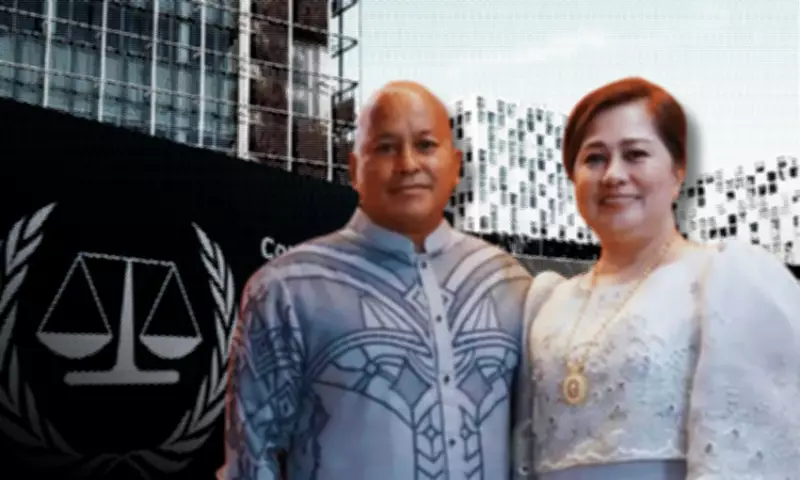
The wife of Senator Ronald “Bato” dela Rosa has issued an emotional appeal to the Philippine judiciary amid escalating efforts to arrest the former police chief over charges linked to the Duterte administration’s controversial war on drugs.
Emotional Plea on Social Media
In a widely circulated social media post early this week, Grace Nancy dela Rosa urged the country’s justices not to allow her husband’s transfer to The Hague, where the International Criminal Court (ICC) is pursuing crimes against humanity charges tied to thousands of deaths during anti-drug operations.
“Please do not be an accessory to bringing my husband to The Hague. Every Filipino must be tried in his own country,” she wrote.

She also appealed to the courts to act swiftly, warning that delays in resolving legal motions could allow authorities to move against the senator.
“We do not have the luxury of time to wait for your technical arguments and debates. Every moment you remain undecided is an opportunity for them to close in on Bato,” she added.
Legal Battle Intensifies
Her remarks came as the legal battle surrounding Dela Rosa intensified in recent days following the Supreme Court’s rejection of his petition for a temporary restraining order (TRO) against the enforcement of an ICC warrant.
The ICC formally unsealed the arrest warrant against Dela Rosa on May 11, accusing him of crimes against humanity allegedly committed during his stint as Philippine National Police chief from 2016 to 2018 under former President Rodrigo Duterte’s anti-narcotics campaign.
According to ICC documents, prosecutors believe Dela Rosa played a “central role” in implementing policies that allegedly resulted in widespread and systematic killings of suspected drug personalities. Human rights groups estimate the death toll reached into the tens of thousands, although government records place the number significantly lower.
Dela Rosa has consistently denied wrongdoing and insisted that law enforcement operations were conducted legally. He has also repeatedly questioned the ICC’s jurisdiction, arguing that the Philippines had already withdrawn from the Rome Statute before the court’s investigation progressed.
Recent Public Appearance and Aftermath
The senator resurfaced publicly earlier this month after months of absence from Senate sessions, appearing during the leadership change in the upper chamber that installed Senator Alan Peter Cayetano as Senate president.
His appearance triggered chaos inside the Senate complex after National Bureau of Investigation (NBI) agents allegedly attempted to approach him regarding the ICC warrant.
Surveillance footage and reports later showed Dela Rosa being pursued by agents inside Senate premises before he was eventually placed under Senate protective custody. The incident prompted a temporary lockdown of the Senate building and fueled political tensions between Duterte allies and the Marcos administration.
Despite briefly emerging in public, Dela Rosa again went into hiding after the Senate confrontation.
Government Response and Supreme Court Ruling
In recent days, the Department of Justice and the National Bureau of Investigation confirmed that tracker teams and law enforcement units had been mobilized to locate and arrest the senator once his whereabouts are confirmed.
Justice Secretary Fredderick Vida earlier declared that authorities are prepared to enforce the ICC warrant, warning that individuals who may help conceal the senator could face legal consequences.
Meanwhile, the Supreme Court clarified this week that its denial of Dela Rosa’s TRO plea did not yet resolve the broader constitutional questions surrounding the enforceability of ICC warrants in the Philippines. The tribunal stressed that the senator “has no clear and unmistakable right to be protected” at this stage, saying the alleged threat to his rights was still “more imagined than real.”
Voting records later released showed divisions within the high court, with several justices dissenting from the denial of interim relief.
Dela Rosa’s lawyers have since announced plans to file a motion for reconsideration before the Supreme Court, insisting that the ICC warrant cannot legally be implemented without judicial authorization from Philippine courts.