Bacolod City Council Unanimously Endorses Anti-Political Dynasty Legislation
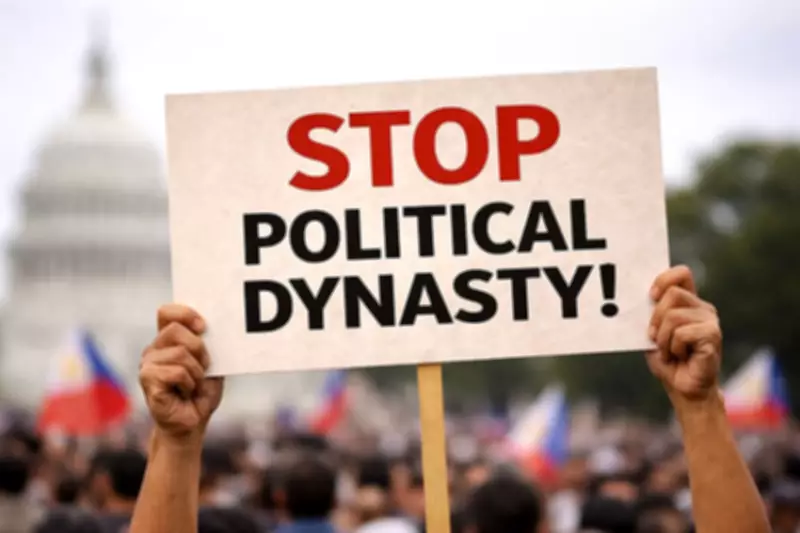
The Bacolod City Council has taken a definitive stand by approving a resolution that expresses strong and urgent support for the immediate enactment of a Comprehensive Anti-Political Dynasty Law. This move highlights growing local advocacy for structural political reforms aimed at enhancing democratic participation and governance.
Constitutional Mandate Remains Unenforced
Councilor Celia Matea Flor, the author of the resolution, emphasized that despite a clear constitutional requirement, an enabling Anti-Political Dynasty Law has yet to be enacted, rendering the prohibition toothless and unenforced. She pointed to Article II, Section 26 of the 1987 Constitution, which mandates that "the State shall guarantee equal access to opportunities for public service and prohibit political dynasties as may be defined by law."
Flor, who chairs the City Council committee on women, gender, and family and childcare, stressed that the current comprehensive Anti-Political Dynasty Bill before the Philippine Congress seeks to address this gap. The bill aims to:

- Define political dynasties explicitly.
- Prohibit spouses and relatives within the second degree of consanguinity or affinity from simultaneously running for or holding elective office in the same jurisdiction, covering both national and local levels.
- Establish clear enforcement mechanisms through the Commission on Elections (Comelec).
Empirical Data Reveals Widespread Dynastic Dominance
Recent empirical data underscores the urgency of this legislation, showing extensive domination by dynastic families in Philippine politics. According to Flor, the statistics include:
- Approximately 87 percent of provincial governors belonging to political dynasties.
- Around 80 percent of district representatives.
- About 67 percent of House members.
- Roughly 53 percent of mayors.
This pervasive presence undermines political competition, limits access to public office, and entrenches patronage and inequity, posing significant challenges to democratic principles.
Local Support and Broader Implications
The hearing on the bill held in Bacolod City garnered broad community support and was fully endorsed by Mayor Greg Gasataya, reflecting the local electorate's desire for reforms that broaden political participation and strengthen democratic governance. Flor noted that this grassroots backing is crucial for pushing national action.
Copies of the resolution will be transmitted to key national bodies, including the Office of the President, the Senate of the Philippines, the House of Representatives, the Comelec, and other relevant government agencies, for their information and appropriate action. This step aims to amplify the call for legislative change beyond local boundaries.
By advocating for this law, the Bacolod City Council aligns with efforts to curb dynastic politics, promote fairness, and ensure that public service opportunities are accessible to all, in line with constitutional ideals.