
Cebu's Political Stew: Binignit Metaphor Reveals Governance Imbalance
During the solemn observance of Kuwaresma, or Holy Week, Cebuanos traditionally turn to binignit—a sweet, thick, and deceptively complex dessert that serves as more than just a dish. This culinary creation represents a full menu in one pot, combining ingredients like kamote, gabi, saba, langka, bilo-bilo, mais, sago, ube, and the notoriously stubborn landang. Each component requires precise timing, discipline, and a steady hand to achieve perfect harmony, where no single element dominates and throws off the delicate balance.
The Political Ingredients in Cebu's Pot
In Cebu provincial politics, however, the metaphorical pot tells a strikingly different story. The kamote and gabi symbolize the old political families—dense, entrenched, and quietly absorbing everything around them. The saging represent the populists, sweet and always ready for public consumption. The bilo-bilo roll with the currents, adaptable and uncommitted yet ever-present. The mais and sago fill the optics, decorative and visible but rarely essential to the core.
Then comes the landang, firm and resistant, often out of sync when not handled properly. These are the rigid decisions and policies that refuse to bend, sitting in the pot without fully integrating, noticed more for their texture than their contribution. And of course, the langka—the controversies that are loud, lingering, and impossible to ignore, defining the aroma long after the ladle has passed.

Controversial Decisions and Fiscal Projections
A prime example is the controversial tax discount granted to APO Cement, a decision that, like an ill-timed ingredient, has unsettled the balance of the pot. In a province already managing fiscal pressure, such generosity demands clarity, justification, and control, not confusion and a lingering aftertaste. The contradictions extend further, raising questions about governance coherence.
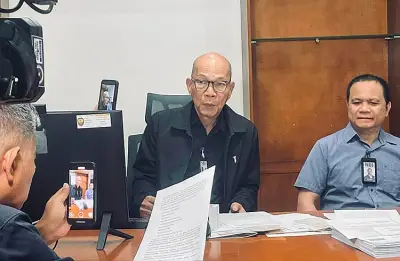
Why was Aldwin Emphaces the one announcing a projected P12.5 billion provincial budget by 2027? On what determinants and assumptions are these projections based? Are they anchored on actual revenue performance, or merely aspirational figures dressed for public consumption? More critically, can the province even meet this year's targets?
The numbers seem to speak different languages. On one hand, officials talk confidently in billions, projecting growth and expansion. On the other, they have trimmed what was once a billion-peso obligation to APO Cement down to roughly P200 million. This is not just a fiscal adjustment; it is a signal that priorities may be shifting faster than explanations can keep up.
Leadership and the Binding Gata
All of this is supposed to be held together by the gata, or coconut milk, representing the administration—smooth, steady, and capable of absorbing pressure without breaking. This brings us to Pamela Baricuatro and the test of governance as absorptive capacity. The ability to take in competing interests, rising heat, and public scrutiny while producing something coherent is crucial.
But what happens when the heat rises and the gata does not bind but begins to separate? What we are witnessing feels less like careful cooking and more like unmanaged mixing. Ingredients float without hierarchy, decisions appear without sequence, and governance increasingly leans toward performance—brief, visible, and shareable, rather than sustained, structural work. It may be TikTok-ready, but governance is not a highlight reel.
A Call for Reflection and Direction
The APO Cement controversy, paired with ambitious budget projections, only sharpens the question: Is this leadership steering the pot, or simply reacting to whatever surfaces? Binignit demands patience, knowing when to stir, when to hold back, and when to ensure no single ingredient overwhelms the rest. Cebu today feels like a dish still negotiating its own recipe—too sweet in parts, too rigid in others, and bound by a gata struggling to hold everything together.
In the end, Cebu's governance has become its own kind of binignit, with everything thrown into the pot hoping the sweetness will hide the imbalance. But binignit, like leadership, cannot be faked. You taste it immediately when the gata has split, when the landang stays hard, or when one ingredient overwhelms the rest.

Perhaps this Kuwaresma offers more than ritual; it offers a pause—a moment to step back from the noise, reflect, and ask whether governance has become performance rather than purpose. If there is an action plan at all, it may begin not with another stirring of the pot, but with the discipline to stop, think, and finally cook with direction.