
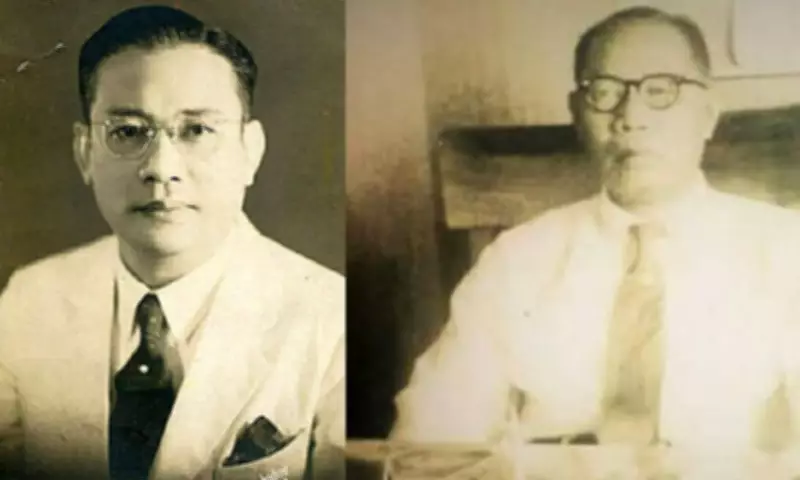
The Unresolved Historical Debate Over Cebu City's Founding
A nine-year-old objection by former mayor Mike Rama regarding the recognition of Gervasio Lavilles in Cebu City's history has failed to settle a long-standing debate about who truly deserves credit for the city's charter. The controversy centers on whether Lavilles, who authored a key municipal resolution, should share recognition with Vicente Rama, traditionally honored as the charter's "father."
Vicente Rama: The Recognized "Father" of the Charter
Vicente Rama (1887-1956) has been consistently honored as the "father" of Cebu City's charter since the first Charter Day celebration after the city's legal conversion. As congressman of Cebu's third district, Rama sponsored and shepherded the bill through Congress that created the Cebu City Charter. The charter was approved on October 20, 1936, and officially inaugurated on February 24, 1937, under Commonwealth Act #58.
Rama's legislative work involved significant political skill and determination, as the bill faced opposition from other Cebu political leaders who believed the municipality wasn't ready for city status. His role encompassed all parliamentary stages, requiring both legislative expertise and political savvy to overcome obstacles.

Gervasio Lavilles: The Underappreciated Contributor
Gervasio Lavilles, a lawyer-journalist and municipal board member from 1925 to 1935, authored Resolution #185 in 1931. This resolution, signed by then municipal president Fructuoso Ramos on August 31, 1931, formally requested Congress to convert Cebu town into Cebu City. This local initiative directly led to Vicente Rama introducing the corresponding bill in Congress.
Despite this foundational contribution, Lavilles received minimal recognition during his lifetime. It wasn't until 2017—eighty years after the city's founding and thirty-one years after Lavilles' death in 1986—that the City Government under then mayor Tomas Osmeña invited Lavilles' family to a Charter Day gathering. A street in Barangay Tinago, formerly named Bagumbayan, now bears Lavilles' name, but formal city honors remain pending.
The Lavilles Family's Lament and Historical Questions
At a 2020 media forum, a daughter of Gervasio Lavilles publicly expressed that her father's role in Cebu City's creation was "under-appreciated" and that proper recognition never came before his death. The late Clarence Paul Oaminal, a Freeman columnist specializing in Cebu history, described honoring Lavilles' memory as "long overdue" in a February 2019 article.
Critical questions remain unanswered about Lavilles' specific contributions: Did Resolution #185 contain more than a formal request? Did it include conceptual details about the proposed city government's structure and functions? What exactly did Lavilles contribute to the charter bill beyond the initial resolution?
Mike Rama's Objection and Political Dimensions
When Mayor Tomas Osmeña included recognition for Lavilles in the 80th Charter Day celebrations in 2017, Mike Rama—grandson of Vicente Rama—reportedly "expressed strong displeasure." Rama argued that honoring Lavilles would diminish his grandfather's role and constitute "rewriting history." He noted that his grandfather's 80th Charter Day memorial was limited to two baskets of flowers at Vicente Rama's statue.
This disagreement occurs within the context of a long-running political feud between Mike Rama and Tomas Osmeña, further complicating objective historical assessment. The lack of detailed records about Lavilles' actual legislative work on the charter bill adds to the uncertainty.
Distinguishing "Father" from "Brains"
While there's no dispute about Vicente Rama being the charter's "father"—the principal sponsor who guided it through Congress—the question of who served as the "brains" behind the legislation remains contentious. Did Lavilles function as technical assistant or primary researcher and drafter, with Rama focusing on congressional defense and promotion? Neither the Lavilles family nor historical advocates have provided comprehensive evidence detailing Lavilles' specific contributions beyond the municipal resolution.

With Cebu City facing numerous contemporary challenges, resolving this historical disagreement appears low on current priorities. As the 89th Charter Day passes, attention may turn to whether Lavilles will receive proper recognition by the 90th or 100th anniversary celebrations.