Mati City Hall Enforces Four-Day Work Week to Boost Energy Efficiency
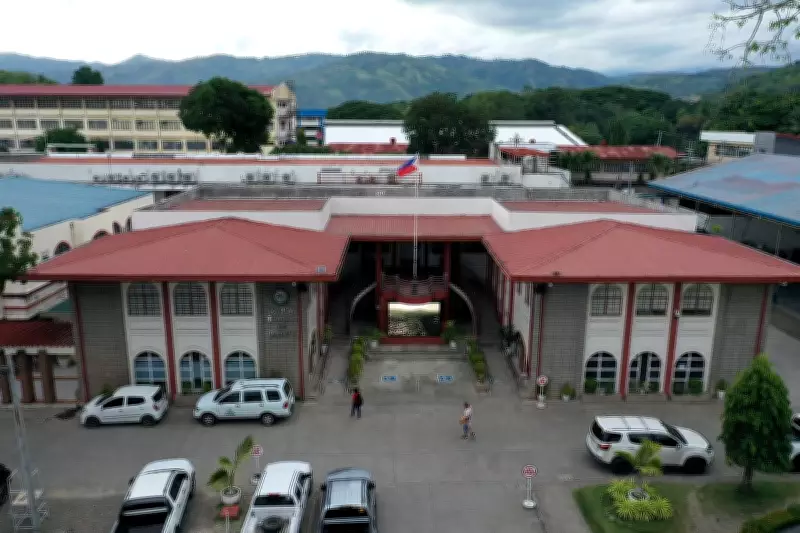
In a significant move to address energy conservation, the City Government of Mati has officially implemented a four-day work week for all its employees. This decision, announced on April 13, 2026, is in direct compliance with Office of the President Memorandum Circular No. 114 and DILG Memorandum Circular No. 2026-023, which mandate strict energy-saving measures across government offices nationwide.
New Work Schedule Details and Coverage
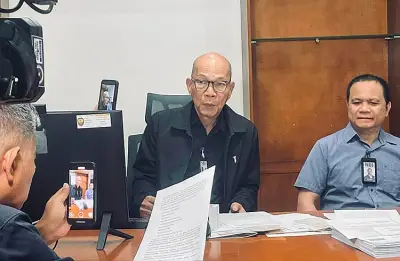
Mayor Joel Mayo Almario issued Memorandum Order No. 035, compressing the work schedule from Monday to Thursday, effective immediately. Under this new arrangement, offices will operate from 8 a.m. until 7 p.m., ensuring that employees complete the standard 40-hour workweek. The policy applies to all regular employees, as well as those under Job Order (JO) and Contract of Service (COS) arrangements.
However, essential services remain unaffected. The local government unit (LGU) clarified that operations in critical areas such as security, healthcare, emergency response, markets, terminals, and slaughterhouses will continue as usual to maintain public safety and service delivery.

Rationale and Public Statement
In a Facebook post on April 13, 2026, the City of Mati explained the rationale behind this measure. "Kini nga lakang gihimo aron magarantiya ang episyente nga paggamit sa resources sa siyudad dungan sa pagpabilin sa accountability ug transparency sa serbisyo publiko," the post stated, translating to: "This measure is being implemented to ensure the efficient use of the city’s resources while maintaining accountability and transparency in public service." This highlights the city's commitment to balancing resource management with governmental integrity.
Context of Rising Electricity Rates
The implementation comes at a time when energy costs are escalating. Davao Oriental Electric Cooperative, Inc. (Doreco), the sole electric provider for Mati City, announced a rate increase in March 2026. Residential rates rose to P12.3788 per kilowatt-hour (kWh) from P11.8839/kWh in February, marking an increase of P0.4949/kWh.
For low-voltage consumers, the rate increased to P11.4205/kWh from P10.9174/kWh, up by P0.5031/kWh, while high-voltage users now pay P9.5870/kWh, which is P0.2981/kWh higher than the previous month. This context underscores the urgency of energy conservation efforts in the face of rising operational costs.
National Directive and Broader Implications
This local initiative aligns with a broader national mandate. President Ferdinand "Bongbong" Marcos Jr. ordered the temporary adoption of a four-day workweek in the executive branch starting March 9, 2026, aimed at reducing energy consumption across all government levels. The directive encompasses national government agencies, government-owned or -controlled corporations, local government units, state universities and colleges, and other institutions.
Under the circular, agencies must continue delivering essential and emergency services while enforcing energy-saving measures. These include setting air conditioning to 24 degrees Celsius, limiting the use of non-essential lights and equipment, and placing devices on sleep mode when not in use. This comprehensive approach aims to foster a culture of sustainability within the public sector.