Sta. Cruz Mayor Denounces Politicized Cityhood Rejection, Vows Legal Action
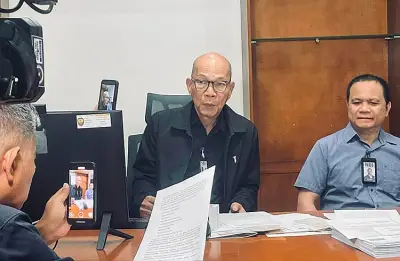
Mayor Jose Nelson "Tata" Sala has publicly condemned what he describes as the politicized rejection of Sta. Cruz's bid for cityhood in Davao del Sur. During a special press conference with Davao media on April 16, 2026, Sala openly criticized the provincial government for blocking the municipality's long-standing push for city status, emphasizing that their community has been financially overqualified for conversion long before his tenure as mayor began.
Procedural Concerns and Lack of Due Process
The mayor revealed that the resolution passed by the Sangguniang Bayan seeking provincial support for Sta. Cruz's cityhood bid was summarily rejected by the Sangguniang Panlalawigan without undergoing the usual committee hearing process. According to Sala, the provincial board failed to extend even a basic opportunity for the municipal government to present its case or respond to concerns before the resolution was disapproved.
"Nang-gihimo man gyud sa province. Ang amoa dili man na 'ultra vires'. Wala man man lang giagi og committee hearing. Diretso man gyud, ready-made, diretso nila og bara," Sala stated during the press conference, highlighting what he perceives as procedural irregularities.

Financial Overqualification and Revenue Growth
Despite the setback, Mayor Sala expressed confidence that Sta. Cruz would continue pursuing its cityhood aspirations, emphasizing that the municipality has already exceeded the financial requirements set under Republic Act 7160, or the Local Government Code of 1991. The law stipulates that a municipality may qualify for cityhood if it meets at least one of several criteria, including a locally generated annual income of at least P100 million for the last two consecutive years.
"Unya, mo-qualify man ka sa isa, mo-qualify naman ka sa tanan. Una-una, ang among area overqualified mi, ang among income overqualified mi. Ngano? Paglingkod nako as konsehal 170 [million pesos] lang among local taxes. After one term, 176 (million). Second term is 179 (million). Paglingkod nako as mayor is 402 million. Okay? So, overqualified na kaayo para mahimong city, 100 million man lang unta," the politician explained, detailing the municipality's impressive revenue growth trajectory.
Alleged Financial Motivations and Legal Plans
Sala further alleged that the province's opposition may be rooted in financial considerations, particularly the potential reduction in provincial revenue should Sta. Cruz become a city and retain a larger share of its locally generated income. The mayor pointed out that the resolution opposing the cityhood bid was certified as urgent and approved on the same day, effectively shutting down any avenue for deliberation or rebuttal.
In response to these developments, Sala revealed plans to file multiple cases against provincial officials, including the governor, vice governor, and other members of the provincial board, over what he described as procedural lapses and denial of due process.
Legislative Context and Municipal Clarifications
Sta. Cruz Vice Mayor lawyer Charlotte Gallego clarified that the municipal government had merely sought a formal comment from the provincial government, a requirement in the legislative process of converting a municipality into a city. "What happened was, the matter was certified as urgent by the provincial governor, and the same day they passed a resolution opposing the house bill kay act of Congress man ni," Gallego explained.
The proposed measure, House Bill 2787, was filed in July 2025 by Davao del Sur First District Representative John Tracy Fortich Cagas, who earlier vowed to push for the measure as one of his priority bills. If enacted, Sta. Cruz would become the second city in Davao del Sur after Digos City, the provincial capital.
Demographic and Geographic Qualifications
While provincial officials reportedly raised concerns about the municipality's population, Sala maintained that Sta. Cruz's income alone already satisfies the legal requirement. Data from the Philippine Statistics Authority supports the municipality's growth trajectory. As of the 2024 Census, Sta. Cruz has a population of 104,793, reflecting steady demographic expansion over the years.

Although it falls short of the population benchmark of 150,000 for cityhood, PSA data indicated that Sta. Cruz has a relatively young and economically active population, which contributes to its expanding labor force and local productivity. A significant portion of residents are engaged in agriculture, fisheries, trade, and emerging service sectors, reinforcing the municipality's diversified economic base.
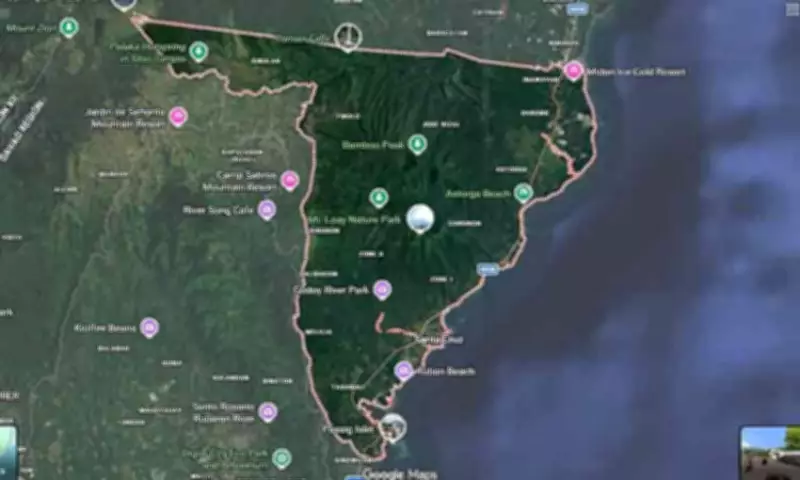
Sta. Cruz also covers a land area of 319.91 square kilometers, far exceeding the minimum land area requirement of 100 square kilometers for cityhood. Its geography is considered one of its strongest assets, combining upland, lowland, and coastal ecosystems that support multiple industries.
Economic Foundations and Historical Significance
Agriculture remains a major economic driver, with crops such as coconut, banana, and other high-value produce contributing to both local consumption and regional trade. PSA agricultural indicators for the Davao Region have consistently identified Davao del Sur, including Sta. Cruz, as a key contributor to Mindanao's food production chain.
The municipality's coastal areas along the Davao Gulf sustain a vibrant fisheries sector, while portions of its mountainous terrain include areas within the Mt. Apo Natural Park, creating opportunities for eco-tourism and environmental conservation initiatives. Classified as a first-class municipality, it recorded an annual income of P565.97 million in 2024, reflecting sustained revenue growth through improved tax collection efficiency and expanding business activities.
Historically, Sta. Cruz holds a significant place in Davao del Sur's development. Established on October 5, 1884, it is the province's oldest municipality. Notably, Digos City was once part of Sta. Cruz before it was separated and later converted into a city, underscoring the municipality's role as a foundational economic center in the area.
According to Sala, with its strong fiscal position, expansive land area, and growing economic base supported by PSA data, Sta. Cruz continues to present itself as a viable candidate for cityhood, but the challenge now lies in overcoming the political and institutional hurdles that stand in the way of this long-awaited transformation.